
In daily life and industrial production, we may have all encountered such a perplexing situation: the power supply is clearly working normally, yet the light suddenly burns out the moment it lights up. Why is that?
Common causes for a light burning out instantly despite a normal power supply are
When the electromagnetic compatibility (EMC) performance of the lighting fixture itself is poor, high-power machinery interference and radio-frequency emissions in the surrounding environment may become the main culprits. During operation, high-power machinery generates strong electromagnetic interference. These interference signals can enter the lighting fixture’s circuit system through spatial radiation or conduction. If the EMC design of the lighting fixture is inadequate and fails to effectively resist such interference, it may lead to abnormalities in the fixture’s internal circuitry. As a result, the instantaneous output voltage can rise sharply, far exceeding the normal operating voltage range of the lighting fixture, ultimately causing it to burn out.
Real-life Case: The Testing Dilemma of Lighting Fixtures for Haier Carrier Refrigerators
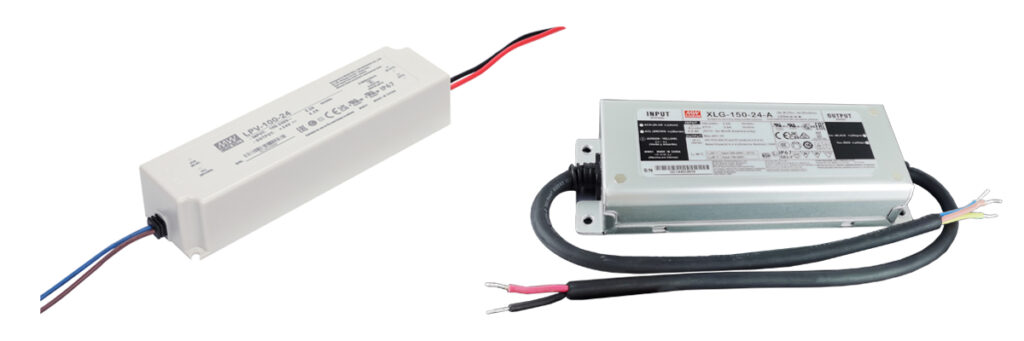
Our client, Haier Carrier, a refrigerator manufacturer, encountered this thorny issue during the testing of lighting fixtures. Haier Carrier selected power supplies from the Laidishine brand, which are of exceptional quality and highly stable, and have never experienced similar faults in previous use.
However, during the lighting fixture testing phase, the fixtures frequently burned out the instant they were normally powered on. To identify the cause, Haier Carrier sent back the problematic power supplies and lighting fixtures to us for comprehensive testing. After rigorous and meticulous testing, we found that both the power supplies and the lighting fixtures had normal performance indicators across the board, with no obvious quality issues detected.
Faced with this perplexing result, our entire technical department launched a thorough and in-depth investigation. Through a detailed understanding of the testing site environment and repeated simulation tests, we finally reached a conclusion: When Haier Carrier was testing the lighting fixtures, there must have been high-power machinery operating on-site. Due to the inadequate EMC (Electromagnetic Compatibility) performance of the lighting fixtures, upon power-on, they were subjected to strong electromagnetic interference generated by the high-power machinery. This led to an instantaneous abnormal voltage increase within the fixtures’ internal circuitry, ultimately causing them to burn out. After verifying with the client, this hypothesis was confirmed.
Solutions and Preventive Measures
To address and prevent this issue, we can take the following approaches:
- Optimize the EMC Design of Lighting Fixtures: Lighting fixture manufacturers should enhance electromagnetic compatibility design by using high-quality electromagnetic shielding materials and adopting reasonable circuit layouts. This will improve the fixtures’ ability to resist electromagnetic interference, ensuring stable operation even in complex electromagnetic environments.
- Plan Testing Environments Rationally: When conducting lighting fixture tests, it is advisable to avoid testing near high-power machinery whenever possible. Alternatively, effective electromagnetic isolation measures should be implemented to reduce the impact of external electromagnetic interference on the fixtures.
- Strengthen Compatibility Testing between Power Supplies and Lighting Fixtures: When selecting power supplies and lighting fixtures, in addition to focusing on their individual quality and performance, sufficient compatibility testing should be carried out to ensure that they can operate stably and in coordination under various working conditions.
The root cause of a light burning out instantly despite a normal power supply often lies in the inadequate EMC anti-interference capability of the lighting fixture, rather than quality issues with the power supply or the fixture itself. Especially in industrial production settings, where high-power equipment is densely packed and electromagnetic interference is strong, greater attention should be paid to the EMC performance selection and design of lighting fixtures.
Have you encountered any other fault issues related to commercial LED lights? I would be delighted to engage in in-depth discussions and exchanges with you on this topic.