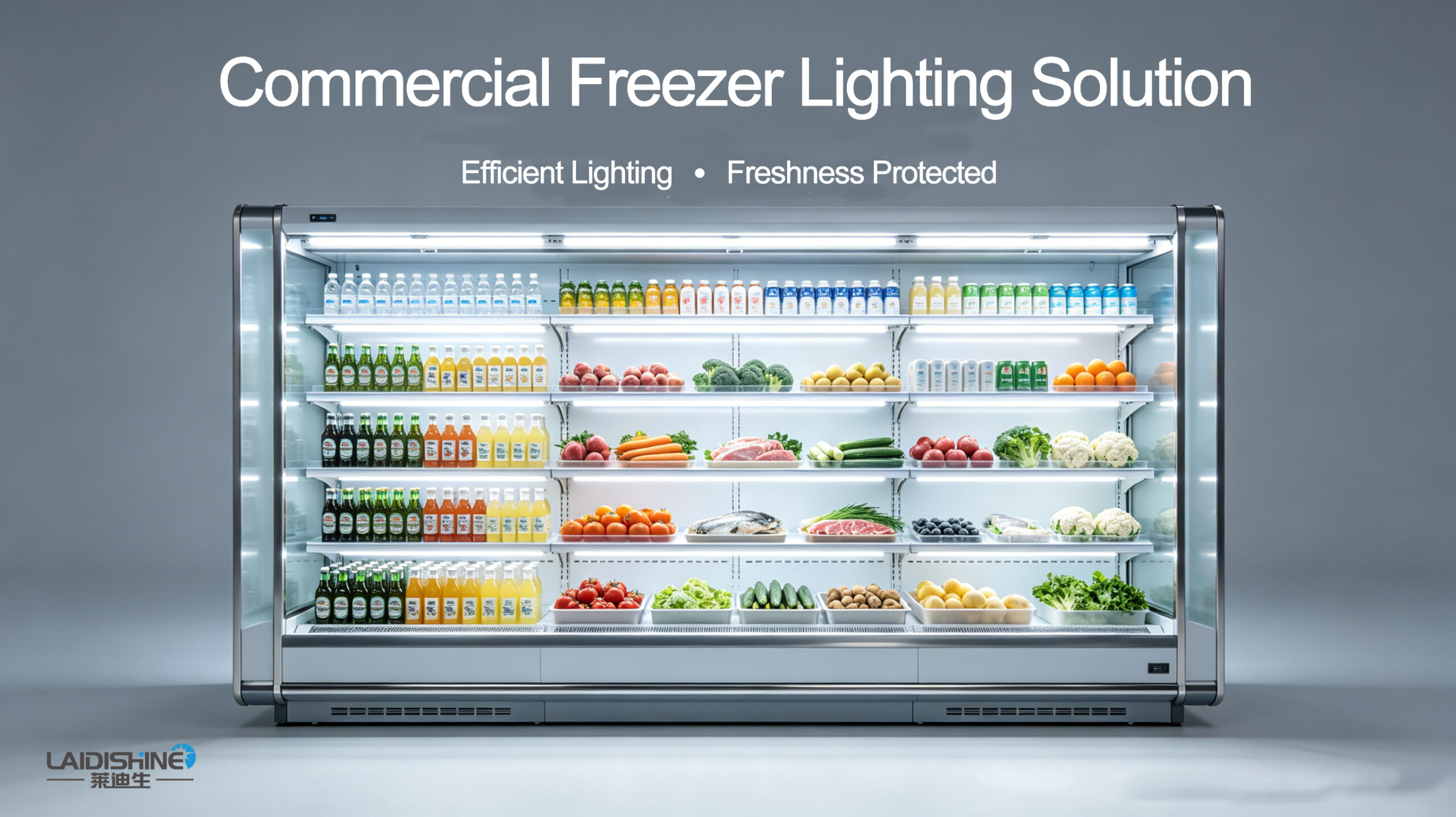
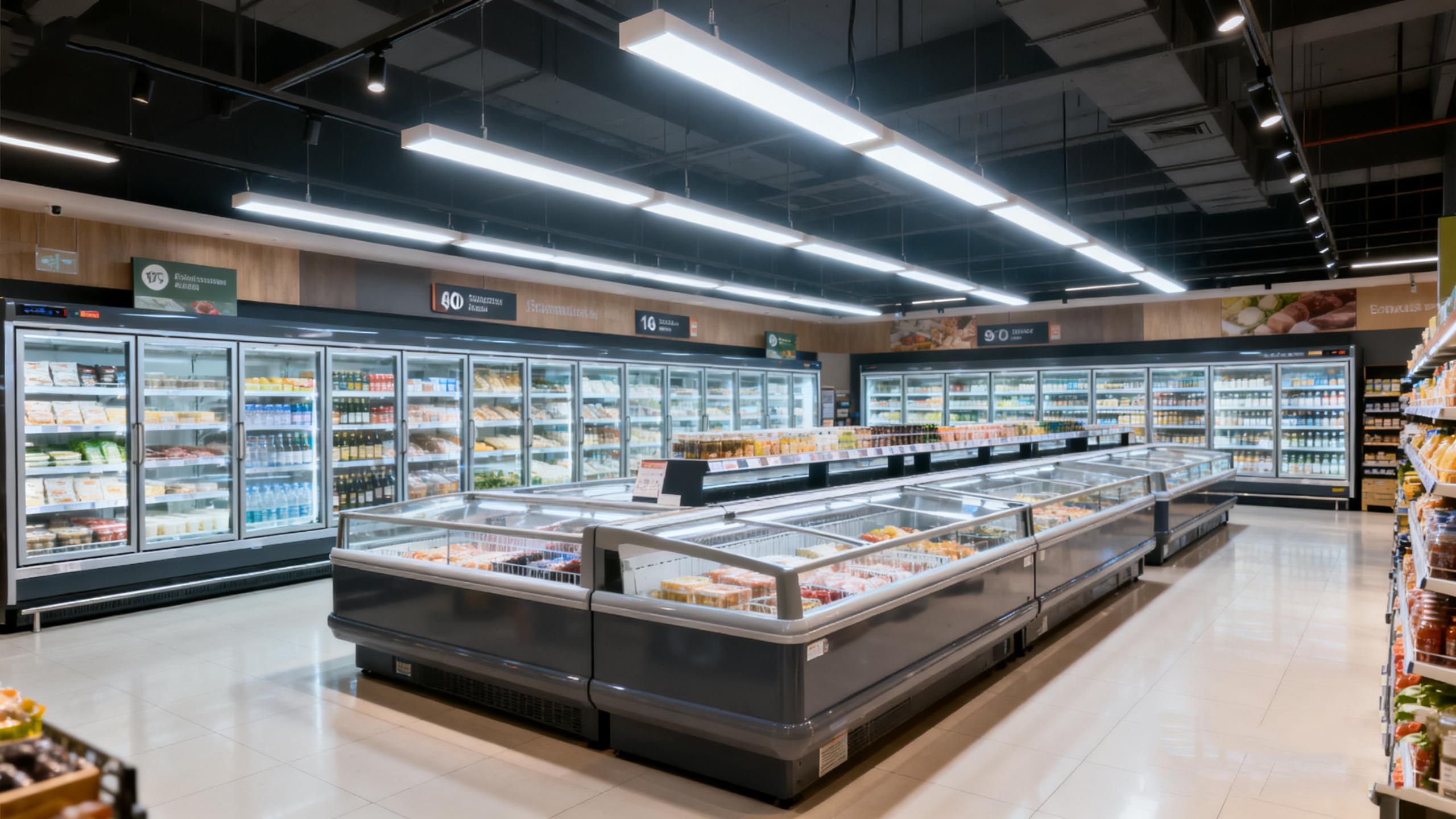
In the commercial refrigeration sector, lighting is no longer merely a functional component; it has become a key factor influencing product visibility, energy efficiency, and ultimately, sales performance. However, supermarkets and convenience stores have significantly different lighting needs. These differences are not accidental—they are determined by store format, customer behavior, and merchandise display strategies. Understanding these differences helps refrigeration equipment manufacturers, distributors, and retailers select the most suitable LED lighting solutions. This difference stems primarily from customer shopping habits. In supermarkets, shoppers typically spend more time browsing. They compare various products, explore different product categories, and are more prone to impulse purchases. Therefore, supermarket refrigerated equipment is designed to maximize product exposure and visual appeal.
In contrast, convenience stores prioritize speed and efficiency. Customers are typically targeted and expect to find the items they need quickly. Therefore, convenience store refrigerated display cases are often designed to be more compact, with enclosed structures, and optimized for rapid retrieval. This has led to two distinct types of refrigerated display cases:
- Supermarkets: Refrigerated multi-deck cabinet open, island freezers, large refrigerated multi-deck cabinet closed (with glass door);
- Convenience stores: Single-door or multi-door reach-in refrigerated display cases, beverage refrigerated display cases, compact refrigerated display cases;
Differences in lighting design: Focus on display or efficiency?
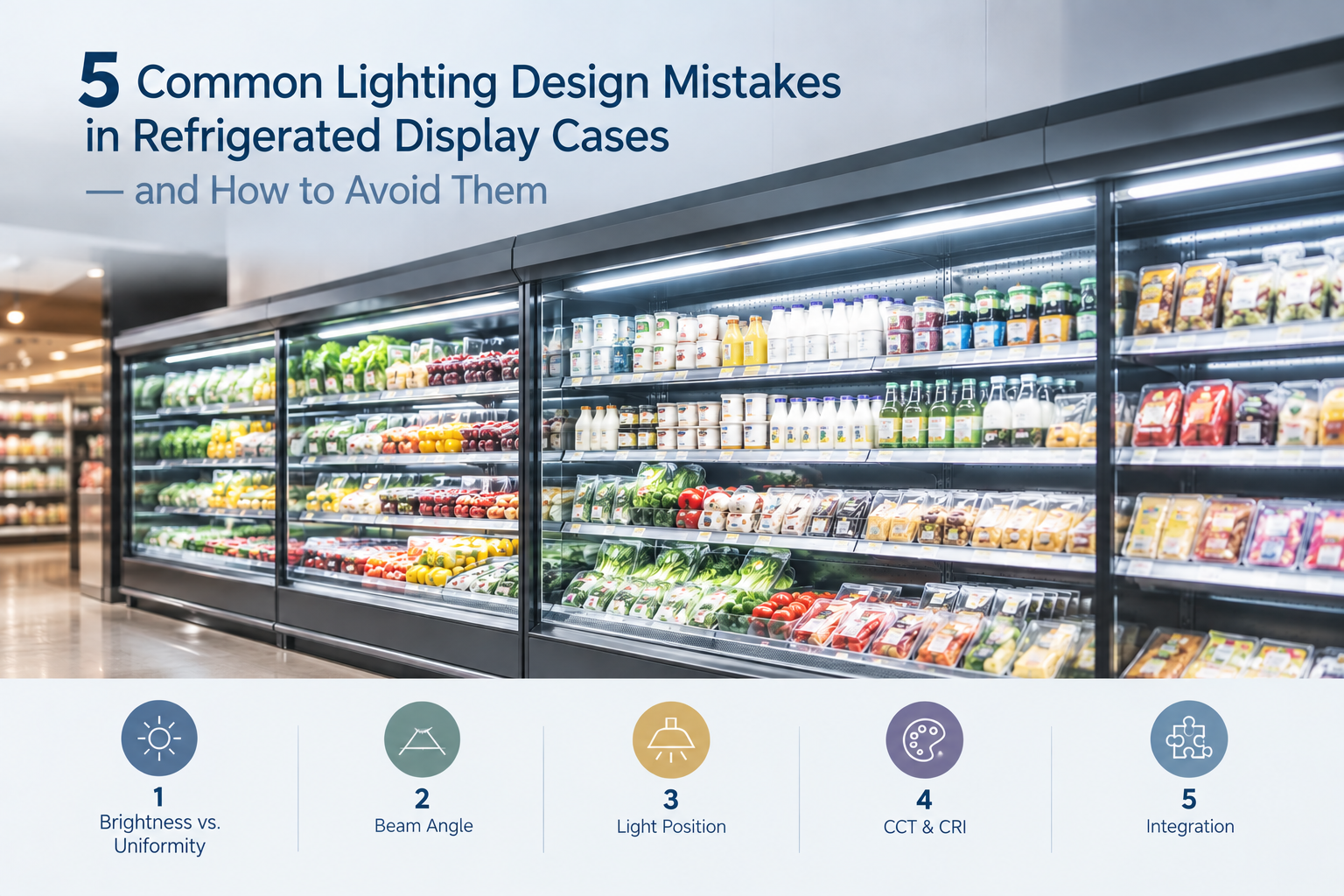
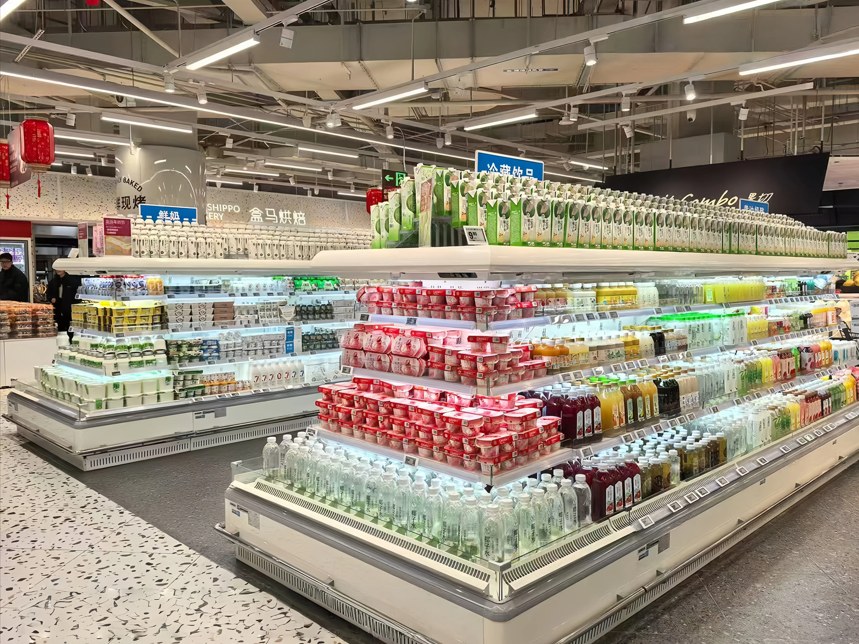
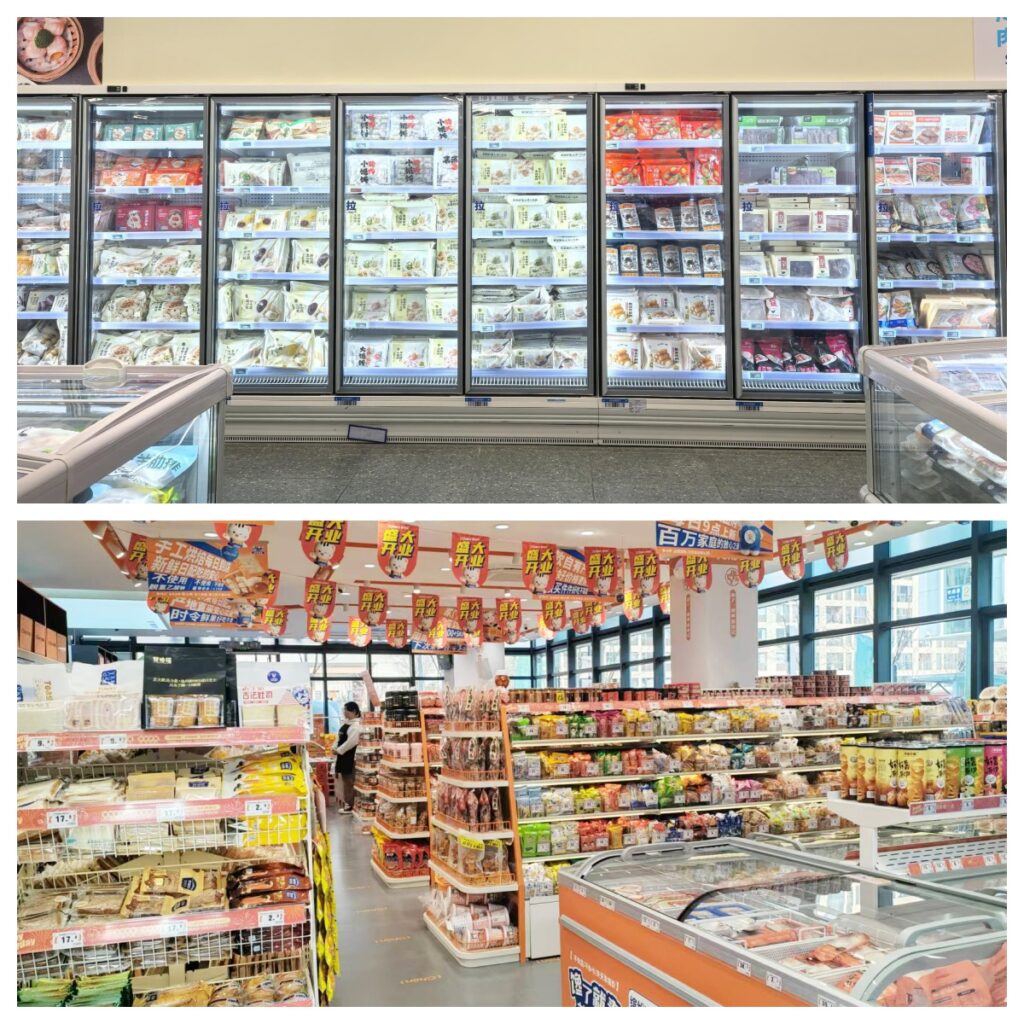
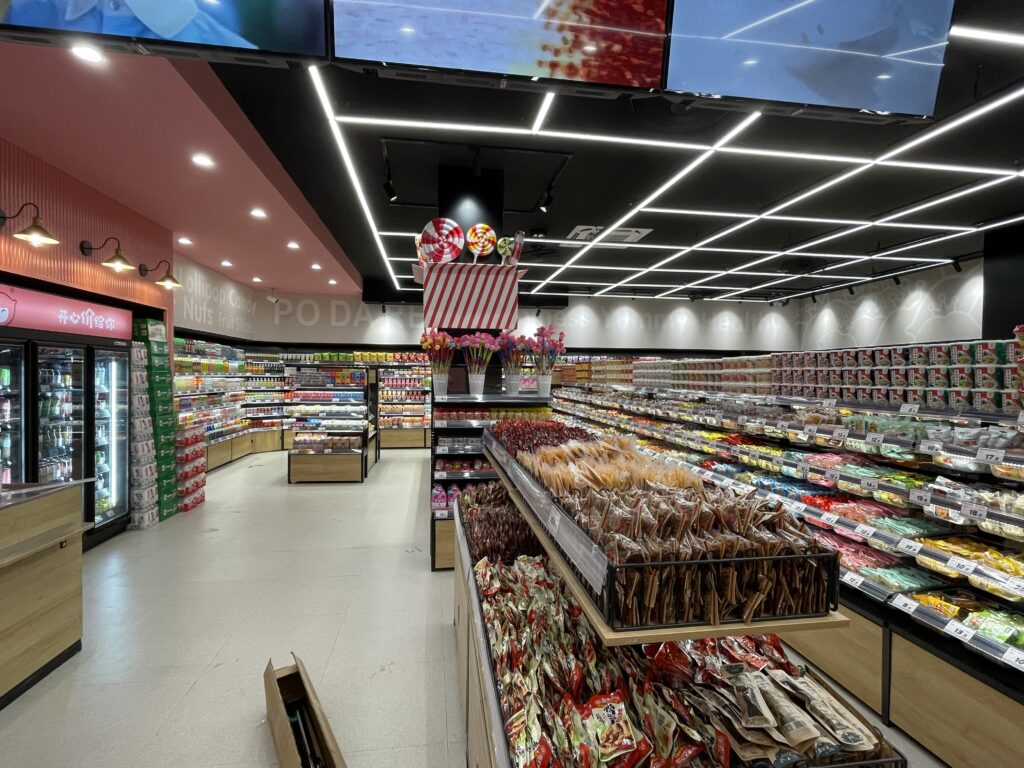
Due to varying customer purchasing behaviors and different store positioning, the types of refrigerated display cases used differ, necessitating the fulfillment of diverse lighting needs. Consequently, lighting products have expanded and diversified. For supermarket refrigerated lighting, retailers aim to emphasize product display, using light to make products more attractive and thus boost sales. Supermarkets typically utilize numerous refrigerated display cases and air-curtain cabinets, creating a visually striking effect through neatly arranged and abundant merchandise, potentially leading to impulse purchases. Therefore, refrigerated display case lighting in this context prioritizes bright light and excellent color rendering index, making product colors vibrant and more appealing.
To address this lighting need, Laidishine, drawing on its experience in supermarket renovation projects, analyzed the shortcomings of existing lighting and proposed targeted solutions: For large-area refrigerated display cases, the same lighting products and color temperature are consistently used to ensure uniform illumination; for upright sliding-door refrigerated display cases, vertical LED lighting products—SPU-VL/VR/VC—are installed on both sides and the center of the door frame. Optical lenses then allow light to sweep from both sides of the door frame inwards, ensuring uniform illumination on each shelf and preventing uneven lighting.
With only one-sided lighting, the light gradually weakens with distance from the light source. Adding vertical center lighting, which also projects light from the center of the door frame, complements the single-sided lighting and significantly improves overall light uniformity. For frameless refrigerated display cases and other cabinets designed for easy customer access to goods, while vertical lighting products cannot be installed, individual shelf lights can be installed to illuminate each shelf, making the lighting more targeted. Furthermore, using high-color-rendering index (CRI) LEDs ensures accurate color reproduction of products (such as SPU-H), and designing separate color temperatures for different fresh-food sections further highlights product advantages and makes the overall supermarket display look neater, encouraging customers to linger longer and resulting in more purchases.
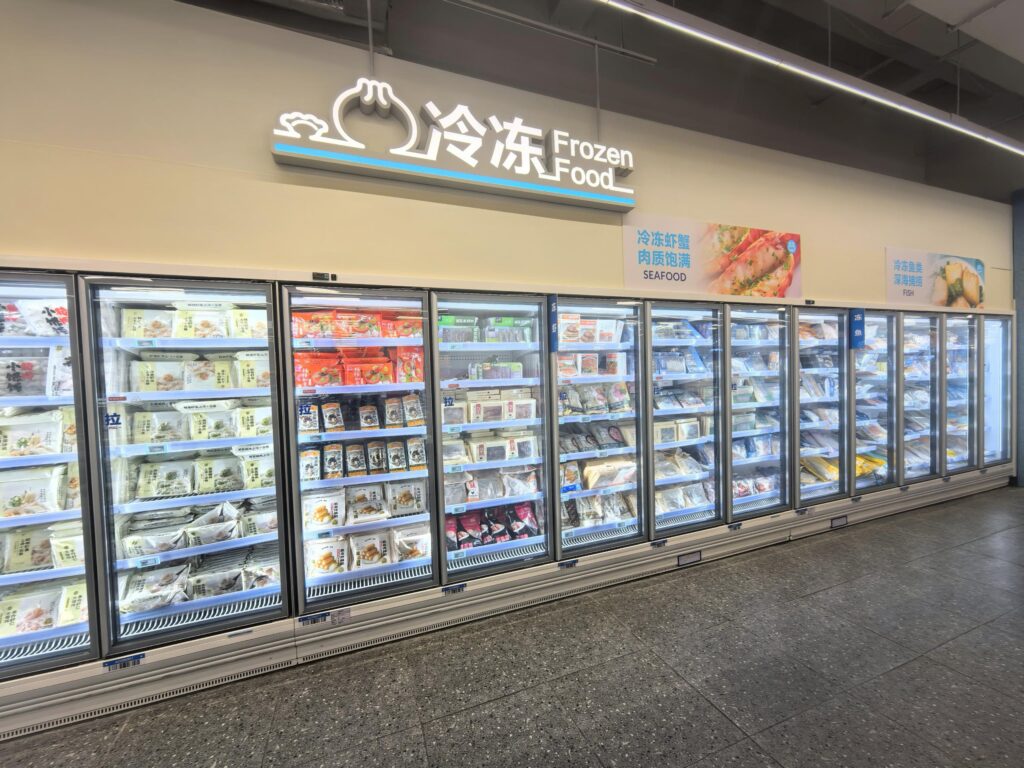
For smaller stores like convenience stores and snack shops, which are often located in easily accessible areas such as residential areas or commercial districts, the stores are small but offer a wide variety of goods. Merchants aim to create a fast-paced consumption environment, allowing customers to make purchase decisions quickly.
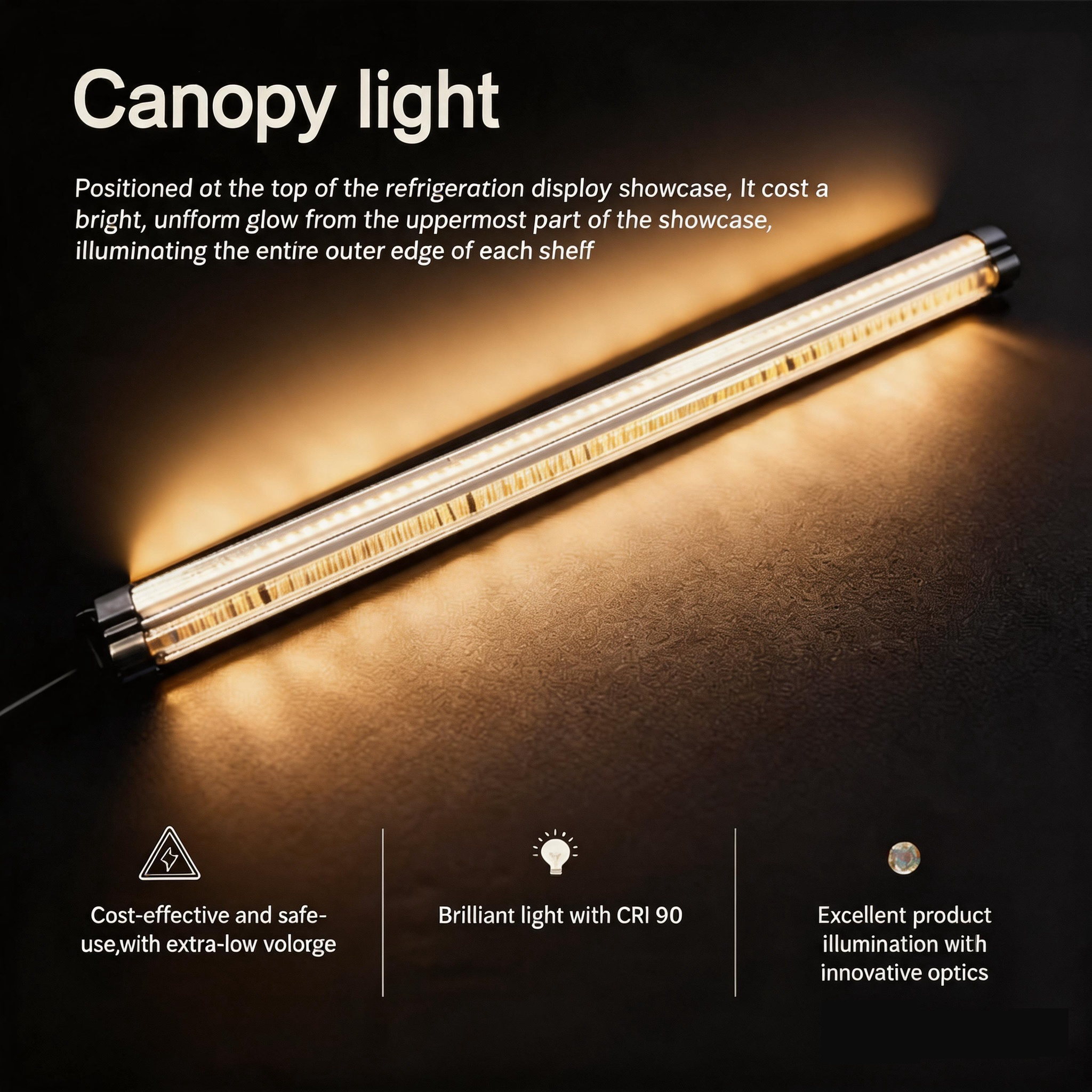
Therefore, to display as many products as possible, the store design is compact, and refrigerated display cases often use single-door or double-door pull-out designs, primarily displaying beverages. Regarding lighting needs, convenience stores prioritize efficiency, focusing on energy saving and cost control. While top lights can illuminate the refrigerated shelves, providing basic lighting while saving costs, this method is only suitable for smaller cabinets with limited illumination.
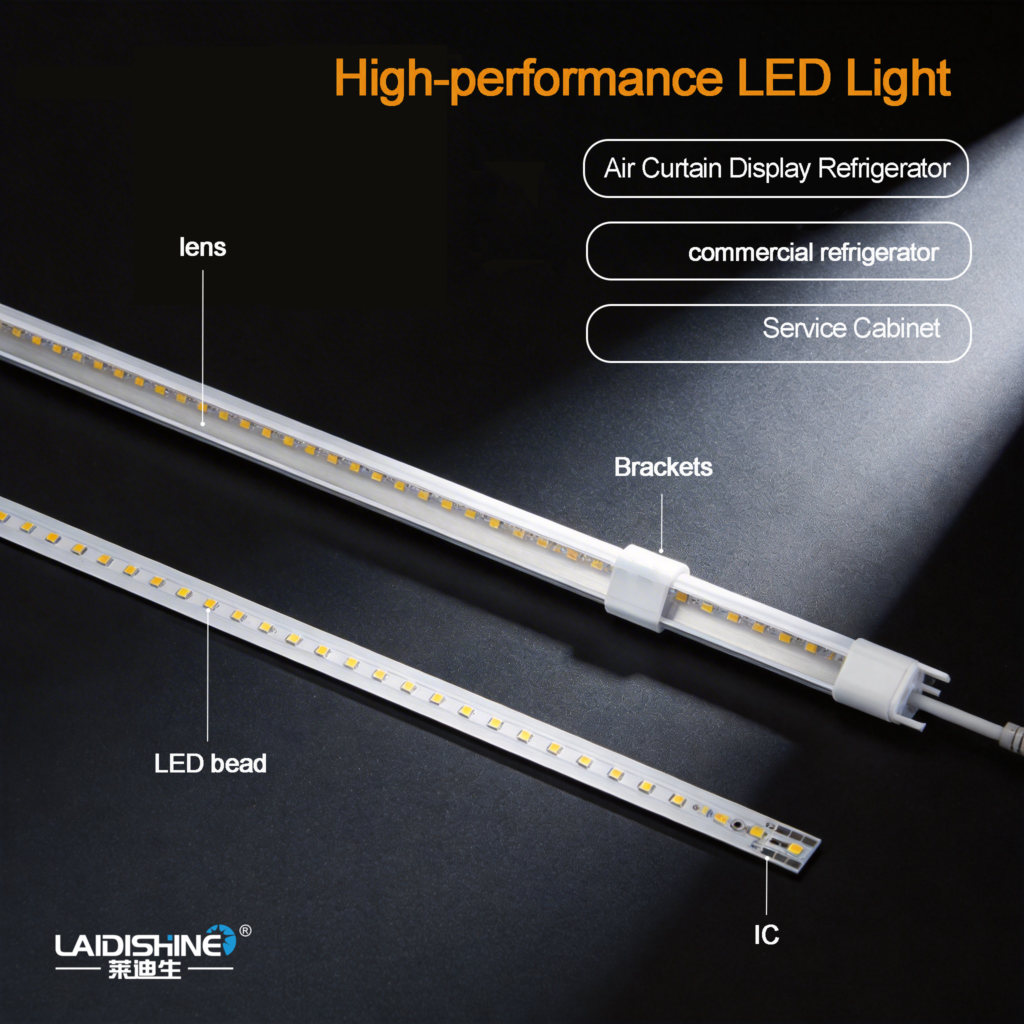
For cabinets with more than four shelves, it is recommended to install lighting on each shelf. Laidishine’s SLK series uses high color rendering index LEDs and boasts an IP65 protection rating. When used as shelf lights for beverage display cases, its luminous efficacy reaches 120 lm/W with a transparent cover and 130 lm/W with a clear cover, making it a highly cost-effective lighting product. Convenience store snack shelves, with their compact layout and densely packed goods, require shelf lights on each shelf to ensure customers can accurately identify products. Since shelves are typically low, each shelf needs sufficient brightness. The SNK shelf light series is compact, lightweight, and easy to install. It requires very low power while achieving an efficiency of 120 lm/W, resulting in low energy consumption. It also comes with a 3-year warranty, making it a highly cost-effective product for snack shelf lighting.
What does this mean for refrigeration equipment manufacturers and distributors?
Choosing the right lighting solution involves more than just brightness; it’s about whether it meets the specific needs of the application scenario. For supermarket projects, investing in high-quality LED lighting systems with superior color rendering and flexible installation options can significantly improve product display and customer engagement. For convenience store applications, the primary focus should be on stable performance, ease of installation, and energy efficiency. Standardized LED lighting solutions often achieve the optimal balance between cost and functionality.
Choosing the right lighting solution involves more than just brightness; it’s about whether it meets the specific needs of the application scenario. For supermarket projects, investing in high-quality LED lighting systems with superior color rendering and flexible installation options can significantly improve product display and customer engagement. For convenience store applications, the primary focus should be on stable performance, ease of installation, and energy efficiency. Standardized LED lighting solutions often achieve the optimal balance between cost and functionality.