With the upgrade in consumption patterns, consumer shopping behavior and psychology have shifted significantly. People are increasingly willing to pay for a better environment, higher-quality service, and superior product quality. For freezer manufacturers, the direct clients are commercial customers such as supermarket chains and large retail stores, and the end recipients of these clients’ services are, precisely, the vast number of terminal consumers.
In other words, freezer manufacturers actually serve two types of customers: the retail operators who purchase the freezers, and the shoppers who buy from those stores. To sell freezers successfully, you must meet the direct customers’ demands for performance, energy efficiency, and cost, while also aligning with end consumers’ shopping psychology. The key bridge connecting these two is the lighting system inside the freezer. Here are 5 quick tips to help freezer manufacturers screen out truly qualified lighting suppliers.
1. Can the supplier provide a systematic lighting solution?
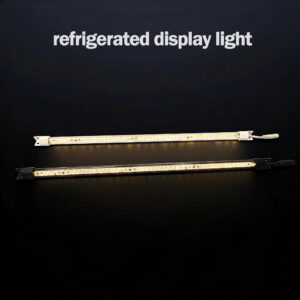
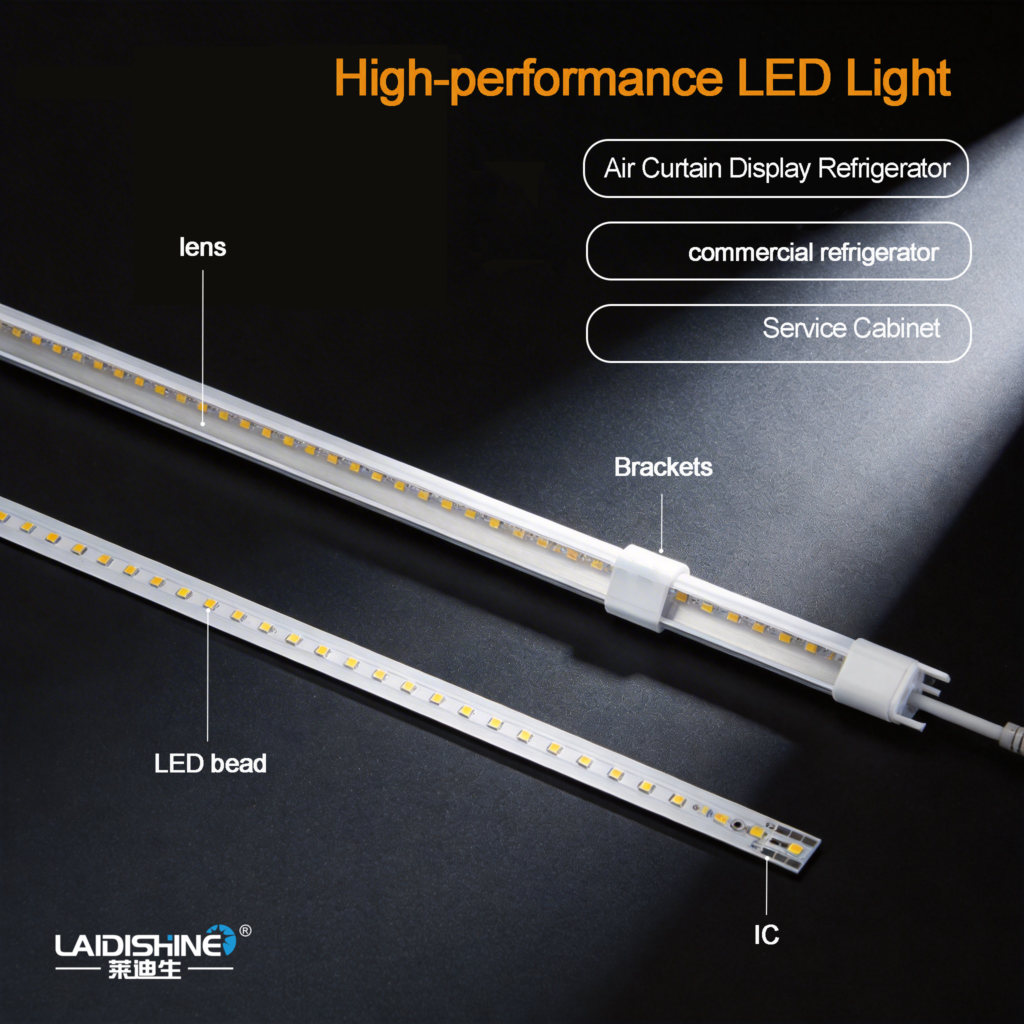
A professional freezer lighting supplier doesn’t just sell a lamp — they deliver a complete lighting solution, including light strips, wiring harnesses, driver power supplies, mounting accessories, and thermal management structures. Whether you’re dealing with upright display cases, horizontal freezers, or custom-shaped and ultra-low-temperature units, they should be able to provide a reliable, matching solution for each.
Specifically, this solution should include:
- Wiring harnesses: Available in various lengths, connector types (e.g., SM, XT, AMP), and cold-resistant, flexible-bend cables — adaptable to different freezer wiring routes.
- Driver power supplies: Supporting constant current/constant voltage, isolated / non-isolated, external/internal configurations — meeting low-temperature start-up and safety certification requirements.
- Mounting options: Offering clips, magnetic mounts, adhesive pads, recessed fixtures, and other structures — suitable for glass doors, metal frames, shelves, and other positions.
- Auxiliary accessories: Such as waterproof end caps, end covers, connectors, and mounting brackets — designed for easy installation.
No matter what type of freezer you encounter, they should be able to deliver a mature, mass-producible lighting solution.
Here is a case study!
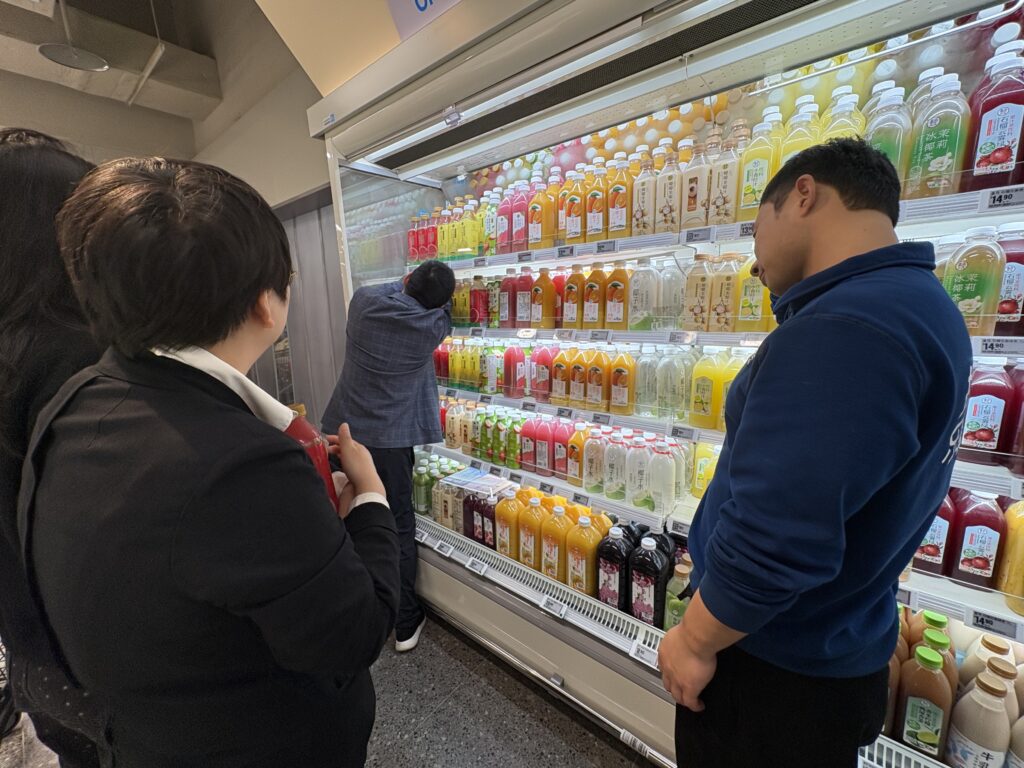
Laidishine once installed shelf lighting for a Freshippo. The original open-front cooler used T8 tubes. When replacing them with Laidishine’s SLK series shelf lights, an issue was identified: due to the bent structure of the cooler shelves, the light could not effectively reach the outermost edge of the shelf, leaving products on the outer side insufficiently illuminated.
The Laidishine team responded quickly and developed a solution specifically addressing this structural issue, ensuring full lighting coverage with no dead zones. In addition, we provided wire clips at no extra charge, effectively preventing exposed wiring and improving the overall aesthetic inside the cabinet.
2. Is the lighting solution truly suited for low-temperature, high-humidity environments?
Standard LED fixtures suffer from delayed start-up, accelerated light decay, and even driver failure below -20°C. A professional freezer lighting supplier should be able to provide full-range temperature test reports, ensuring the light strips operate stably across -30°C to +30°C.
Key verification points:
- Provide light decay data from continuous operation at -25°C (recommended < 5%)
- Whether the LED board uses high-thermal-conductivity aluminum substrates to prevent short circuits caused by low-temperature condensation
- Waterproof rating: IP65 or above is recommended
3. Can the lighting system help reduce the overall unit’s energy consumption?
Energy efficiency labeling is one of the core selling points for freezers. Although the lighting system accounts for a small share of total power consumption (roughly 5–15%), poor lighting design increases the compressor’s thermal load, because heat generated by the light strips raises the internal cabinet temperature.
Requirements you can set for your lighting supplier:
Light strip power controlled at 8–12 W per meter (depending on brightness needs), with luminous efficacy ≥ 120 lm/W to minimize heat generation.
In addition, the fixtures should be equipped with optical lenses to concentrate effective light onto the product surface, eliminating wasted light.
4. Does the supplier have international certifications and batch-to-batch consistency?
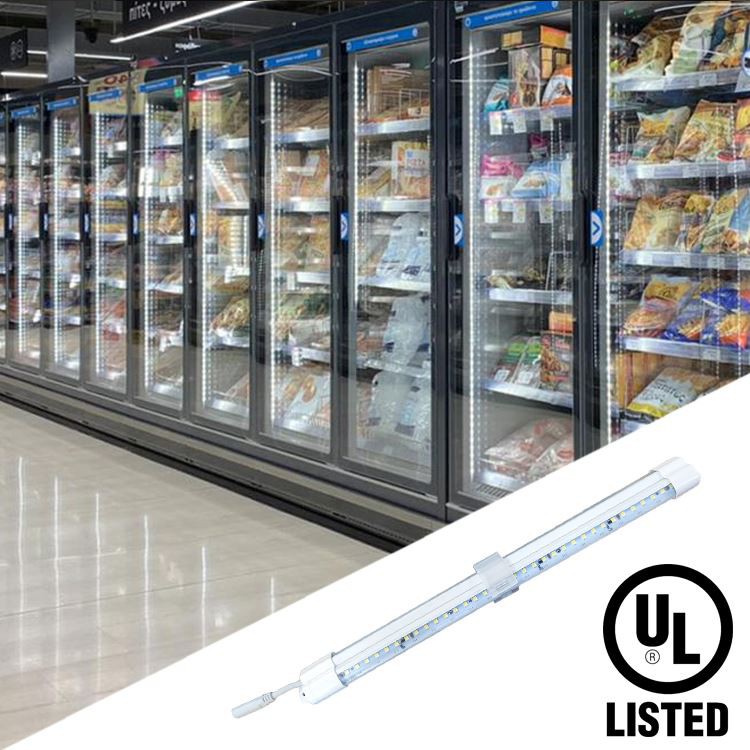
When exporting freezers to European and American markets, lighting components must pass relevant safety certifications. If your lighting supplier cannot provide UL, CE, CB, RoHS, REACH, or other certificates, the entire unit’s certification will be blocked.
- Documents to request from the supplier:
- UL 60950-1 or IEC 60335-1 test reports for the complete lamp and driver power supply (specifically for freezer applications)
- ISO 9001 quality management system certificate
- Aging test records for every batch (minimum 24 hours at room temperature + 12 hours at low temperature)
- UL Yellow Cards and flammability ratings (V0 or above) for wire materials, adhesives, and lens materials
5. Does the supplier support flexible OEM/ODM and after-sales guarantees?
Freezer manufacturers often need custom lengths, connectors (e.g., SM/XT/AMP), color temperatures, and even specific LED chip brands. The supplier’s cooperation level and response speed directly affect your product development cycle.
Recommended cooperation model:
- Request samples from the supplier (both standard length and custom length)
- Sign a quality assurance agreement: warranty period ≥ 3 years, failure rate ≤ 0.5%
- Confirm whether the supplier has ERP management to trace production dates and material batches for every lot
- Provide installation drawings and photometric files so your engineers can integrate directly
For freezer manufacturers, LED lighting should not be treated as a standard accessory to be overlooked. Choosing a professional and reliable freezer lighting supplier can help you reduce after-sales costs, enhance brand value, and improve end-product display performance.
Laidishine specializes in lighting solutions for commercial freezers, offering UL/CE-certified low-temperature LED light strips with OEM/ODM customization support. Welcome to request samples and the technical specification manual.