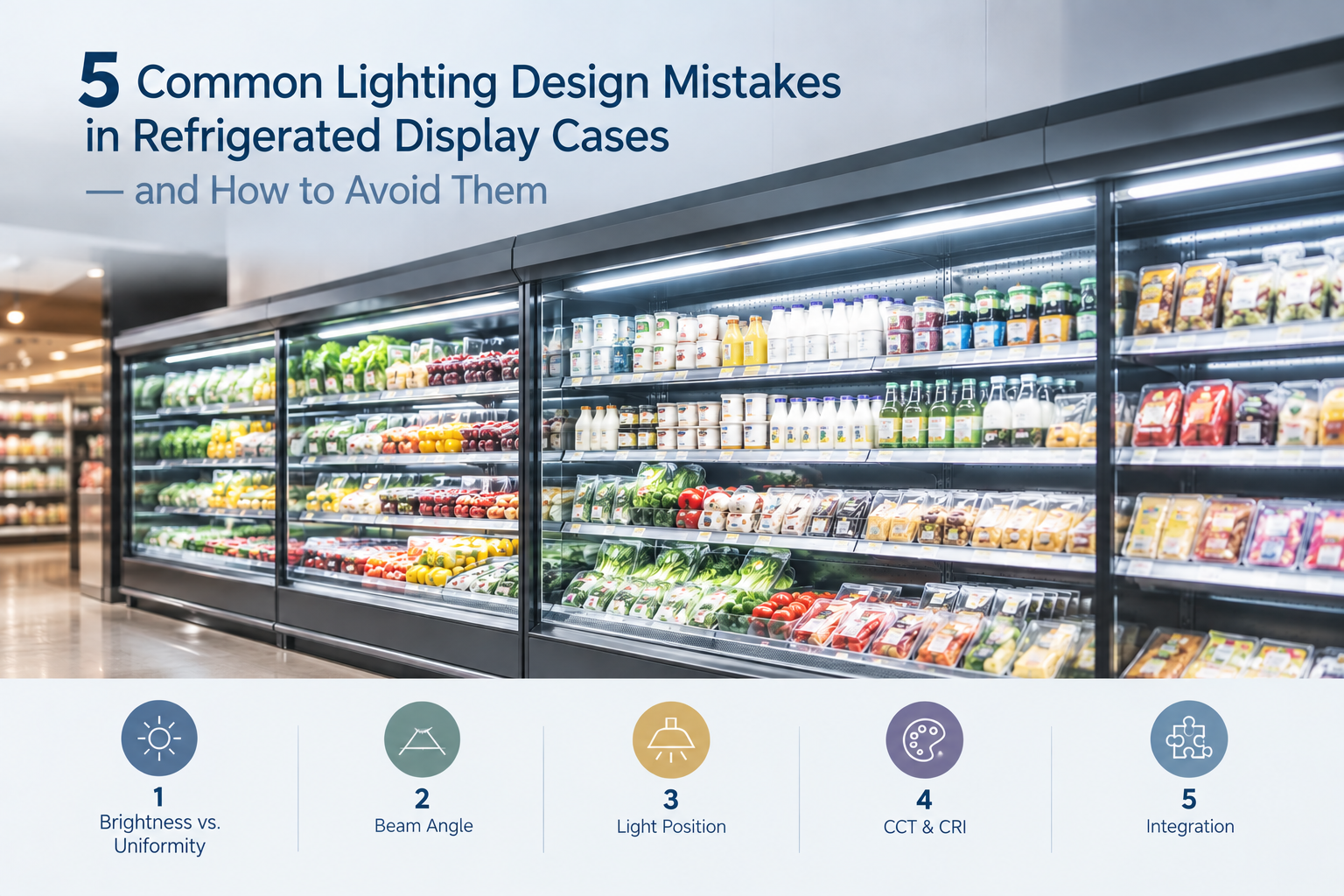
Good lighting does more than simply make a refrigerated display case brighter. It affects how customers see the products, how easily they can find what they want, and how attractive the entire cabinet looks.
Yet in practice, lighting is sometimes treated as a simple matter of choosing an LED light with enough lumens and installing it inside the cabinet. That approach can create problems later — uneven illumination, dark areas, шинчаончалтыш, poor product presentation, or difficult installation.
After working with refrigerated showcase manufacturers and different types of commercial refrigeration applications, we have seen several lighting design issues come up repeatedly.
Here are five common mistakes and what to consider instead.
1. Focusing on Brightness Instead of Uniformity
When selecting an LED light, lumen output is one of the first specifications people look at. It is easy to assume that more lumens mean a brighter and better display.
But a refrigerated display case is not simply a space that needs to be filled with as much light as possible.
A high-output light can create a bright area directly below or beside the LED while leaving the lower shelves or deeper parts of the cabinet comparatively dark. The result may actually be less attractive, even though the light has a high lumen rating.
What matters is how evenly the light is distributed across the display area.
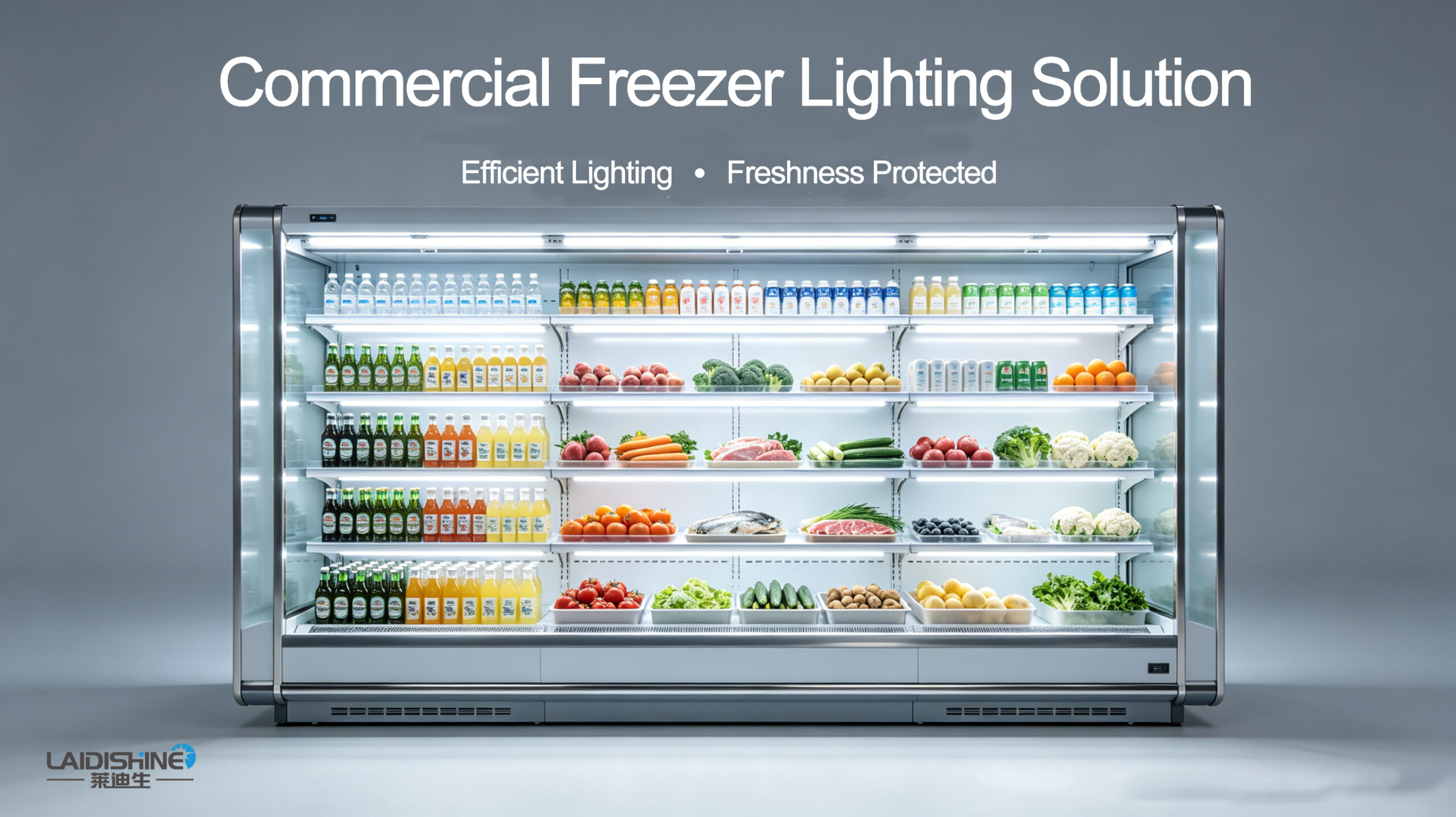
A well-designed lighting solution should provide consistent illumination from top to bottom and from front to back, depending on the cabinet structure. This helps products look more consistent and makes the display easier to view.
What to consider instead:
- Illuminance across the actual display area
- Light distribution and uniformity
- Cabinet depth and shelf arrangement
- Distance between the light source and products
- Potential hot spots and dark areas
Вес семынже, don’t ask only, “How bright is the LED?”
Also ask, “Where does that light actually go?”
2. Using the Same Beam Angle for Different Cabinet Structures
Not every refrigerated display case is built the same way.
A narrow upright cabinet, a wide island cabinet, a glass-door freezer and a multi-deck fresh-food case can have very different depths, shelf layouts and viewing angles.
Using the same optical design for all of them may result in wasted light or uneven illumination.
Мут, a beam that works well for a relatively narrow cabinet may not distribute light effectively across a deeper cabinet. In another application, a wide beam may spread too much light outside the main display area.
This is why optical design should be considered together with the cabinet structure.
The right solution may involve a different beam angle, lens, or light distribution depending on the application.
When selecting an optical solution, consider:
- Cabinet depth
- Shelf spacing
- Mounting position
- Product location
- Customer viewing angle
- Glass and other reflective surfaces
There is no single optical design that is ideal for every refrigerated showcase.
The goal is not simply to produce more light, but to put the light where it is needed.
3. Installing the Light in the Wrong Position
Even a well-designed LED light can perform poorly when it is installed in the wrong place.
The position of the light affects shadows, шинчаончалтыш, product visibility and overall uniformity. A small change in mounting position can sometimes make a noticeable difference to the final result.
Different applications may require different approaches:
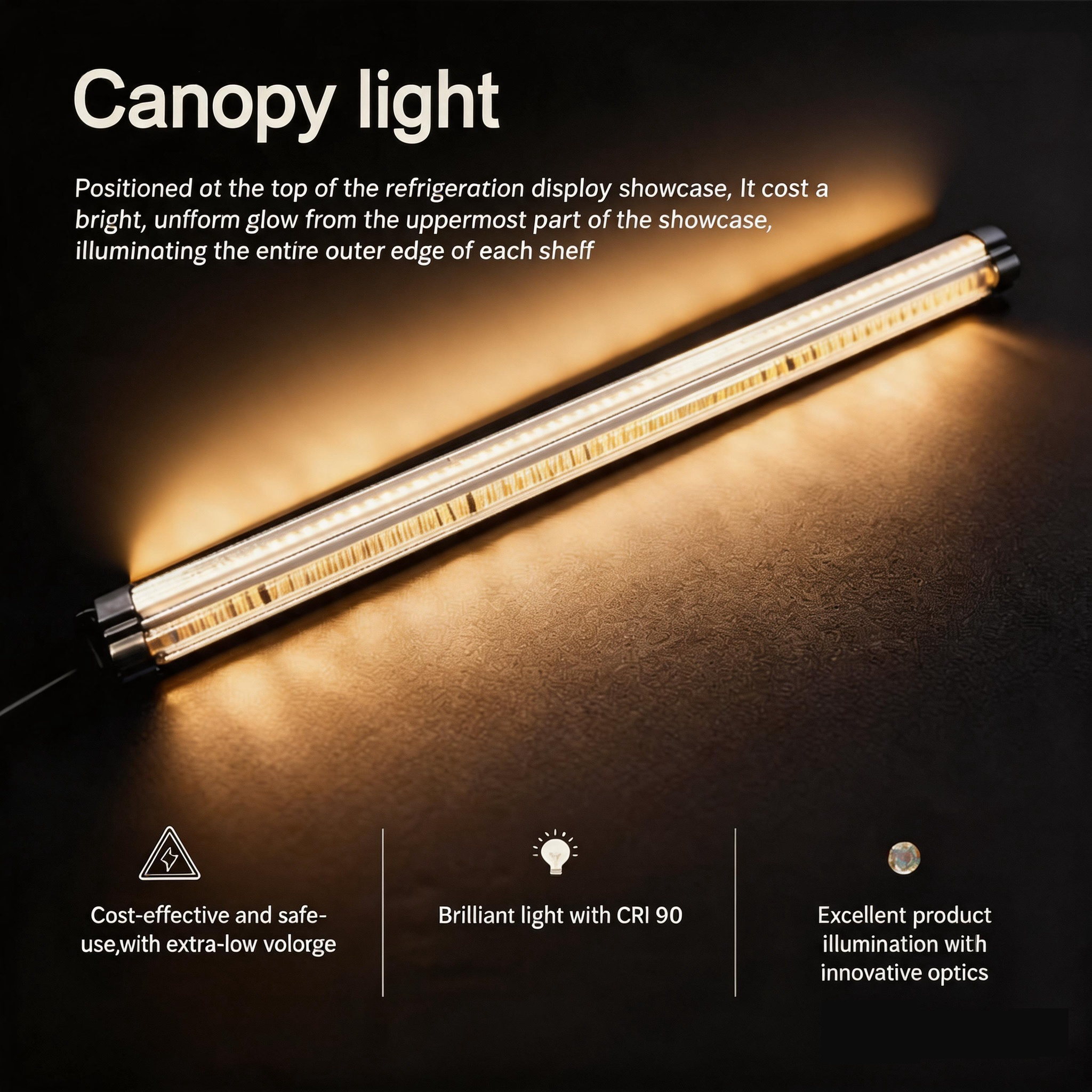
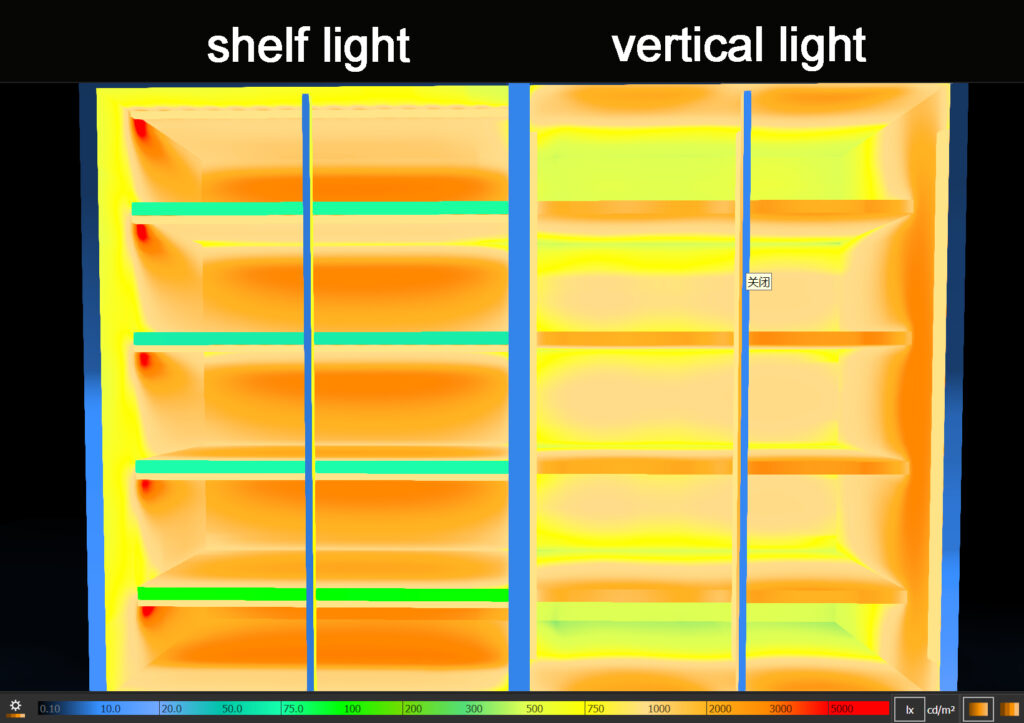
- Top or canopy lighting can provide general illumination from above.
- Shelf lighting can bring the light closer to the products and improve illumination on individual shelves.
- Vertical lighting can illuminate the front of products from top to bottom and is particularly useful for glass-door and upright applications.
- Door-frame or side lighting can provide another option when cabinet structure or installation space is limited.
The important point is that the lighting position should be part of the cabinet design — not something decided only after the cabinet has already been designed.
Before selecting the light, consider where the light needs to come from and what you want the customer to see.
-Showcase-1024x683.jpg)
4. Selecting CCT and CRI Without Considering the Products
There is no universal “best” color temperature for every refrigerated display.
Шыл, шӧр продукт, напитке-влак, frozen food and fresh produce can have very different visual requirements. The same light can make one product category look attractive while making another look less appealing.
Тиде амал дене, CCT and color characteristics should be selected according to the application rather than simply using the same specification across every cabinet.
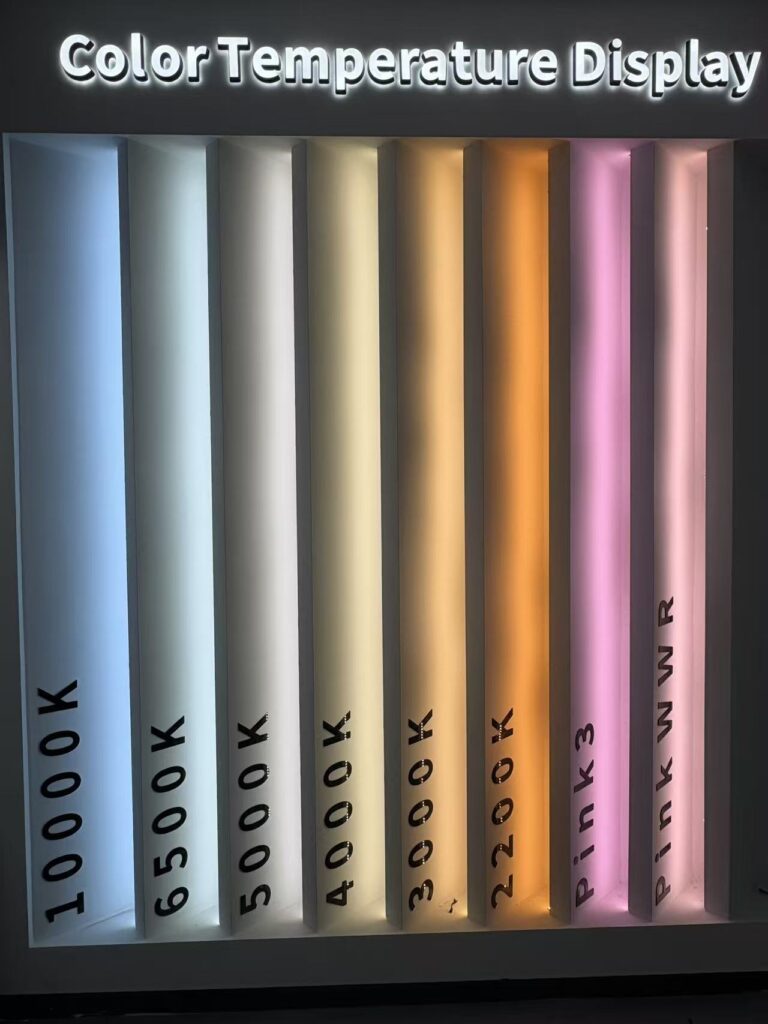
Common CCT options for commercial refrigeration include 3000К, 4000К, 5700К да 6500К, while specialized solutions such as meat-pink lighting can be used for particular food applications.
CRI is also an important consideration, but it should be viewed together with the complete lighting objective. A high CRI number alone does not guarantee that the products will look right if the optical distribution, CCT or installation position is unsuitable.
A better approach is to consider:
- What products will be displayed?
- How should the products look under the lighting?
- What CCT is appropriate for the application?
- Is the color rendering consistent from one fixture to another?
- Does the lighting remain visually comfortable for customers?
The best lighting specification is therefore not necessarily the one with the highest number on a datasheet. It is the one that works well in the actual application.
5. Designing the LED Light Separately From the Cabinet
This is one of the issues that is easiest to overlook during the early design stage.
An LED light may perform perfectly in a laboratory test but still create problems when it is integrated into an actual refrigerated showcase.
Неге?
Because the light is only one part of the system.
The final solution may also involve:
- Mounting method
- Rail compatibility
- End-cap design
- Wiring and connectors
- Installation space
- Кочкышым пуышо
- Maintenance access
- Appearance
- Шкафын структурыжо
Мут, a light may have the right dimensions but not match the available mounting positions. Or the electrical connection may work, but the cable routing may make installation unnecessarily complicated.
These details are much easier to solve when the lighting supplier and showcase manufacturer discuss them early in the design process.
Instead of asking only, “Which LED light should we use?”, it can be more useful to ask:
“How should the lighting system be integrated into this cabinet?”
That change in thinking can save time during development and reduce problems during production and installation.
Better Lighting Starts With Better Design
Коммерческий холодильникыште, effective lighting is not simply about producing more light.
It is about delivering the right amount of light, to the right place, with the right optical distribution, color characteristics and installation method.
By considering uniformity, cabinet structure, mounting position, product type and mechanical integration from the beginning, manufacturers can create refrigerated displays that are easier to build, easier to maintain and more attractive to customers.
Лайдиши гыч, we believe refrigerated display lighting should be considered as part of the complete cabinet solution rather than as an independent component. Working closely with showcase manufacturers allows the optical, mechanical and electrical requirements to be considered together — from the initial design through to the final application.
Because in the end, good refrigerated display lighting is not about making the LED brighter.
It is about making the display work better.

Мучашмут
A successful refrigerated display lighting solution starts long before the LED is installed.
Avoiding these five common mistakes can help manufacturers achieve better illumination, better product presentation and smoother integration:
- Don’t focus on brightness alone — consider uniformity.
- Don’t use the same optical design for every cabinet.
- Don’t treat mounting position as an afterthought.
- Don’t choose CCT and CRI without considering the products.
- Don’t design the LED separately from the cabinet.
The right lighting solution is one that works with the cabinet, the products and the people who use it.