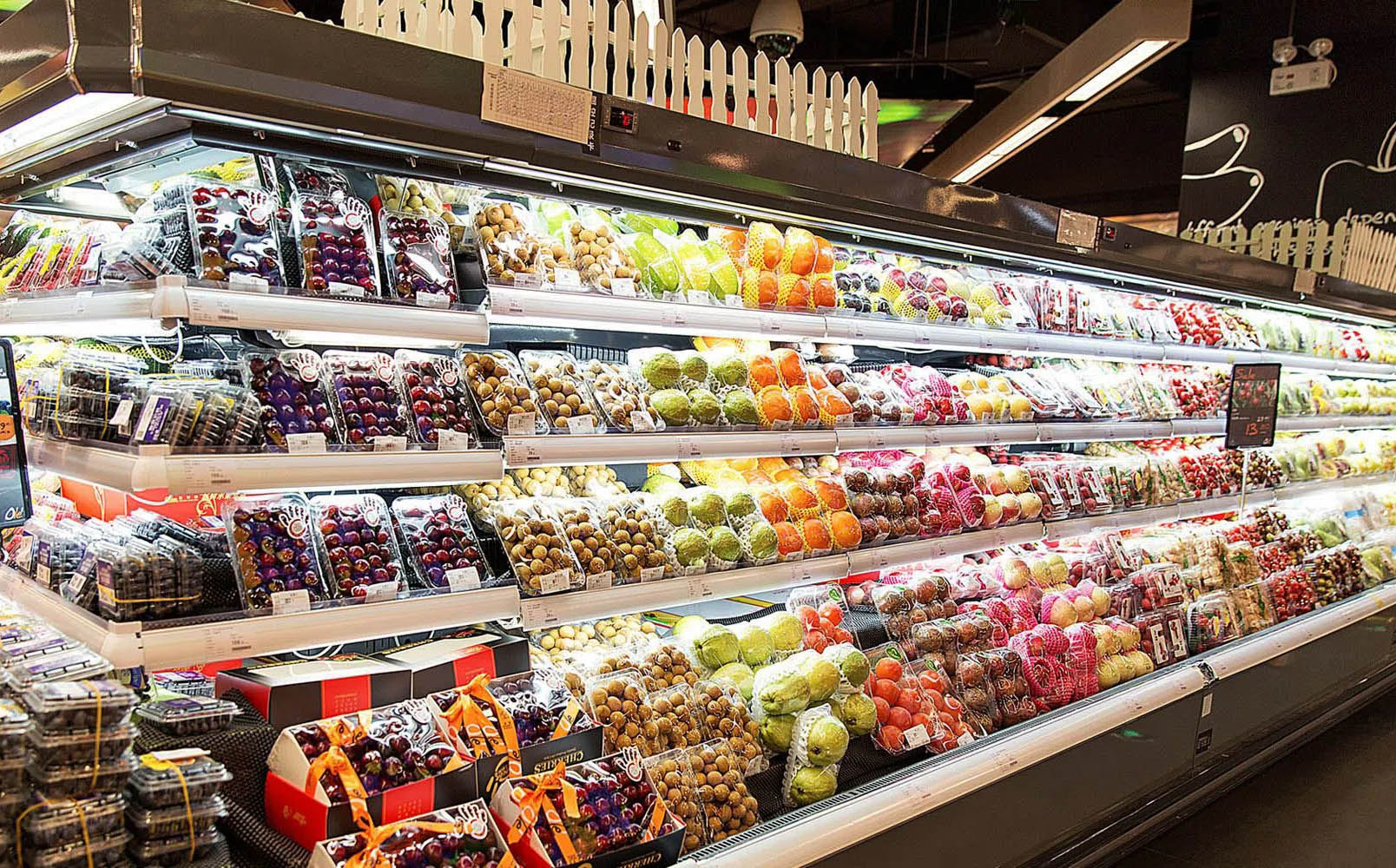
Against the backdrop of shifting global dynamics in 2026, raw material costs keep rising, and supply chain stability remains under pressure.
A deeper shift is quietly unfolding in the commercial refrigeration lighting industry. Clients are changing how they buy lighting: they no longer simply purchase a product — they buy certainty.
Product specifications are just the basic entry requirement. What matters more to buyers is whether projects can be delivered on schedule, whether quality stays consistent batch after batch, whether lead times are reliable, and whether after-sales support is dependable.
Refrigeration light suppliers need to shift their mindset too. Instead of asking “what can we manufacture?”, we need to focus on “what does the client’s project actually need?”
With 15 years of experience specialized in commercial refrigeration lighting, Laidishine has built up rich hands-on experience in retrofitting refrigeration lights for supermarket chains and fresh food retail stores. Drawing on real project insights, we’d like to share key trends we’re seeing in this space. Feel free to reach out for exchanges, and let’s push for healthier development across the industry.
1. Rising demand for customized lighting solutions
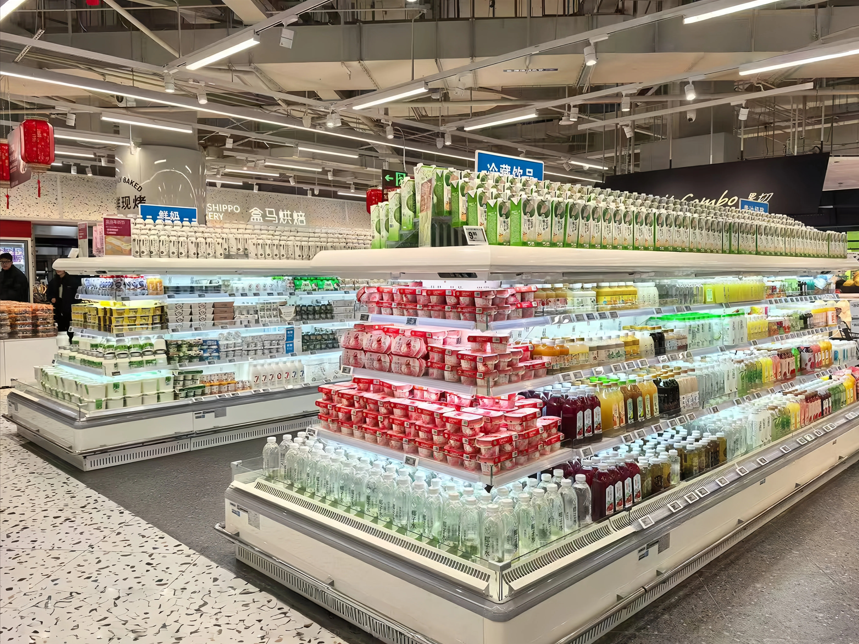
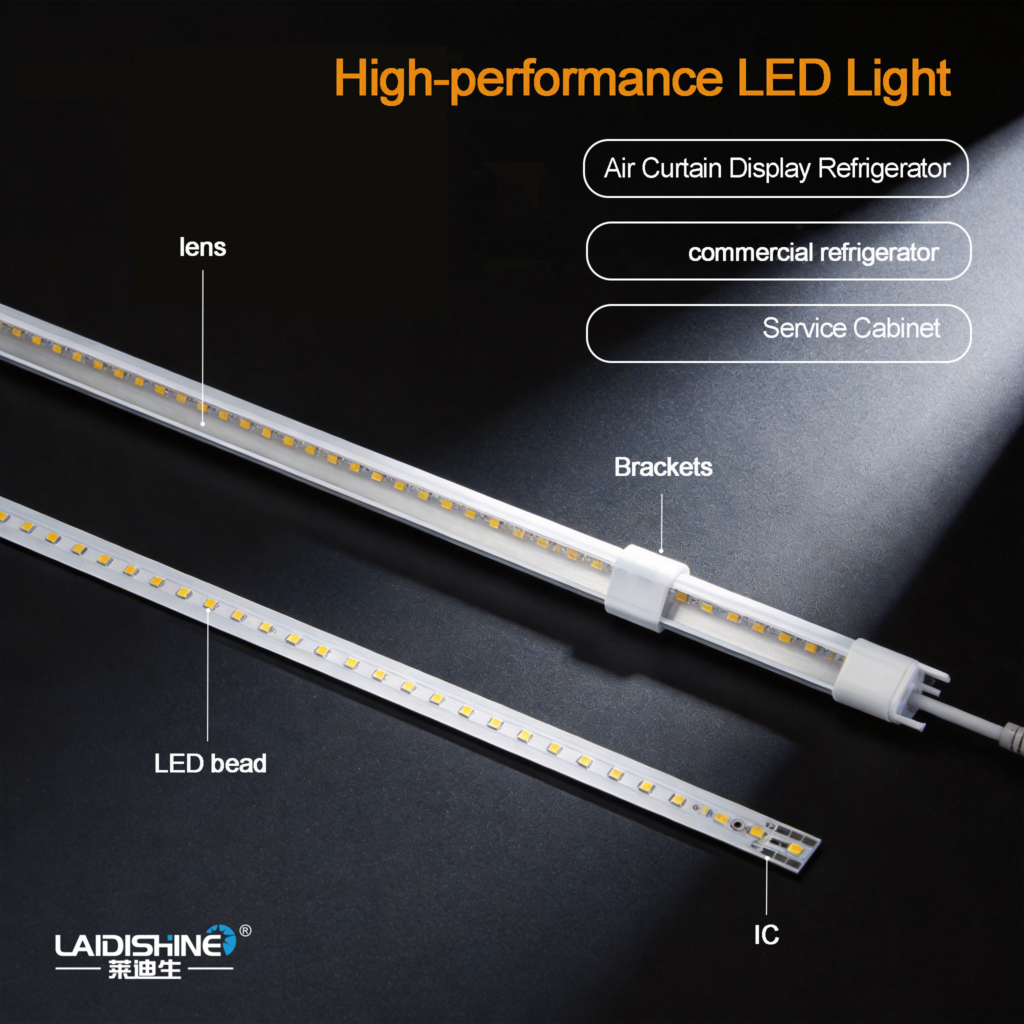
Since 2025, we’ve seen a growing number of refrigeration light retrofit projects from major domestic supermarket chains, including Freshippo and Walmart. One trend stands out clearly: traditional T8 tubes are gradually being replaced by low-voltage LED refrigeration lights.
Supermarket lighting retrofits are no longer a simple swap with bulk standard tubes. Different product categories, cabinet structures, and brand visual guidelines call for tailored brightness, color temperature, and beam angles. Off-the-shelf lights can hardly meet the visual merchandising goals of individual stores.
2. Competition is moving from price to value
In 2026, core raw materials such as LED chips and aluminum profiles keep getting more expensive. Meanwhile, retail operators are struggling with tight margins and keep pushing for lower prices.
Many suppliers get caught in a race to the bottom. On the surface, buyers get lower prices and suppliers secure orders. But this usually means downgraded materials, inconsistent quality, and higher failure rates — and the supermarket retailers end up bearing the consequences.
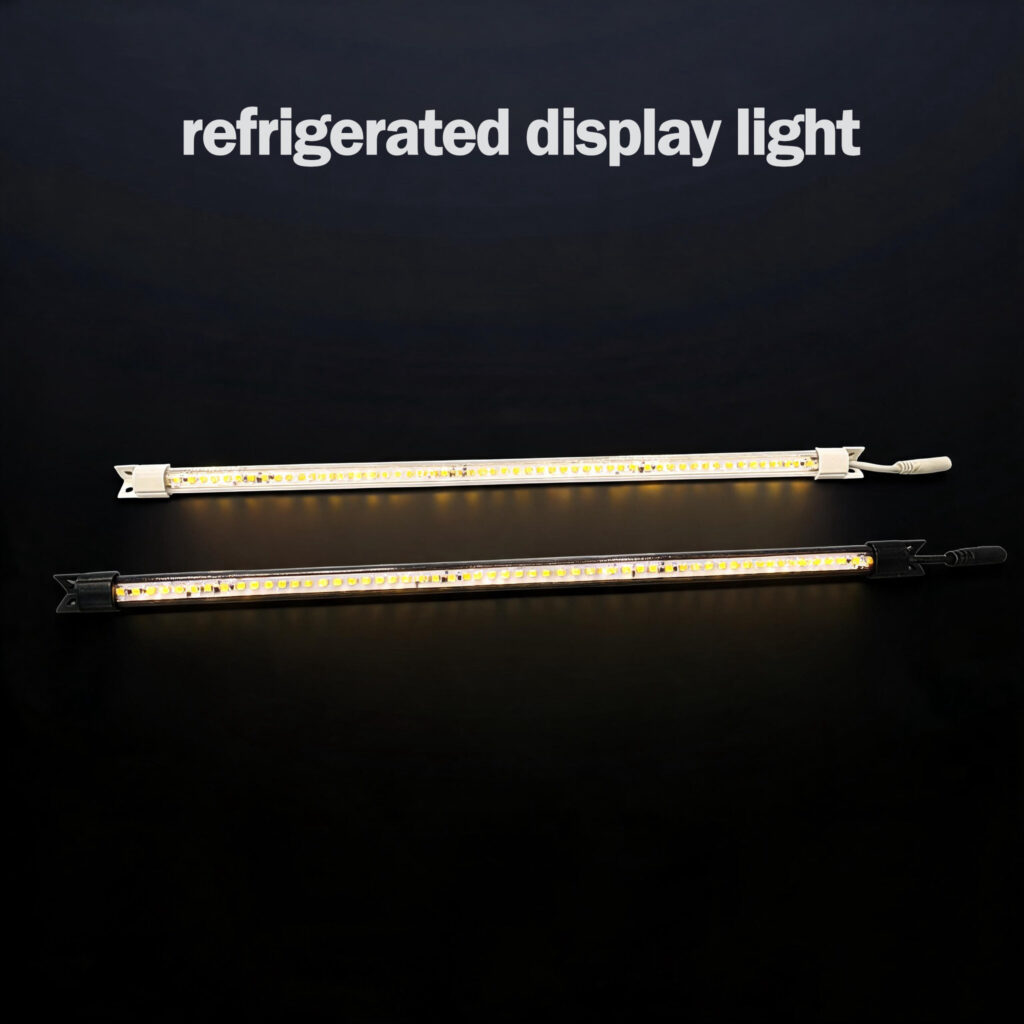
At Laidishine, our philosophy is simple: we do not sell a single refrigeration light or light strip. We deliver a complete lighting solution tailored to each project.
This includes cabinet-compatible power supply designs, user-friendly mounting structures, food-specific optical tuning, consistent production QC, predictable lead times, and full-cycle technical support. The light itself is only part of the package. What clients truly want is a smooth retrofit rollout, uniform lighting across all their locations, and hassle-free long-term maintenance.
We don’t compete on price. We compete on value.

3. Agile R&D and iteration are non-negotiable
The ability to iterate products quickly has become a critical benchmark for qualified refrigeration light suppliers. Client requirements keep evolving: lower power consumption for energy savings, custom beam angles, improved mounting options, compatibility with new cabinet models, and the list goes on.
R&D cannot happen in a vacuum. New products need to solve real on-site problems.
Fresh food display has surprisingly high standards for lighting. Take meat display lights, for example. Most options on the market only offer a single pink tone, which fails to match different brand styles. Some retailers want meat to look bright and reddish; others prefer a more natural, authentic look; many run mixed displays with raw meat and ready-to-eat food.
To serve these different visual strategies, Laidisheng developed three meat light variants with distinct spectra. They are optimized for pork, beef & lamb, and deli food, respectively, to bring out the natural appeal of ingredients and help stores boost fresh food sales.

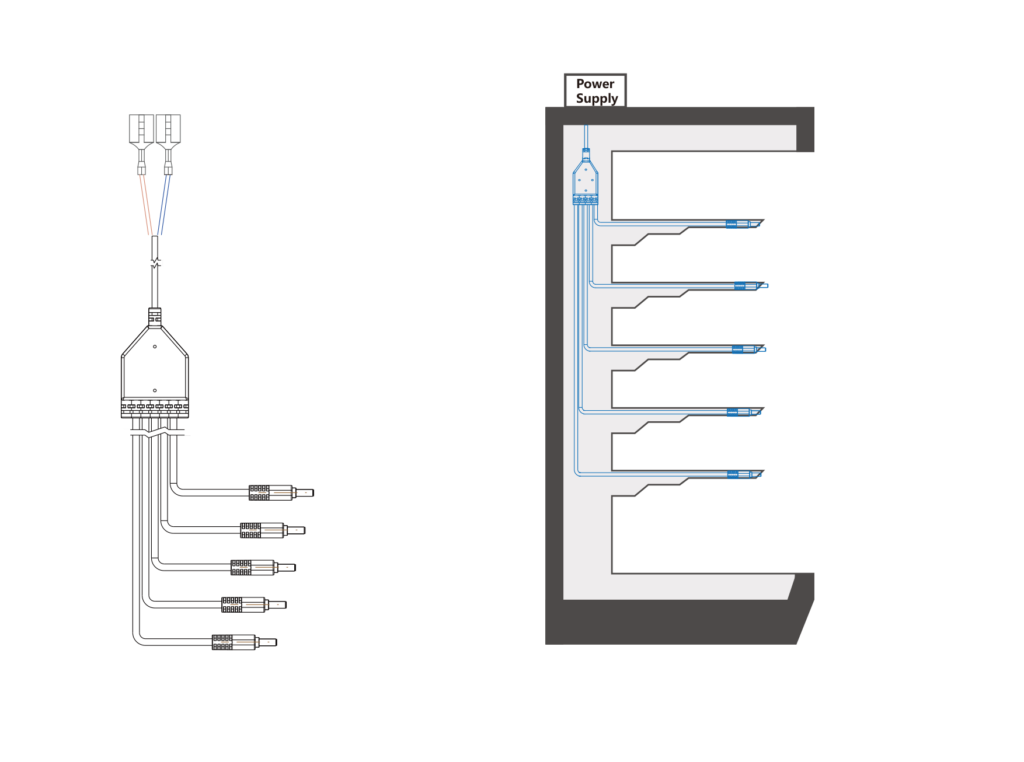
A recent overseas project is a great example. The client wanted the familiar form factor of a T8 tube, but rejected the wide, scattered oval beam common on the market. They also needed lower power, balancing energy efficiency and targeted lighting.
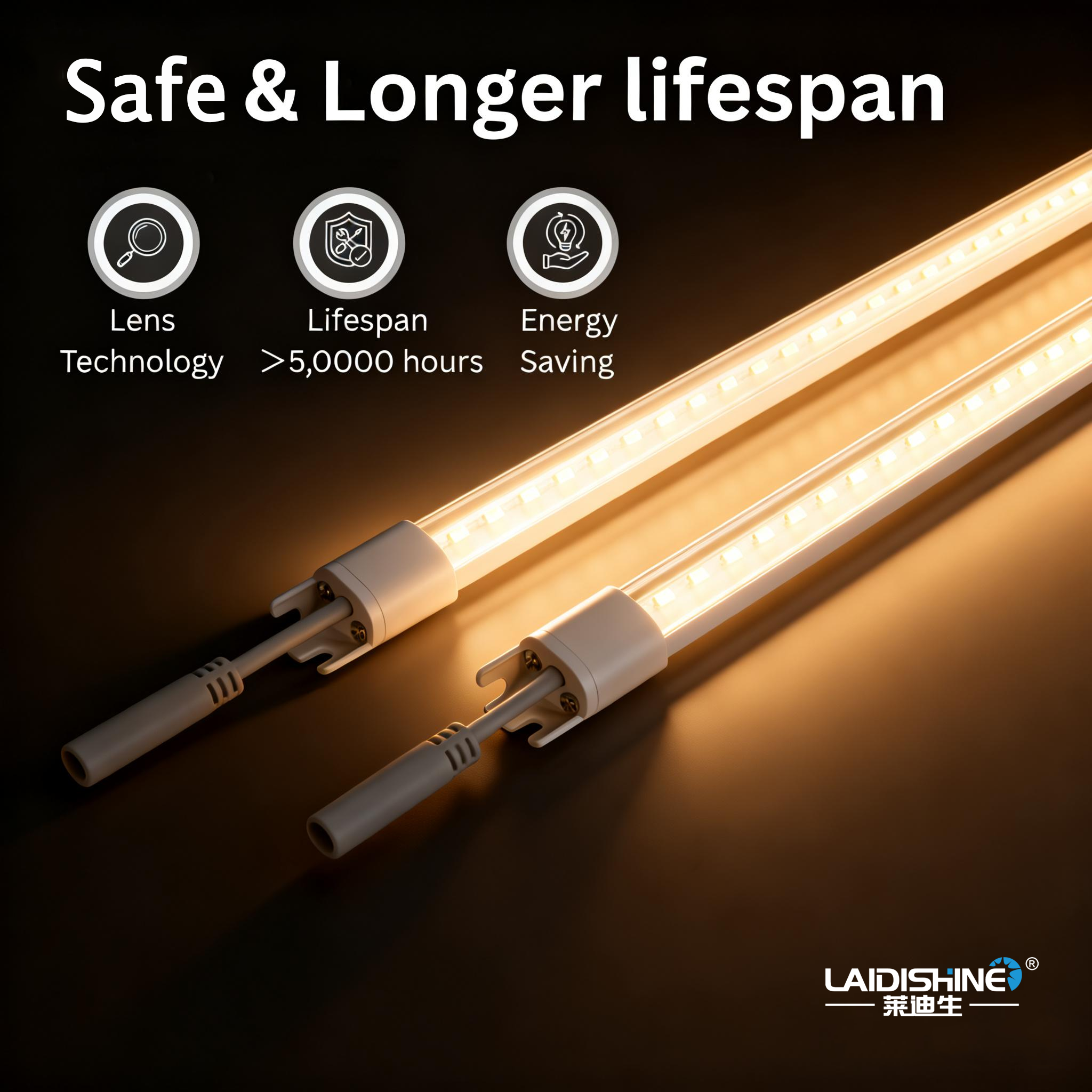
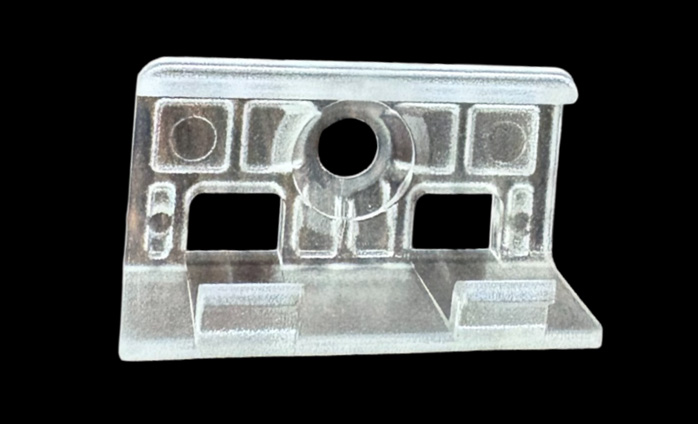
We customized the beam angle of this T8-style refrigeration light to 82 degrees. The light is directed onto the display area, cutting wasted spill light and reducing extra heat load inside the cabinet. We also redesigned the end wiring structure to save space inside refrigerated cabinets and improve installation flexibility.
Get in touch with us if you are interested in this refrigeration light.