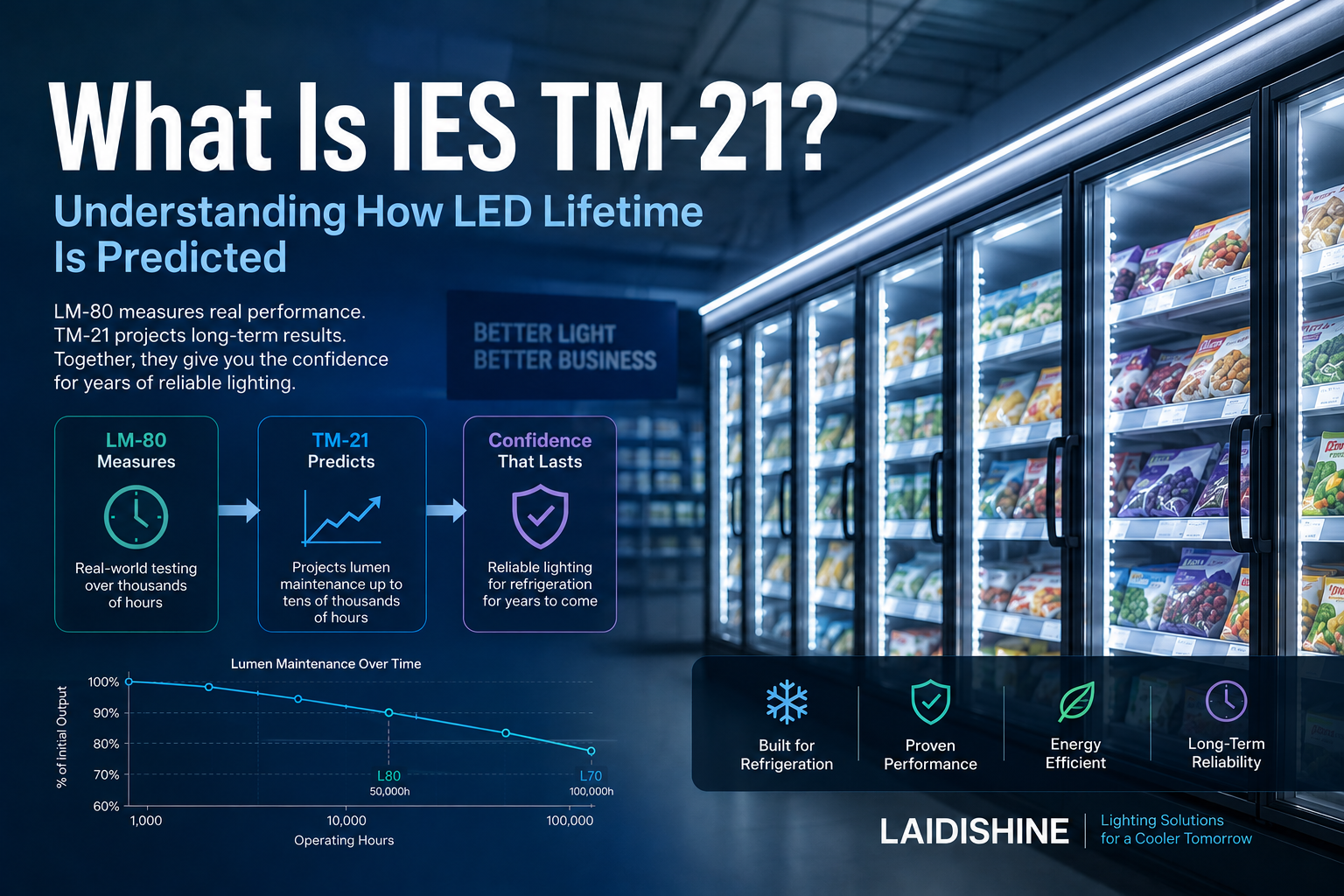

Muitas pessoas têm uma ideia errada sobre iluminação para câmaras frigoríficas, assumindo que as luminárias só precisam ser adequadas para ambientes de baixa temperatura. Na realidade, as condições de operação em câmaras frigoríficas são muito mais complexas do que as configurações normais. O equipamento está cronicamente exposto ao acúmulo de água condensada, formação de gelo por diferença de temperatura, lavagem de chão, poeira de mercadorias, e operações frequentes de higienização - todas as quais tornam a proteção de entrada (PI) classificação como um fator crítico para um desempenho confiável.
Na engenharia de iluminação para câmaras frigoríficas, IP65 e IP69K são duas classificações convencionais de alta proteção. Na maioria dos projetos hoje, a questão da seleção não é a qualidade da marca da luminária, mas sim uma incompatibilidade na classificação de proteção: atualizar desnecessariamente para IP69K para armazenamento refrigerado de uso geral leva a orçamentos desperdiçados e excesso de engenharia; por outro lado, usar IP65 no processamento de câmaras frigoríficas que exigem lavagem de alta pressão e higienização de alto padrão geralmente resulta em falhas posteriores, como entrada de água, acúmulo de gelo, corrosão da carcaça, curtos-circuitos, e queima de lâmpadas – aumentando os custos de manutenção e riscos de tempo de inatividade.
O principal critério de seleção é este: se a luminária precisa suportar altas temperaturas prolongadas, a limpeza com jato de água de alta pressão é a linha decisiva entre IP65 e IP69K para iluminação de câmaras frigoríficas - e isso não tem correlação direta com a temperatura de refrigeração do armazenamento.
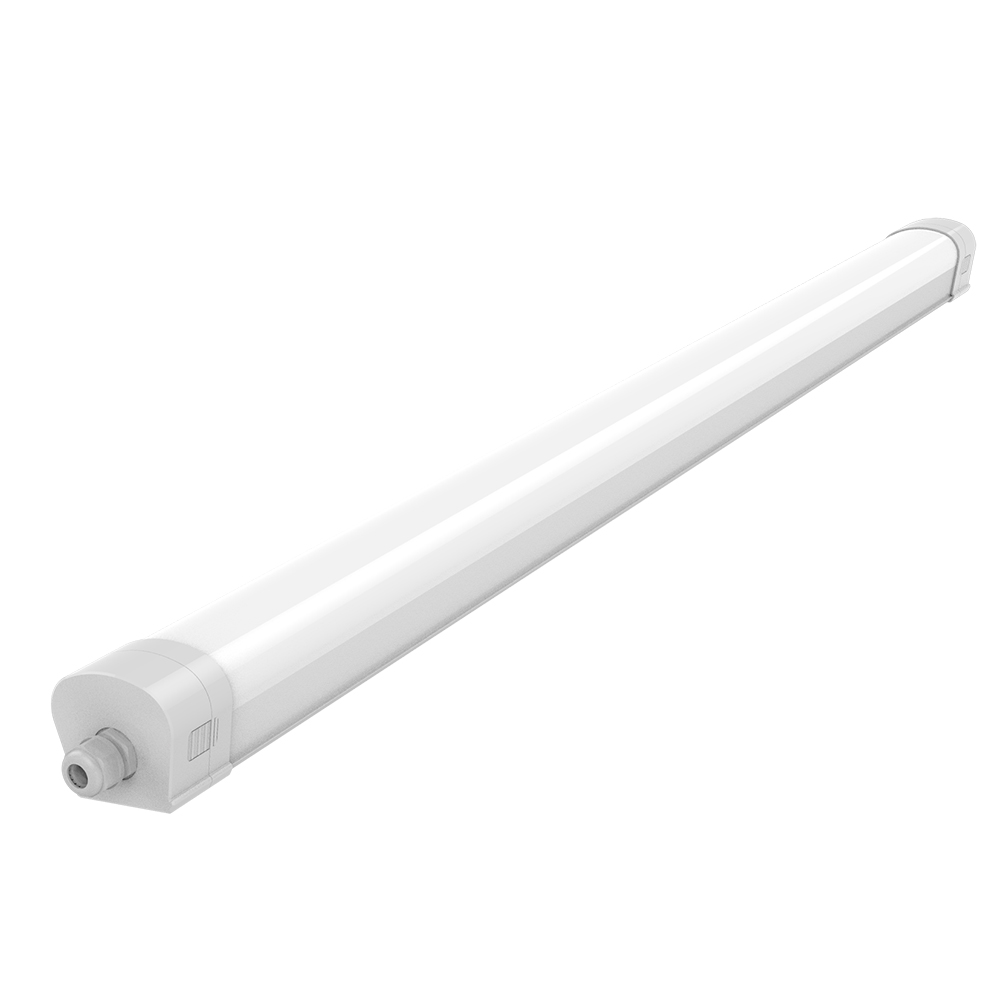
1. Compreendendo as classificações de proteção IP
O PI (Proteção de entrada) A classificação é um padrão reconhecido internacionalmente para resistência à poeira e à água. Consiste em dois dígitos: o primeiro indica proteção contra poeira, e o segundo indica proteção contra água. A diferença de desempenho em luminárias de armazenamento refrigerado reside principalmente no segundo dígito – a classificação de proteção contra água.
Primeiro dígito (proteção contra poeira):
Uma classificação de 6 é o nível mais alto para proteção contra poeira, significando total estanqueidade ao pó. Ambas as luminárias IP65 e IP69K atendem a esse padrão de nível 6, tornando-os totalmente adequados para ambientes severos de armazenamento refrigerado com acúmulo de poeira, geada e detritos de gelo, e contaminantes de mercadorias. Hásem diferença no desempenho de proteção contra poeira entre os dois.
Segundo dígito (proteção da água):
Esta é a principal distinção entre as duas classificações e determina diretamente se a luminária pode acomodar diferentes regimes de limpeza e higienização em armazenamento refrigerado..
- IP65: Suporta respingos comuns com cobertura total, acumulação de condensado, e spray de água de baixa pressão. Suitable for routine basic cleaning and natural defrosting scenarios in cold storage.
- IP69K: An industrial‑grade high‑end water protection rating specifically designed for high‑temperature, high‑pressure, close‑range, and powerful water jet cleaning. It is the dedicated lighting rating for frequent sanitization and water‑based washing operations in food and pharmaceutical clean cold storage.
Additional note:
Na indústria, IP69 and IP69K are often used interchangeably. Although their standard systems differ slightly, they can be treated as equivalent for cold‑storage applications. When procuring and accepting products, there is no need to get hung up on the naming—be sure to request official test reports from the supplier that correspond to the applicable standard, e também confirme as condições completas de compatibilidade de instalação.
2. Principais diferenças entre luminárias de armazenamento frio IP65 e IP69K: Uma comparação
Considerando toda a gama de cenários de armazenamento refrigerado, incluindo armazenamento, processamento, higienização, classificação, e mais - as principais diferenças entre os dois estão concentradas em três dimensões: tolerância à lavagem com água, áreas aplicáveis, ecusto de aquisição. As comparações específicas são as seguintes:
| Itens de comparação | Luminárias para armazenamento refrigerado IP65 | Luminárias para armazenamento refrigerado P69K |
| Proteção contra poeira | Nível 6 (totalmente à prova de poeira) | Nível 6 (totalmente à prova de poeira) |
| Proteção da água | Resiste à condensação normal, espirrando, e spray de água de baixa pressão | Resiste à água em alta temperatura em torno de 80°C e alta pressão (8–10MPa) poderosos jatos de água de perto |
| Métodos de limpeza adequados | Limpeza manual, aspersão de água de baixa pressão para limpeza, descongelamento natural | Limpeza frequente com jato de água de alta pressão, higienização com água quente, lavagem abrangente em águas profundas |
| Custo de aquisição | Custo-benefício, adequado para zonas de armazenamento de grandes áreas | Custo mais alto, desempenho de proteção mais forte |
| Principais áreas de armazenamento refrigerado aplicáveis | Áreas de armazenamento refrigeradas/congeladas, áreas de rack alto, corredores gerais (sem lavagem de alta pressão) | Áreas de processamento de alimentos, áreas de classificação e embalagem, zonas de sanitização, áreas de trabalho com lavagem direta de piso, áreas limpas da cadeia de frio farmacêutica |
2.1. IP65: A melhor escolha econômica para áreas de armazenamento refrigerado
Em instalações padrão de armazenamento refrigerado e congelado, as funções principais são armazenamento de mercadorias, empilhadeira e acesso de pessoal. Não há limpeza diária com jato de água de alta pressão; o ambiente envolve apenas condensado, geada com diferença de temperatura, poeira de mercadorias, e limpeza básica periódica. Para essas áreas de armazenamento principais, As luminárias IP65 atendem totalmente aos requisitos de longo prazo, operação estável.
As luminárias IP65 resistem eficazmente à humidade persistente, condensação, salpicos ocasionais, e poluição por poeira comum em câmaras frigoríficas. Eles são adequados para baixas temperaturas, condições de temperatura constante, oferecendo desempenho estável com menores custos de aquisição e manutenção. Eles são ideais para instalação em lote em grandes áreas e representam a melhor opção com boa relação custo-benefício para zonas de armazenamento, sem qualquer problema de excesso de engenharia.
Lembrete chave: IP65 faznão têm a capacidade de resistir ao impacto direto de jatos de água de alta pressão. Se um jato de água de alta pressão for direcionado para a luminária de perto, a água pode penetrar através de pontos vulneráveis, como anéis de vedação, lacunas na fiação, e portas de entrada de cabos, levando a geada interna, entrada de umidade, curtos-circuitos, e eventual falha da luminária.
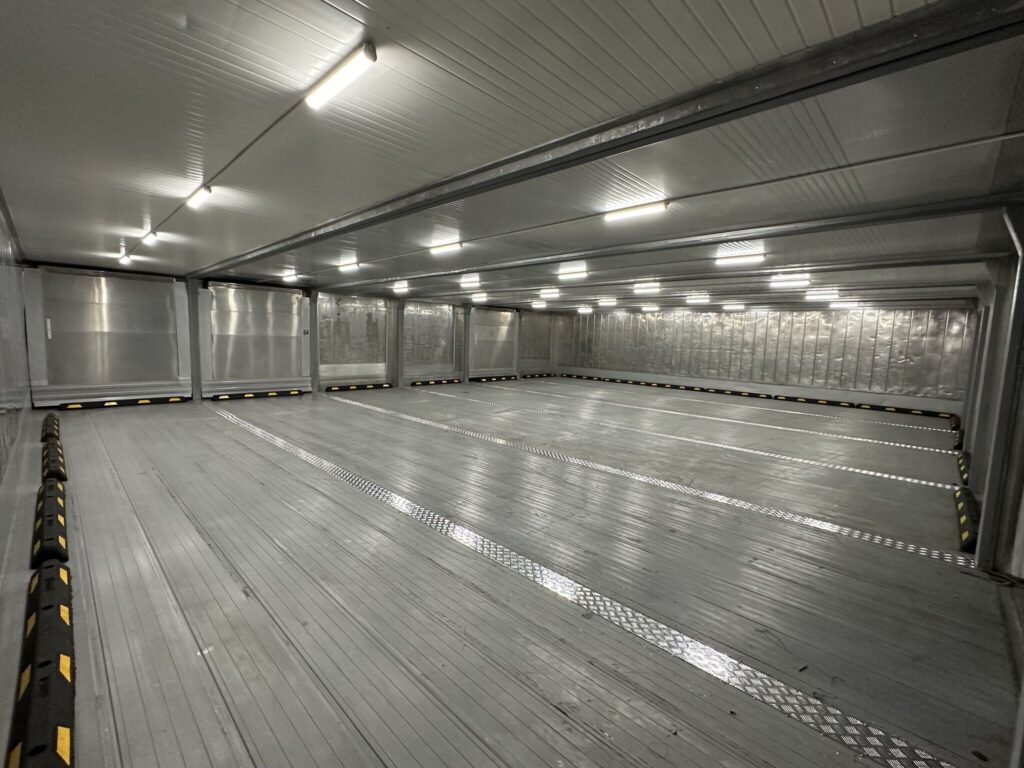
2.2. IP69K: A escolha especializada para condições exigentes de processamento de armazenamento refrigerado e higienização
IP69K não é apenas uma simples atualização na proteção contra água; é uma classificação de proteção de nível industrial projetada especificamente para condições adversas de alta temperatura, lavagem com água de alta pressão e higienização higiênica frequente em câmaras frigoríficas.
Em instalações da cadeia de frio alimentar – como corte de carne, processamento de frutos do mar, classificação de alimentos cozidos, armazenamento central da cozinha, bem como salas limpas da cadeia de frio farmacêutica – lavagem e higienização diária abrangente de pisos, equipamento, e as paredes são executadas com alta temperatura, jatos de água de alta pressão. Estas operações são frequentes e envolvem um impacto hídrico extremamente poderoso. Em tais cenários, As luminárias IP65 não suportam a exposição prolongada a jatos de água intensos e terão uma taxa de falhas muito elevada. Em contraste, As luminárias IP69K resistem de forma confiável a altas temperaturas, spray de água de alta pressão, garantindo a operação segura e contínua do sistema de iluminação durante todo o processo.
Equívoco comum: IP69K indica apenas que os níveis de proteção contra poeira e água foram atendidos; não oferece inerentemente resistência a baixas temperaturas ou resistência a desinfetantes químicos. Ao selecionar luminárias para armazenamento refrigerado, você deve verificar adicionalmente a temperatura mínima de operação, material de vedação, e resistência à corrosão para se adequar às baixas temperaturas, ambiente de higienização de alta frequência.
3. Seleção de precisão: Soluções de iluminação recomendadas para diferentes áreas de armazenamento refrigerado
3.1 Armazenamento frio de armazenamento puro, áreas de rack alto, e corredores de acesso → Prioridade ao IP65
Condições aplicáveis: Estas áreas são utilizadas principalmente para armazenamento de mercadorias, transporte de empilhadeira, e acesso de pessoal. Não há lavagem diária com água de alta pressão; apenas geada natural, salpicos suaves, e limpeza periódica ocorre, sem jato de água direto nas luminárias. As luminárias IP65 são perfeitamente adequadas para estas condições, equilibrando praticidade e economia.
3.2 Áreas de classificação e embalagem em câmaras frigoríficas de alimentos → Seleção mista por zonas
Nessas áreas, não é necessário usar IP69K para todas as luminárias. A seleção por zonas pode controlar com precisão os custos e evitar riscos:
- Para luminárias instaladas em altitudes elevadas, longe de estações de lavagem, e não sujeito a pulverização direta de água, IP65 é suficiente.
- Para luminárias instaladas em níveis baixos, perto de estações de processamento e lavagem, ou propenso a respingos do rebote da água do piso, a atualização para IP69K é recomendada para eliminar problemas de entrada de água.
3.3 Áreas de processamento da cadeia de frio, zonas de higienização de alta frequência, e armazenamento refrigerado limpo farmacêutico → IP69K obrigatório
Estas áreas de armazenamento frigorífico têm padrões de higiene rigorosos, exigindo lavagem diária programada com água quente em alta temperatura e higienização com desinfetante químico. As luminárias estão constantemente expostas a intensos jatos de água e vapores químicos corrosivos, então as luminárias IP69K são obrigatórias. Ao mesmo tempo, você deve verificar cuidadosamente o desempenho da luminária em baixas temperaturas, resistência a desinfetantes, e certificação geral de vedação para atender aos requisitos dos padrões de operação limpa da cadeia de frio.

4. Quatro equívocos comuns em Iluminação de armazenamento frio Seleção – Evite armadilhas dispendiosas
Equívoco 1: Uma classificação IP mais alta (IP69K) é sempre melhor para todos os armazenamentos refrigerados.
Incorreto. O fator chave na seleção da iluminação para câmaras frigoríficas é o método de limpeza, não a temperatura de armazenamento ou a classificação IP em si. Para armazenamento puro sem lavagem de alta pressão, a proteção aprimorada do IP69K é totalmente supérflua e apenas inflacionará significativamente o orçamento do projeto, sem nenhum benefício prático.
Equívoco 2: IP65 pode lidar com toda a umidade e condensação em armazenamento refrigerado.
Incorreto. IP65 é adequado apenas para condensação normal, salpicos suaves, e água de limpeza de baixa pressão; não suporta jatos de água de alta pressão. Os blocos terminais, furos de entrada de cabos, e as placas de cobertura são os pontos mais fracos. A lavagem prolongada de alta pressão levará inevitavelmente à entrada de água, corrosão, e curtos-circuitos.
Equívoco 3: Uma luminária marcada como IP69K na etiqueta alcançará automaticamente essa proteção após a instalação.
Incorreto. A aprovação no teste do corpo da luminária não garante que o sistema instalado manterá o mesmo nível de proteção. Prensa-cabos incompatíveis, tampões de vedação mal apertados, vedação inadequada dos pontos de entrada do cabo, e práticas de instalação não padronizadas podem comprometer a proteção geral. As inspeções de aceitação devem considerar o corpo da luminária, acessórios, e mão de obra de instalação juntos.
Equívoco 4: Quanto maior a classificação IP, melhor será o desempenho em baixas temperaturas.
Incorreto. A classificação IP aborda apenas a entrada de poeira e água; a adequação a baixas temperaturas é um parâmetro independente. A capacidade de uma luminária suportar baixas temperaturas e ciclos térmicos depende do material da caixa, anéis de vedação, motorista, e componentes internos. Mesmo as luminárias de alto IP exigem uma verificação separada dos seus parâmetros operacionais de baixa temperatura.
5. Resumo final – Uma frase para escolher corretamente a iluminação para armazenamento refrigerado
- Para áreas de armazenamento refrigerado usadas principalmente para armazenamento e acesso, sem lavagem com água de alta pressão e sem higienização frequente, escolher IP65 luminárias – oferecem a melhor relação custo-desempenho.
- Para processamento de armazenamento refrigerado e áreas de trabalho que exigem altas temperaturas frequentes, lavagem com água quente de alta pressão, higienização regular, e rigorosos padrões de limpeza, priorizar IP69K luminárias – garantem um funcionamento mais fiável.
Independentemente do nível de proteção que você escolher, além da proteção básica contra poeira e água, você deve sempre verificar a adequação da luminária a baixas temperaturas, resistência à corrosão química, e integridade geral da vedação da instalação. Somente combinando precisamente o desempenho da proteção com as condições reais de armazenamento refrigerado você poderá obter redução de custos e estabilidade, operação sem problemas.