
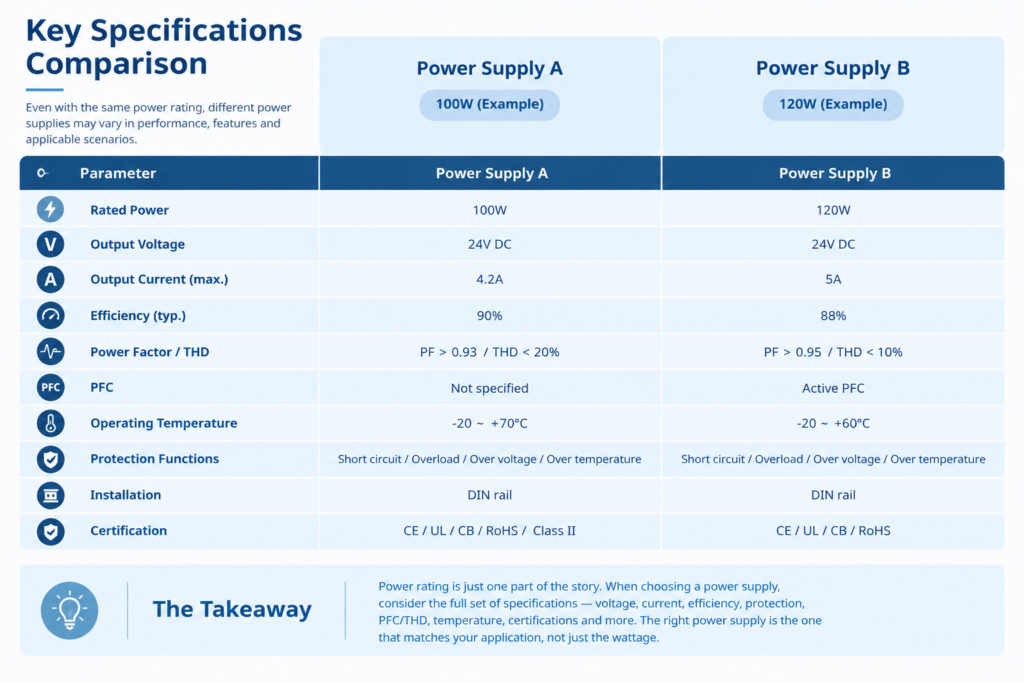
Шукерте, a customer questioned our power supply quotation: Why does a 100W power supply cost more than a 120W power supply?
The customer’s understanding was straightforward: if a 120W power supply can provide more power, why would a 100W power supply cost more? Икымше ончалмаште, this idea seems reasonable. Бирок, when selecting a power supply for LED lighting or commercial refrigeration equipment, rated power is only one of the factors that need to be considered.
Even if two power supplies have different rated power ratings, they may have significant differences in efficiency, protection functions, operating temperature, куатан коэффициент, installation method, сертификат-влак, and overall reliability. Тугеже, when selecting a power supply, we should not compare power ratings alone.
1. Rated Power Is Only the Starting Point for Power Supply Selection
The first step in selecting a power supply is, мутат уке, determining the output power required by the load, because the power supply must be able to support the operation of the connected electrical equipment. Бирок, this does not mean that a higher-power or lower-priced power supply is necessarily the better choice.
For LED lighting systems, factors such as the actual load, operating conditions, startup characteristics, and an appropriate power margin should be considered comprehensively.
Мут, although a 100W power supply has a lower rated power than a 120W power supply, it may have more complete specifications and certifications than the 120W model. This is especially important for power supplies used in export applications, as many countries have strict requirements for the import and export of electrical products. Южо случайыште, a single required certification may determine whether a power supply can be used in a particular market.
Тугеже, a 100W power supply may be more suitable than a 120W power supply whose specifications and product positioning do not match the actual application. A lower-rated power does not necessarily mean a lower-quality or less suitable product.
2. Is the Output Voltage and Current Suitable for Your Application?
Power supply selection should not be based on rated power alone. You also need to confirm whether the output voltage and output current are suitable for the load.
For LED refrigeration lighting, the first step is to confirm the rated input voltage of the LED lights. Мут, if the lighting system is designed for DC24V, the power supply used with it should also provide DC24V output.
Even if a 12V or 48V power supply can also provide 100W of power, it cannot directly replace a 24V power supply for a 24V LED lighting system.
Тиде жапыште, you also need to confirm whether the power supply’s rated output current can meet the actual requirements of the LED lights. Мут, an LED lighting system rated at 24V and 80W has a working current of approximately 3.33A. Тугеже, we need to select a power supply with the same 24V output voltage and a rated output current above 3.33A to meet the load requirements.
Тугеже, power determines how much power the power supply can provide, voltage determines whether the power supply is electrically compatible with the load, and rated output current determines whether the power supply has sufficient current capacity for the load. In actual applications, the power supply should be selected according to the specific requirements.
3. Efficiency Affects Heat Generation and Long-Term Operation
Efficiency is also an important specification when selecting a power supply. The higher the power supply efficiency, the more of the input electrical energy can be converted into useful output power, while relatively less energy is lost as heat. Lower heat generation is generally beneficial for long-term operation, especially in enclosed installations or environments with limited heat dissipation.
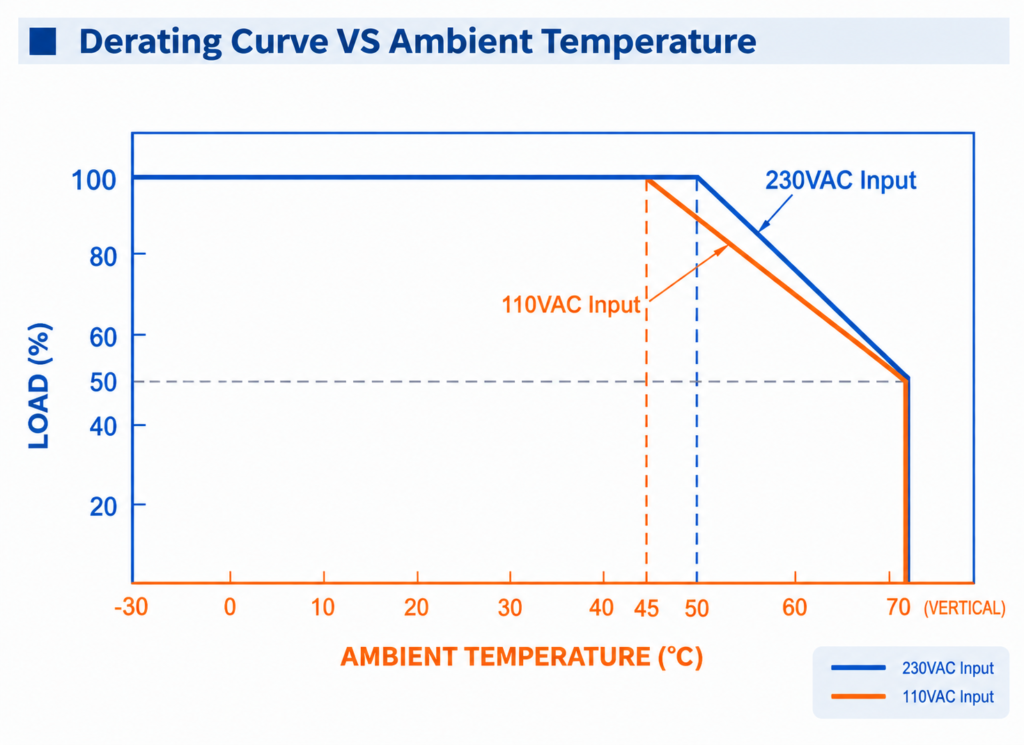
There is an important graph in a power supply datasheet called the derating curve. This curve shows how the allowable load of the power supply changes under different ambient temperatures.
As the ambient temperature increases, the power supply may reach a certain temperature at which its allowable load begins to decrease. This means that the power supply can no longer continuously operate at its original rated power. If the available output capacity becomes lower than the total load of the LED lights, the power supply may not be able to operate normally.
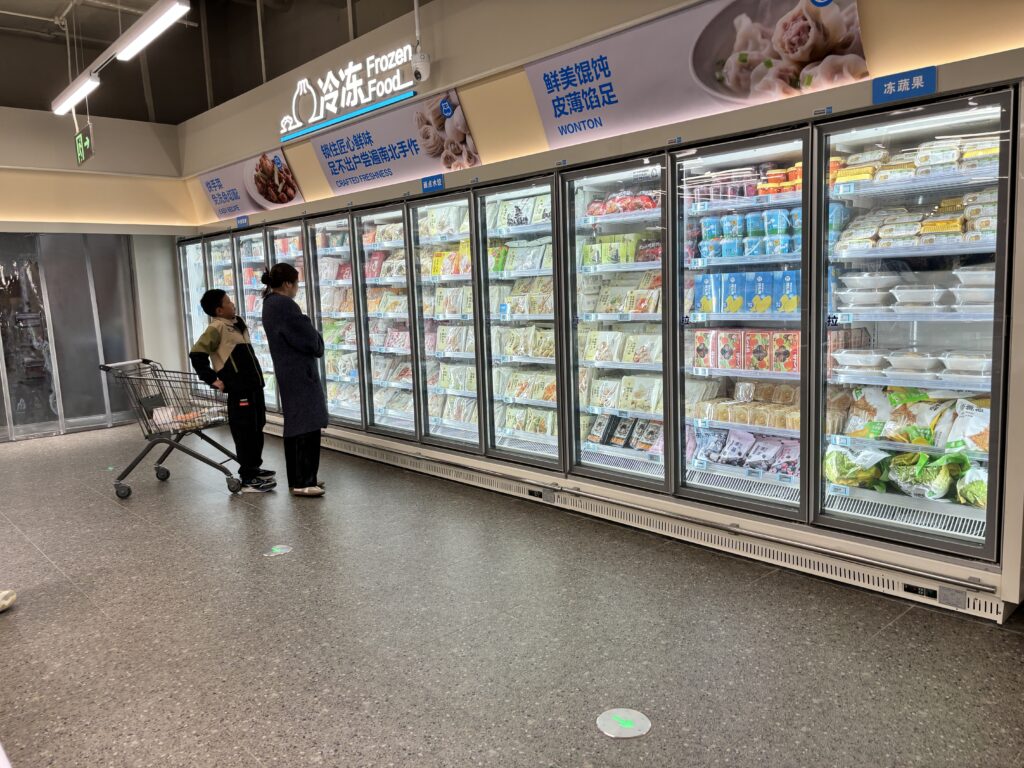
We previously encountered a similar customer case. The customer installed 10 SPU LED lights in a refrigerated display cabinet, with each light rated at 10W/DC24V, and used a 150W, 24V power supply. Бирок, the power supply failed during operation.
The customer contacted our technical team to investigate the cause. We first checked whether the power consumption of the LED lights was normal, and all lights were within the specified tolerance range. We also confirmed that the wiring used to connect the LED lights to the power supply had sufficient current-carrying capacity. The customer also pointed out that after removing the lights from the cabinet and taking them back to their company, the LED lights and the same 150W power supply worked normally again in the laboratory. This led us to reconsider the situation. If both the power supply and LED lights were functioning normally under laboratory conditions, external factors needed to be considered.
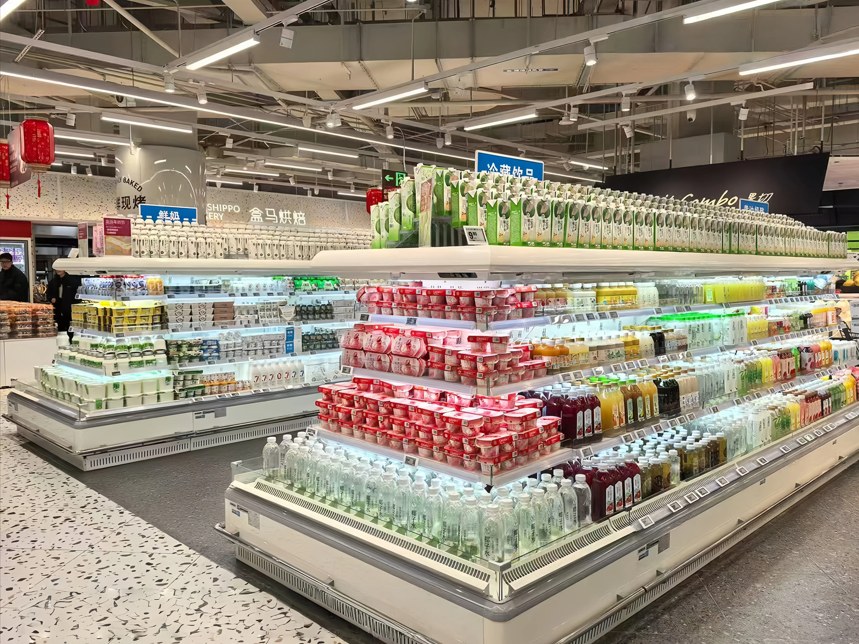
After an on-site inspection, our technical team found that in supermarkets, refrigerated display cabinets are often covered at the top for overall appearance and coordination. The space between the top of the cabinet and the ceiling is commonly covered with advertising boards or other materials, which are often made from non-breathable materials such as foam PVC.
When the power supply is installed externally, it generates heat during operation. If the surrounding space is enclosed, the ambient temperature around the power supply can continue to rise. Once the temperature reaches a certain critical point, the allowable load of the power supply begins to decrease. If the available output capacity falls below the total load of the LED lights, the power supply may no longer operate normally and may eventually fail.
Тугеже, for refrigeration lighting systems that may operate continuously for long periods, power supply efficiency and heat dissipation performance are also important factors to consider.
Only by considering these factors together can we determine whether a power supply is truly suitable for a specific application. A lower-power power supply is not necessarily a worse product, and a higher-power power supply is not necessarily the better choice.
A suitable power supply should match the actual application, meet electrical and safety requirements, and provide stable long-term operation.
4. Choosing the Right Power Supply Is an Important Part of Building a Complete Refrigeration Lighting System
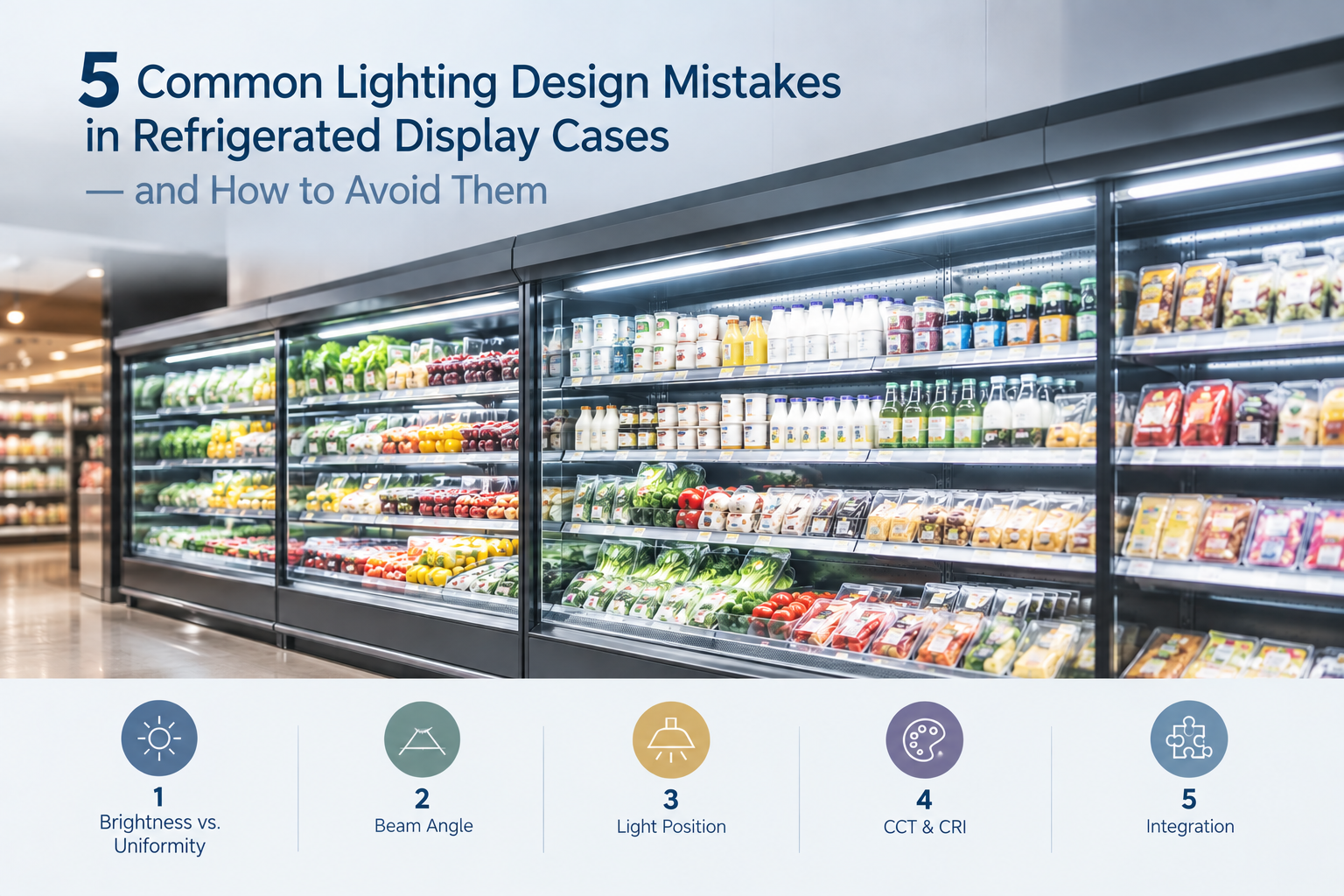
Мутат уке, there are many other specifications to consider when selecting a power supply, but choosing the right LED refrigeration lighting is equally important.
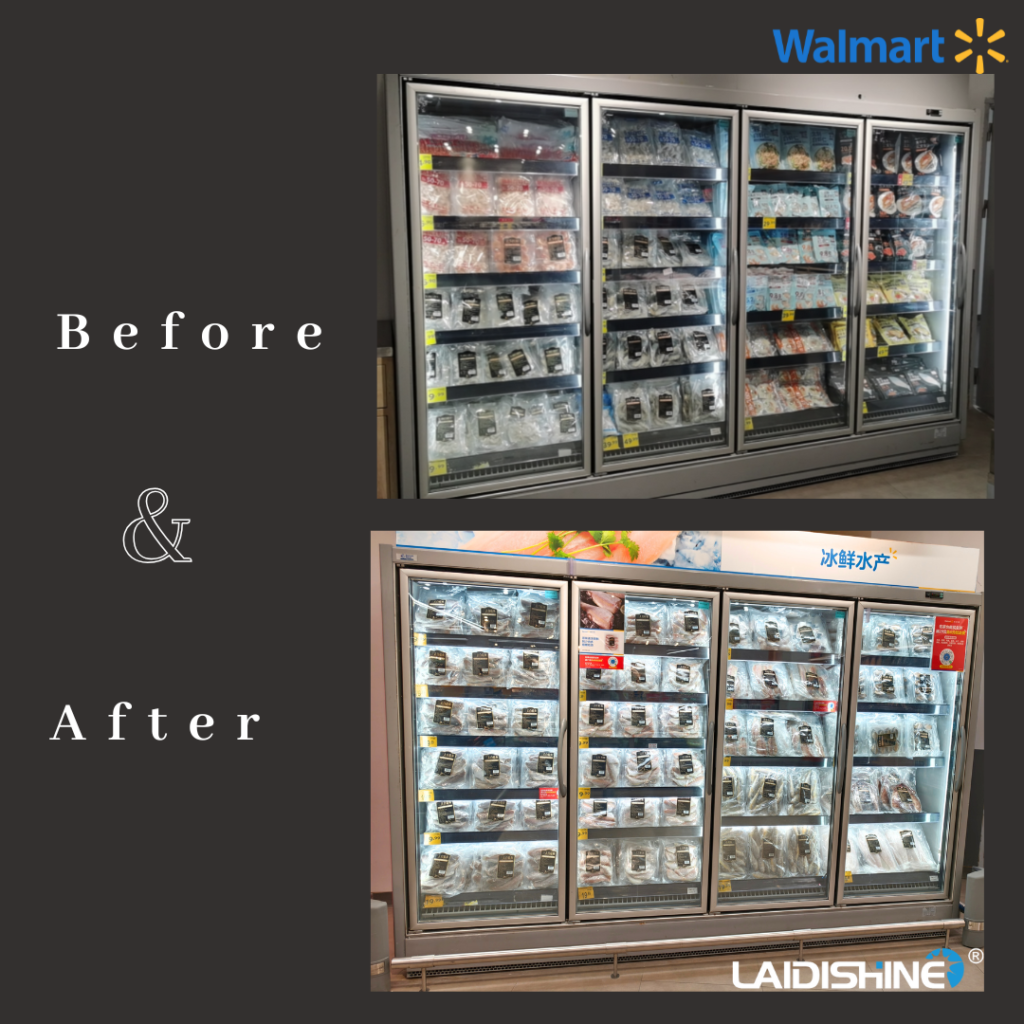
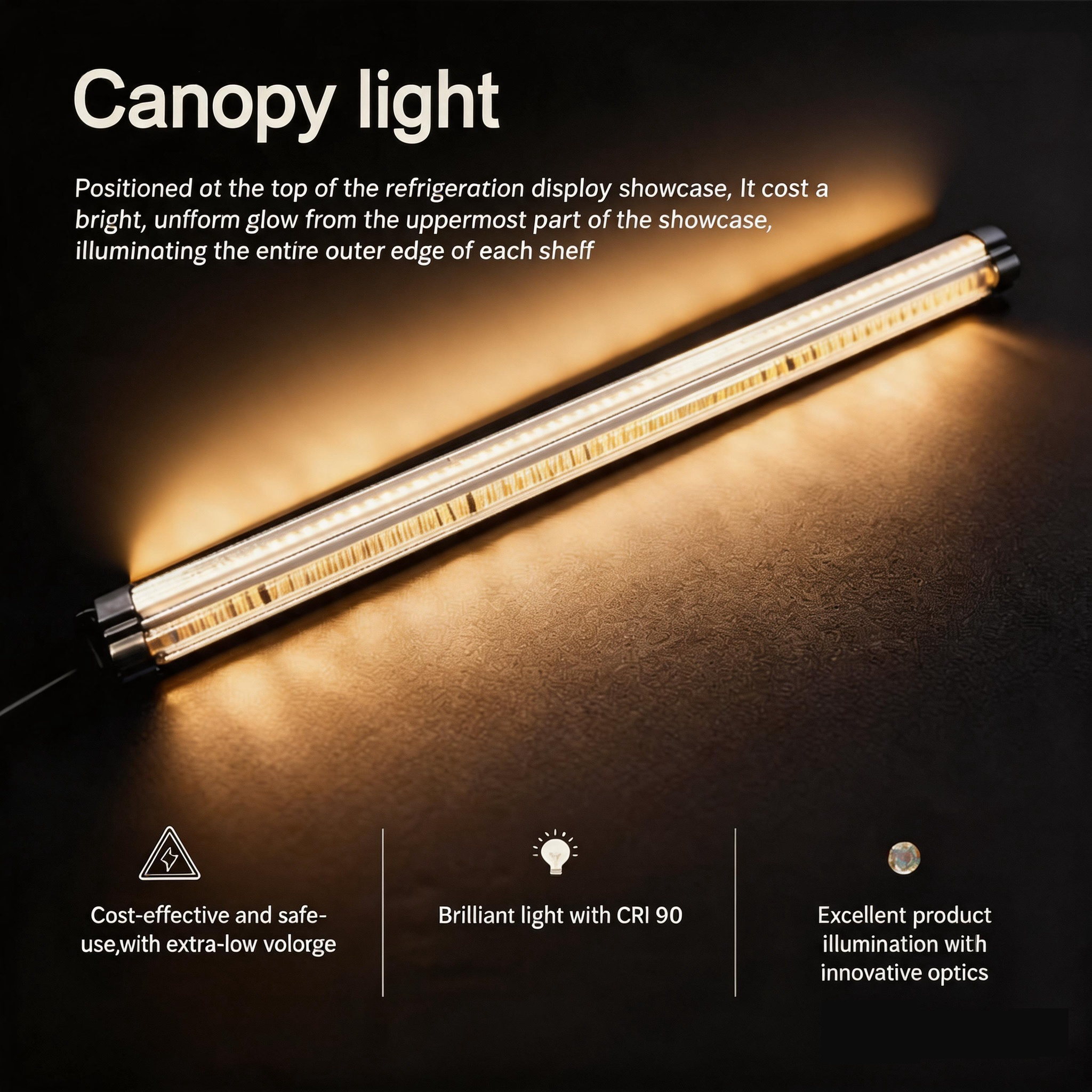
Лайдиши гыч, our sales team not only recommends the most suitable LED lighting products for your application but also provides a one-stop refrigeration lighting solution for retail stores. We provide different lighting solutions according to different installation positions, включатлаш canopy волгалтарымаш, under-shelf волгалтарымаш, and vertical lighting, with suitable product series for each application.
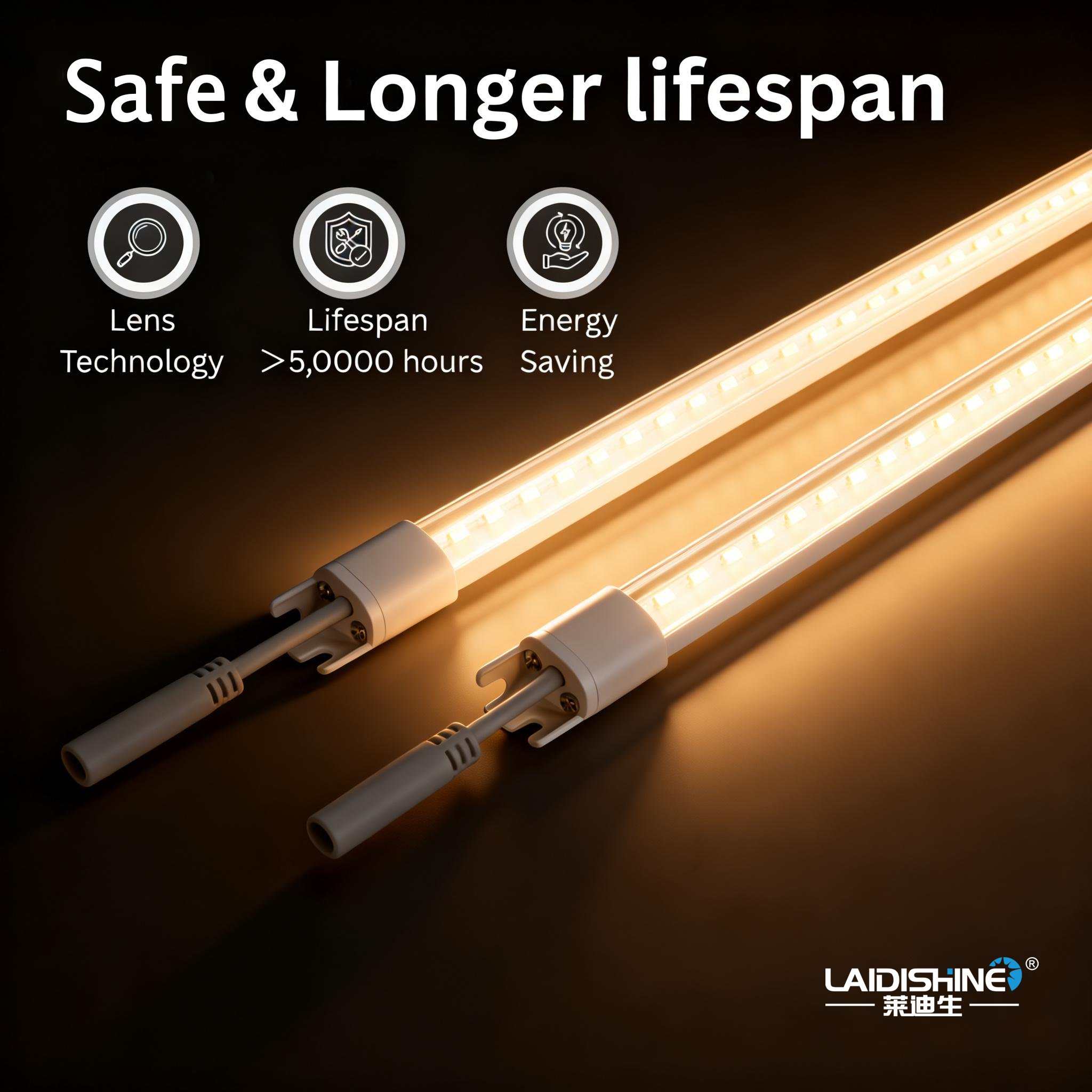
For different application scenarios, Laidishine designs LED lighting products with different specifications. The beam angle is also adjusted according to the installation position. Мут, for vertical glass-door refrigerated display cabinets, Лийшаш СПУ series is available in left, рӱдӧ, and right versions. When the СПУ lights are installed in the correct orientation on the cabinet door frame, their beam angles can maximize light utilization and reduce unnecessary light loss.