Laidishine after‑sales case sharing
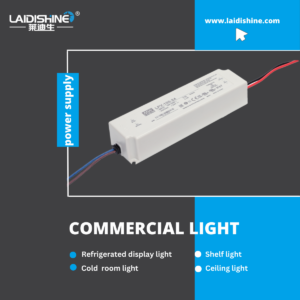
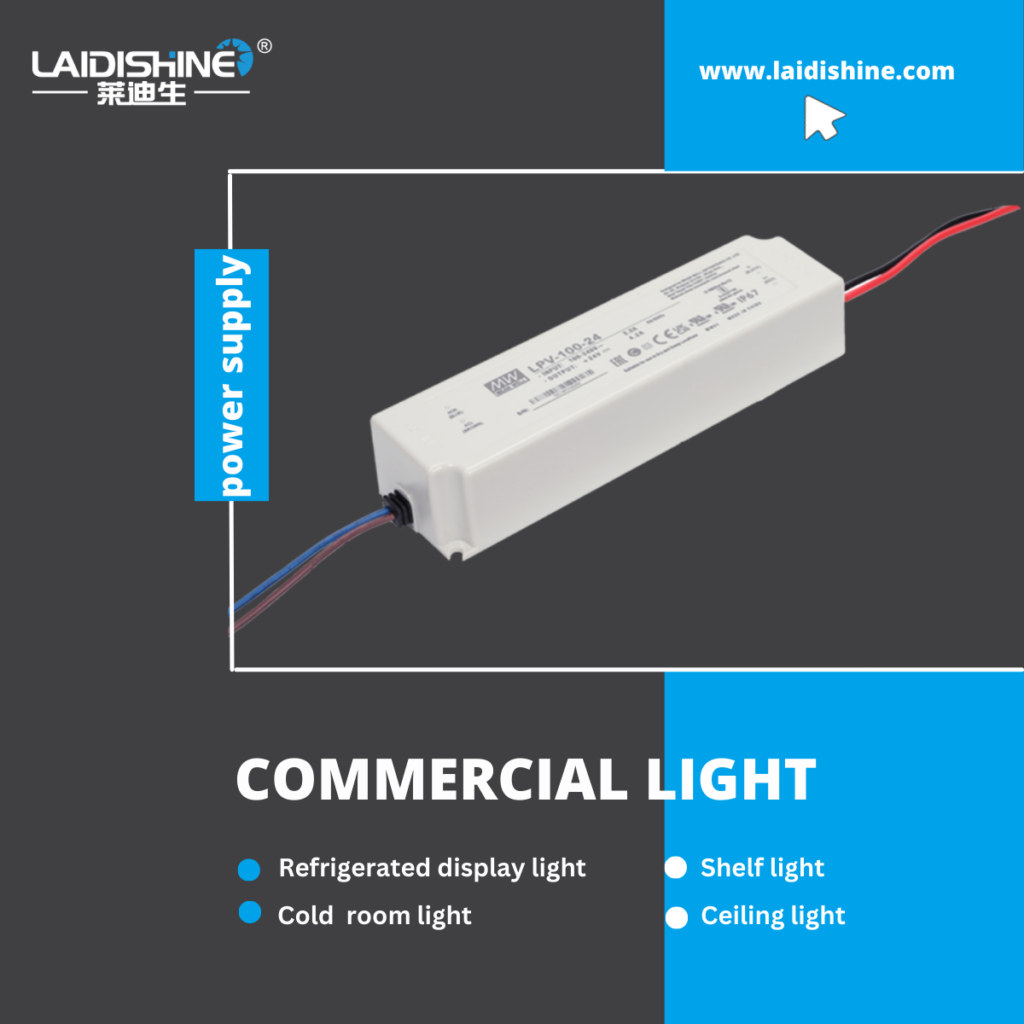
This case covers a fault encountered with an LED lighting system integrated into refrigerated cabinets. The total load power of the complete luminaire set is 130 W, powered by a 150 W constant‑voltage driver. According to standard power‑distribution practices, the driver power exceeds the total luminaire load with sufficient headroom, which should fully meet the basic power‑supply requirements for LED luminaires.
During initial power‑on, all luminaires lit normally. After running for some time, しかし, the lights began flickering on and off with repeated start‑stop cycles. Unstable operation severely disrupted normal lighting for the refrigerated cabinets.
Troubleshooting of Luminaire Fault Causes
Targeted disassembly and comprehensive testing were performed to eliminate common root causes and pinpoint the real issue.
1. Luminaire unit inspection: No defects found on individual fixtures
The complete lighting system was disassembled, and each luminaire unit was tested separately at ambient room temperature. All units lit evenly and operated stably with no flickering, dropout, or abnormal light decay. This ruled out damaged LED chips, wiring faults, and abnormal loading of individual luminaires.
2. Power‑margin verification: Power distribution complies with industry standards
Common industry guidelines for LED driver selection require the driver output power to be at least 120 % of the total LED load power, つまり, a 20 % safety margin. In this project, a 150 W driver powered a 130 W luminaire load, offering adequate power headroom. Overload and insufficient‑power‑supply root causes were eliminated.
3. Environmental comparison test: High‑temperature operating condition confirmed as trigger
Independent environmental tests were carried out on the 150 W constant‑voltage driver. When operated at normal room temperature with the 130 W luminaire under full load, the driver ran continuously and reliably without intermittent faults.
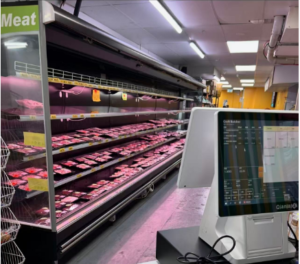
When the same driver was installed in its original position on the refrigerated‑cabinet assembly, the fault recurred consistently. The refrigerated cabinet generates continuous heat during operation, raising the ambient temperature around the driver. Elevated surrounding temperature degraded driver performance and triggered power‑supply anomalies for the luminaires.
Root‑cause Analysis: Performance Degradation of Constant‑voltage Driver under High Ambient Temperature
The constant‑voltage LED driver in this application features adaptive current adjustment according to load conditions, plus built‑in short‑circuit, overload and over‑voltage protection. With an IP67 rating, it delivers robust baseline protection and high reliability under standard operating conditions.
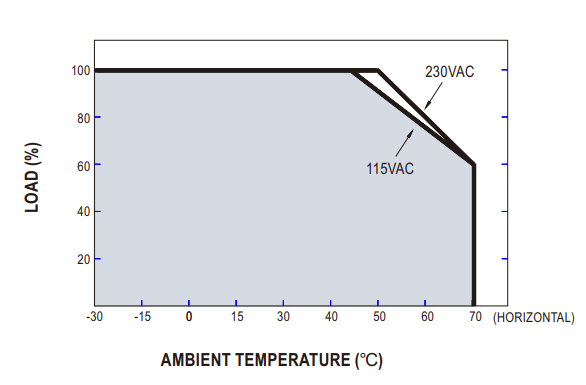
それにもかかわらず, most conventional LED drivers share a common limitation: higher ambient temperature reduces overall power‑handling capability and voltage‑regulation stability. Internal components, including capacitors, voltage‑regulating ICs and power devices, are highly temperature‑sensitive. Sustained heat from the refrigerated cabinet degrades component performance, causing fluctuations in output voltage and current. The driver can no longer deliver sufficient stable power for the 130 W luminaire load.
When high‑temperature‑induced performance drop reduces available driver output power, the luminaires turn off. Once the driver cools slightly, its performance partially recovers and the lights turn on again. This creates the observed on‑off cycling symptom. This is a typical hidden power‑supply instability caused by high‑temperature‑driven driver degradation, rather than a manufacturing defect of the driver itself — it stems from insufficient adaptation to actual thermal operating conditions.

ソリューション & Selection Recommendations for Similar Faults
Based on field‑test findings, below are targeted countermeasures to resolve intermittent LED flickering under enclosed‑space or heat‑generating high‑temperature conditions.
1. Improve driver installation and thermal dissipation
Avoid mounting drivers near heat‑exhaust outlets or hot‑spot zones of equipment. Ensure adequate ventilation space to prevent heat accumulation. Thermal brackets or thermal interface gaskets may be fitted to accelerate heat dissipation, lower operating temperature and preserve full‑load performance.
2. Adopt high‑temperature‑rated dedicated drivers
For refrigerated cabinets, industrial equipment and enclosed enclosures exposed to high‑temperature conditions, replace general‑purpose room‑temperature drivers with wide‑temperature‑range constant‑voltage drivers. Optimized components and thermal design maintain stable power‑handling capacity even under elevated ambient temperature and prevent thermal‑induced performance degradation.
3. Increase power‑supply margin to offset high‑temperature losses
While a 20 % power margin suffices for ordinary environments, a 30 % or higher margin is recommended for high‑temperature scenarios. This compensates for thermal‑related power‑capacity derating and ensures the driver output remains higher than the luminaire full‑load power under hot conditions to avoid power‑supply fluctuations.
4. Prioritize well‑protected drivers with adaptive‑load capability
Select IP67‑rated constant‑voltage drivers with comprehensive protection (short‑circuit, overload, over‑voltage and overtemperature protection) and adaptive‑load‑current regulation. These deliver superior environmental resistance, improve load‑matching stability and extend system service life.
Intermittent on‑off behaviour of LED luminaires does not always originate from damaged fixtures, insufficient power or defective drivers. High‑temperature‑induced driver‑performance degradation is a frequently overlooked root cause. For refrigerated cabinets, industrial equipment and enclosed‑space applications, relying merely on the conventional 20 % power margin is insufficient. Driver selection must account for real‑world ambient temperature and thermal‑dissipation conditions.
Optimized installation for heat dissipation, adoption of high‑temperature‑specialized drivers and enlarged power redundancy can effectively eliminate LED intermittent‑cycling faults in high‑temperature environments. These measures support long‑term stable lighting performance for commercial‑equipment and industrial LED lighting projects.