Bu Bölüm 3 of the series:
Parça 1: Aydınlatma Gücü Neden Vitrinlerde Soğutma Yükü Haline Geliyor?
Parça 2: ASHRAE ve Endüstri Standartları Soğutmalı Kasalarda Aydınlatma Hakkında Gerçekte Ne Diyor?
Öncesi
Once lighting is understood as part of refrigeration load, the next question becomes practical:
What does lighting power actually do to system performance?
The answer is measurable — and often underestimated.
From Watts to Cooling Load
Inside a refrigerated display case, energy follows a simple path:
- electrical input to lighting
- → converted into heat
- → absorbed by air, raflar, and products
- → removed by the refrigeration system
This aligns directly with ASHRAE’s load model, Neresi lighting contributes to sensible heat load inside the case
Which leads to a very practical relationship:
This is why even small increases in lighting wattage have a direct and continuous impact.
What Happens Inside the System
When lighting power increases, three things happen simultaneously:
1. Compressor Runtime Increases
More internal heat means longer cooling cycles.
2. Energy Consumption Increases
The system must remove additional thermal load continuously.
3. Temperature Stability Decreases
Localized heating near products can create micro temperature fluctuations.
Örnek: Small Difference, Large Impact
Let’s compare two cases:
| Parametre | Durum A | Durum B |
|---|---|---|
| Aydınlatma Gücü | 60 W | 30 W |
| Extra Heat Load | 60 W | 30 W |
| Yıllık Isı Yükü | ~525 kWh | ~263 kWh |
A 30W difference per case may seem small.
But across:
- 50 cases → 13,000 kWh/year
- 100 cases → 26,000 kWh/year
This is why lighting decisions scale quickly in supermarkets.
Figure – Linear Relationship Between Lighting and Energy
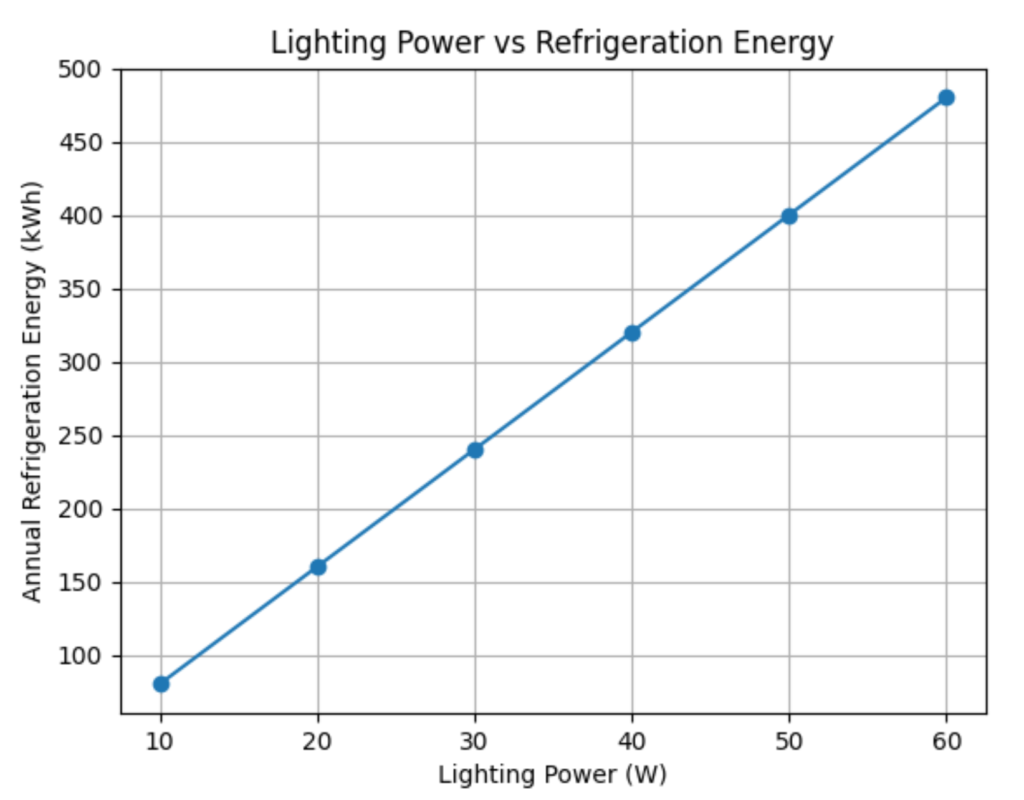
This shows a key insight: Lighting power and refrigeration energy are directly proportional.
Beyond Energy: Impact on Products
ASHRAE also notes that high-intensity lighting can:
- raise product temperature
- accelerate discoloration in meats
This is where lighting becomes more than an energy issue.
It becomes a product quality factor.
Where Standard LED Falls Short
Many LED systems are designed for general lighting, not refrigeration.
Yaygın sorunlar şunları içerir::
- unnecessary high wattage
- concentrated heat near LED chips
- drivers located inside the cabinet
- spectrum not optimized for food
These factors increase both:
- thermal load
- product sensitivity
Laidishine Approach: Reducing Load Without Sacrificing Visibility
In real projects, the challenge is not simply “reduce power”.
It is: reduce thermal load while maintaining product presentation.
Laidishine solutions address this through:
1. Lower Effective Power
Optimized LED distribution reduces required wattage.
2. Heat-Controlled Design
Thermal structure minimizes heat accumulation inside the case.
3. Externalized Driver Strategy
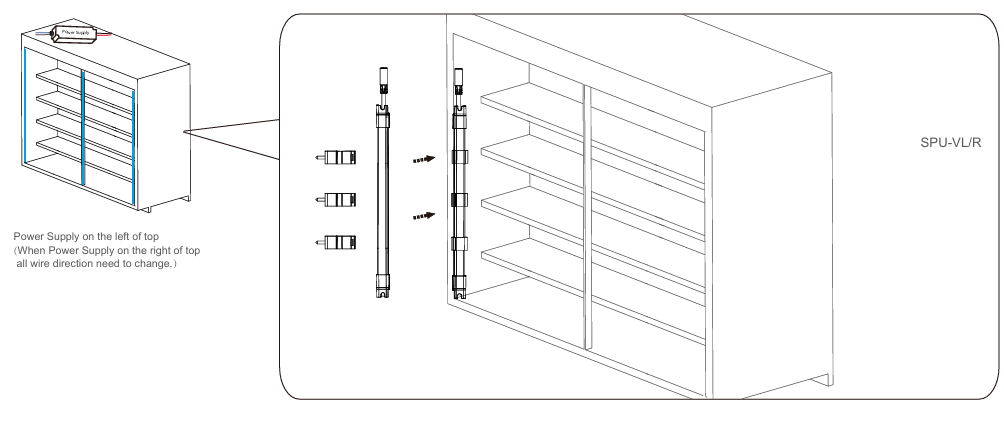
Where possible, drivers are kept outside airflow zones to reduce internal heat.
4. Yüksek CRI (>90) Without Overdriving
Maintains visual quality without increasing power density.
Real-World Result (From Projects)
In retrofit scenarios (multi-deck open cases and glass door freezers):
- reduced lighting power
- improved temperature consistency
- lower compressor cycling frequency
These improvements are not theoretical.
They come from treating lighting as part of the refrigeration system — not separate from it.
Final Insight
Lighting is one of the few refrigeration load components that is:
- constant
- controllable
- design-driven
Which makes it one of the most powerful levers for improving system efficiency.
Series Conclusion
Across this series:
- Parça 1 showed why lighting becomes heat
- Parça 2 showed how standards define it as load
- Parça 3 shows how it affects real system performance
Birlikte, they point to a single engineering truth:
Lighting is not just illumination.
It is part of the refrigeration system.
-1-scaled.jpg)