LED 조명이 다양한 색상의 빛을 방출하는 이유

반도체 발광 원리

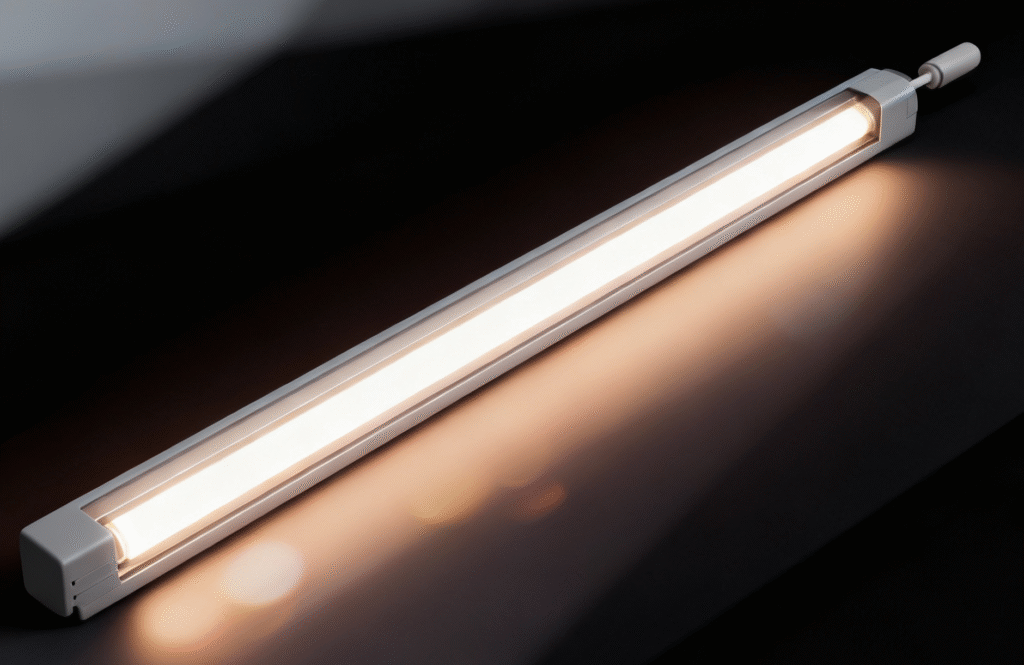
우리 일상 생활에서, 따뜻한 햇살과 별개로, LED 조명이 주요 조명원이 되었습니다.. From the mobile phone screens that accompany us at all times to the cozy and comfortable home lighting, and then to the dazzling neon lights that adorn cities at night, LED lights captivate people with their unique charm. 그래서, why exactly can LED lights emit light, and how are they able to display such a rich array of colors like white, green, 파란색, and red? What scientific mysteries lie behind this phenomenon? Let’s delve deeper and explore together.

Why can LEDs emit light?

An LED is actually a light-emitting diode, which is made of semiconductor materials. The principle behind an LED’s ability to emit light is based on its unique energy band structure and the carrier recombination process.

Semiconductor materials are high-quality crystals in which atoms are arranged periodically in space. Each atom consists of a positively charged nucleus and negatively charged electrons. Since a crystal contains a large number of atoms, these atoms interact with one another. This periodic interaction forms energy bands within the crystal, and there are numerous energy bands present. Each energy band provides many positions for electrons to occupy, and the distribution of electrons within an energy band progresses from the lowest energy positions to those with higher energy.

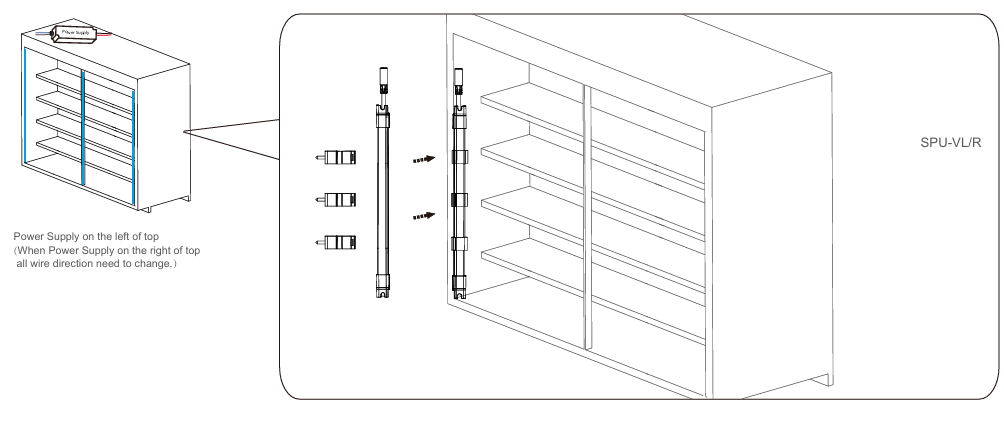
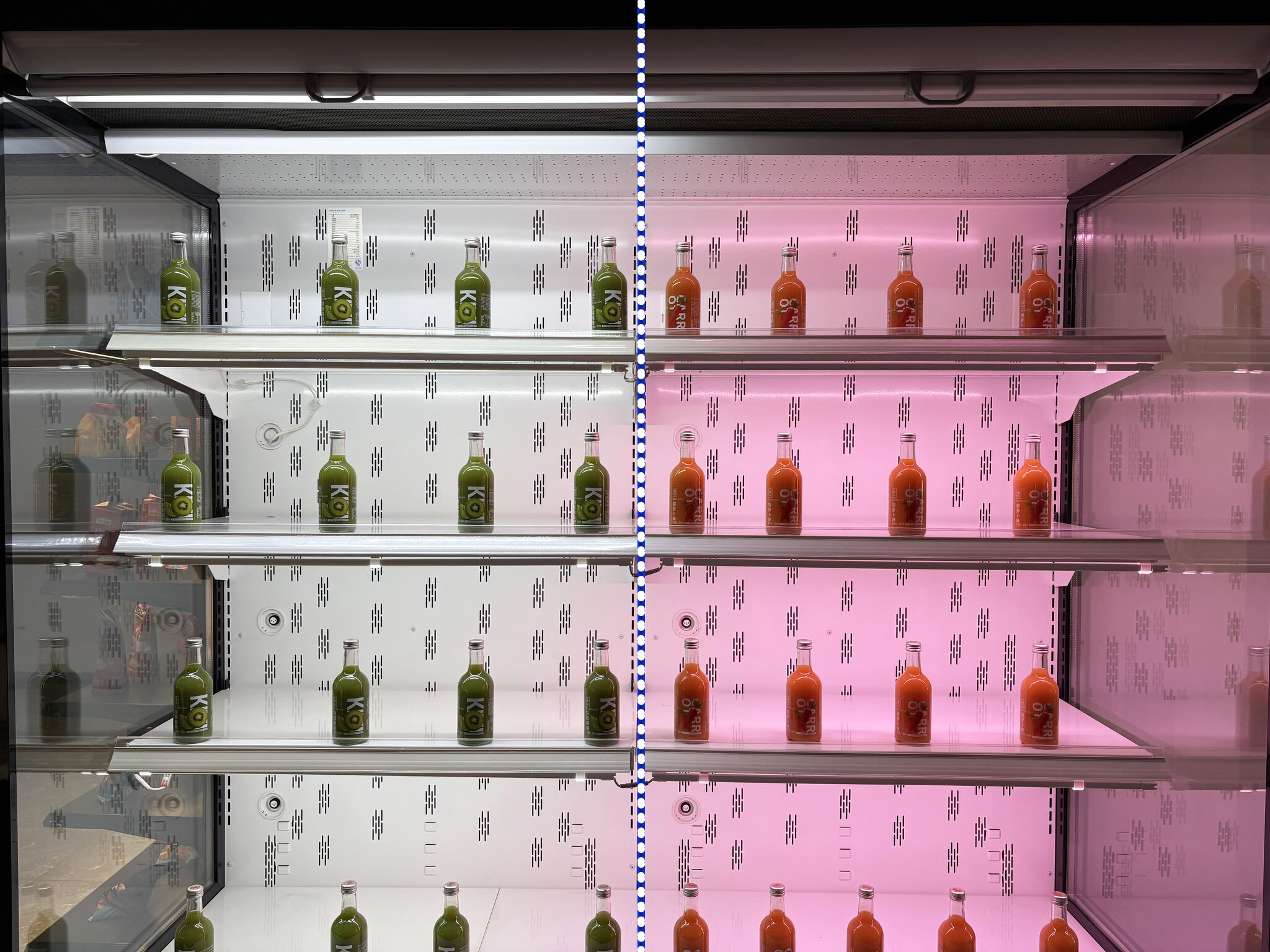
슈퍼마켓 냉장 디스플레이 캐비닛용 LED 조명

Within the energy bands of a crystal, some are occupied by electrons while others are not. Among the occupied energy bands, the one with the highest energy, if only partially filled with electrons, is known as the conduction band. Electrons in the conduction band reside at relatively high energy levels and possess sufficient energy to move freely, thereby forming an electric current. 거꾸로, if this energy band is completely filled with electrons, it is called the valence band. Electrons in the valence band are at lower energy levels, and their energy is insufficient to allow them to move freely. There is a certain energy gap between the top of the valence band and the bottom of the conduction band, known as the bandgap or forbidden band. Electrons cannot reside in this region, although they can traverse it.

When an external voltage is applied, some electrons in the valence band can be excited to the conduction band, forming freely moving charge carriers. 그 동안에, in the originally fully occupied valence band, the absence of some electrons leaves vacant positions, which we refer to as holes. The movement and recombination processes of these charge carriers within the semiconductor material are crucial for achieving light emission.

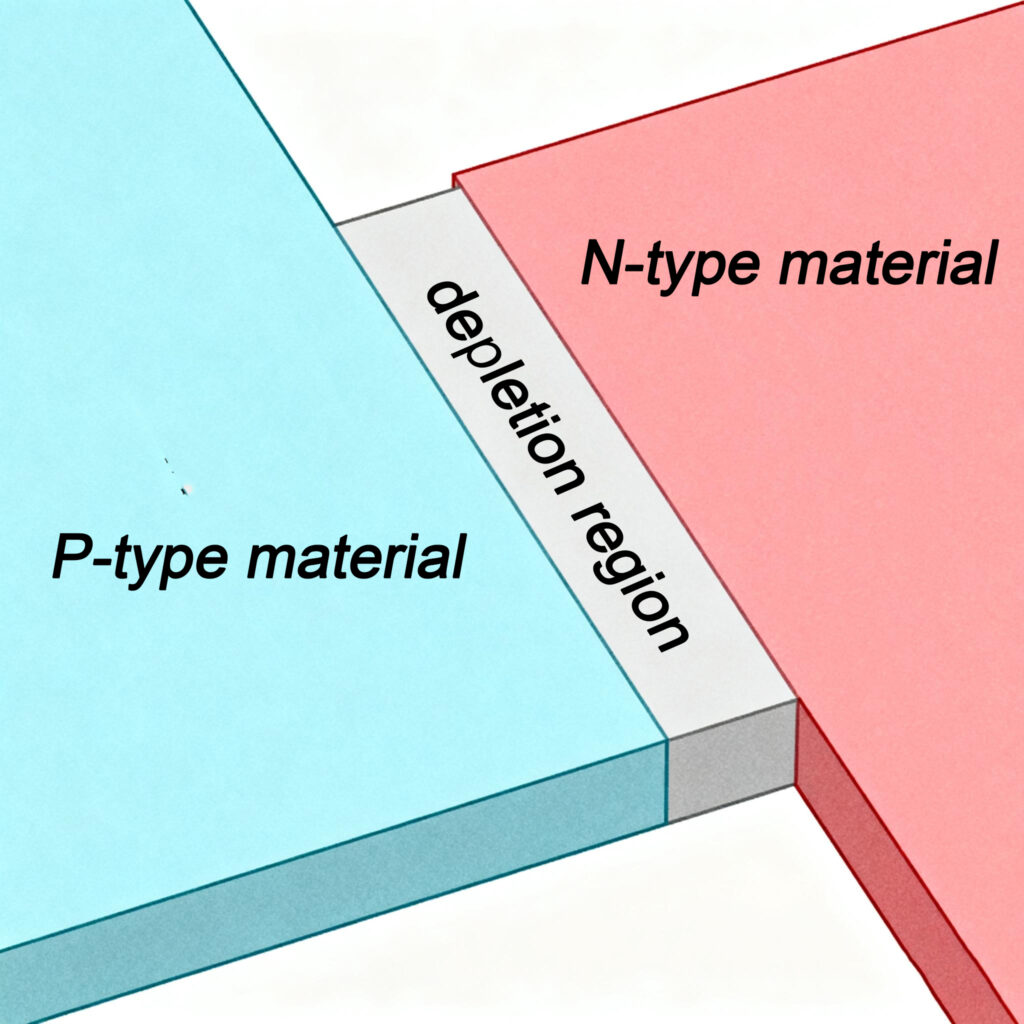
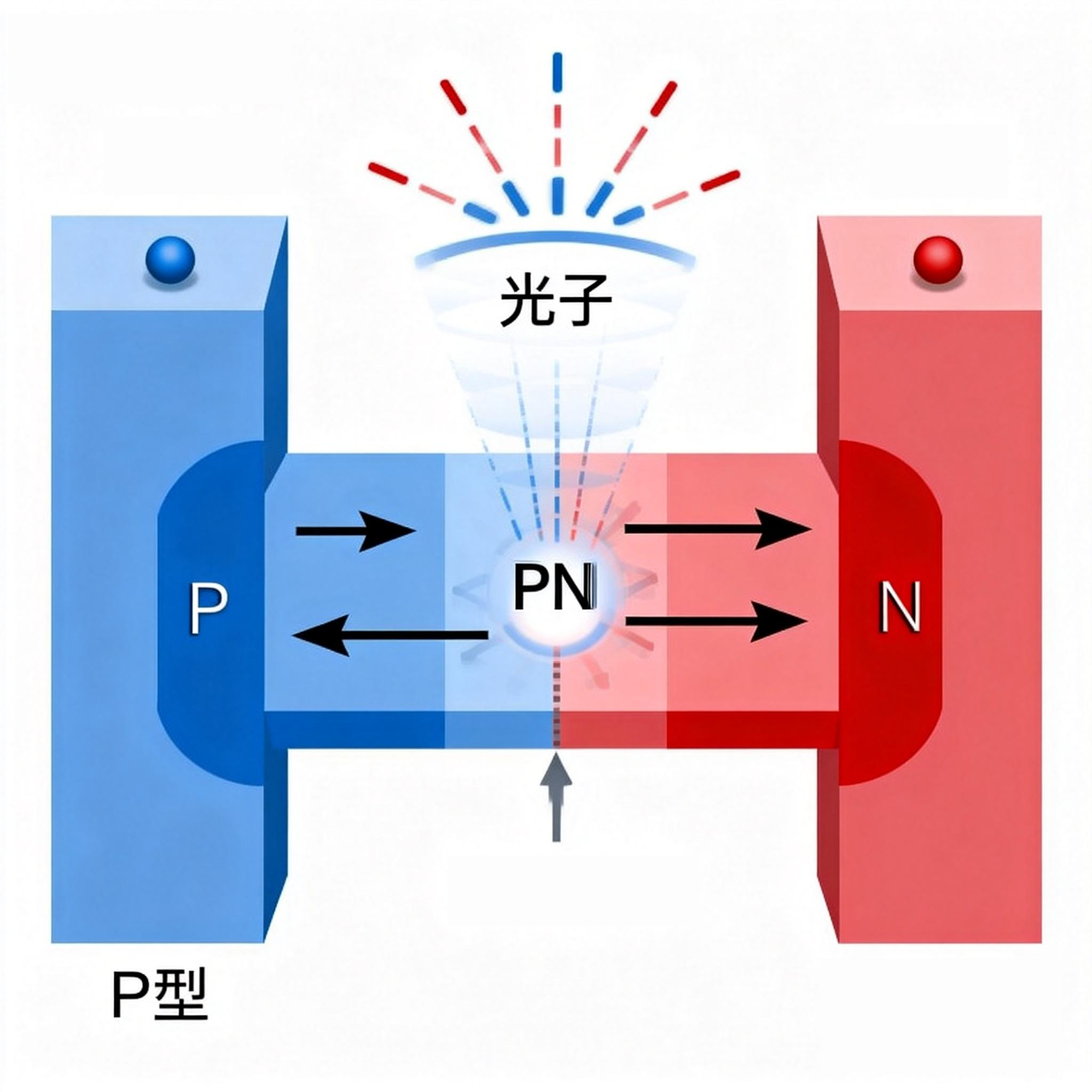
An LED is a light-emitting diode, which consists of a diode structure with a PN junction formed by combining P-type and N-type semiconductors. When we place the P-type and N-type semiconductors together, even without connecting them to a circuit, some electrons will diffuse from the N-type semiconductor to the P-type semiconductor and fall into the holes in the P-type material. This causes the P-type semiconductor to acquire a slight negative charge, while the N-type semiconductor becomes slightly positively charged, resulting in the formation of an internal electric field, known as the PN junction. Within the PN junction, when electrons encounter holes, electrons in the conduction band will jump to the holes in the valence band. During this electron-hole recombination process, energy is released in the form of light. This is the fundamental principle behind how LEDs emit light.

Semiconductor Pn

LED lights emit light of different colors

The energy level involved in the light-emitting process is related to the energy band structure of the semiconductor material. Different materials and energy band structures result in different emission wavelengths and colors. Specifically:

Electron Transition and Energy Difference

When an electron transitions from a higher-energy orbital to a lower-energy orbital, it releases energy that propagates in the form of electromagnetic waves. The energy difference released during electron transitions varies among different elements, corresponding to light of different wavelengths. The greater the energy, the shorter the wavelength. In the spectrum, the energy required increases from left to right. This is why red LEDs were invented first, as they require the least amount of energy, followed by green, and then blue. This is also why the invention of blue LEDs was challenging, as blue light requires more energy.

Wavelengths of 400-500 nanometers correspond to blue light, 500-600 nanometers to green light, 그리고 600-700 nanometers to red light.

Spectrum Diagram

Material Selection and Color Control

The PN junction inside an LED is generally composed of compounds such as gallium arsenide phosphide. When different materials are used, the wavelengths of the emitted light upon electrification vary. 그러므로, by simply changing the material of the internal PN junction, light-emitting diodes of different colors can be produced.

Blue LED: When gallium nitride is used as the semiconductor material, the electron transition energy is relatively high, releasing light with a wavelength of approximately 460 nanometers, which appears blue. This is the principle behind the emission of blue LEDs.

Green LED: When gallium phosphide is utilized, the emitted light has a wavelength of about 560 nanometers, presenting a green color. This explains the emission mechanism of green LEDs.

Red LED: Gallium arsenide, 반면에, releases light with a wavelength of approximately 660 nanometers, appearing red. This is the principle underlying the emission of red LEDs.

To produce white light with LEDs, also known as white LEDs, additional designs are required. One method involves combining light-emitting diodes of different colors to create a white light effect. Another approach utilizes a blue LED coated with phosphor. The blue light emitted by the LED illuminates the phosphor, converting a portion of the blue light into other colors of light. The final effect appears as white light.

Through the detailed introduction above on the light-emitting principle of LEDs and the mechanisms behind their emission of different colors, I believe everyone now has a deeper understanding of LEDs. With continuous technological advancements, the applications of LEDs in various fields such as lighting and displays will become even more widespread and remarkable.

공유하다:

더 많은 게시물

OEM 상업용 냉동고 조명

냉장 디스플레이 조명에서 광학 렌즈가 중요한 이유와 표준 T8/T5 튜브가 부족한 이유

냉장 진열장 내부 조명은 일반 실내 조명보다 훨씬 복잡합니다.. 슈퍼마켓과 편의점에는 음식을 신선하고 매력적으로 보이게 할 뿐만 아니라 추운 날씨에도 안정적으로 작동하는 조명이 필요합니다., 습한 환경. 모든 방향으로 빛을 방출하는 베어 LED 튜브와는 달리, 광학 렌즈는 빔 각도를 정밀하게 제어합니다., 빛을 후면 패널이나 고객의 눈에 낭비하지 않고 상품 쪽으로 빛을 비춥니다..

가까운 편의점

끊임없는 고객과 함께 편의점을 번창시키는 방법?

편의점을 고객으로 북적거리게 하고 싶다? 우수한 조명이 핵심입니다. Laidishine의 전문 LED 솔루션은 매장 분위기와 제품 매력을 크게 향상시킵니다., 특히 신선식품 매출 증대, 에너지 소비를 이상으로 줄이면서 50%. 이 기사에서는 편의점이 부상하는 이유를 이해하고 편의점 고객 트래픽을 늘리는 방법을 안내합니다..

우리에 대해 알고

우리에 대해 알고 12 우리에 대해 알고, 우리에 대해 알고 “@laidishine.com”.

우리에 대해 알고, 우리에 대해 알고 우리에 대해 알고, 우리에 대해 알고, 제품에 대한 자세한 정보가 있거나 협상된 가벼운 솔루션을 얻고자 하는 경우.

데이터 보호

데이터 보호법을 준수하기 위해, 팝업의 핵심 사항을 검토해 주시기 바랍니다.. 당사 웹사이트를 계속 이용하시려면, '수락'을 클릭해야 합니다. & 닫다'. 당사의 개인 정보 보호 정책에 대해 자세히 알아볼 수 있습니다.. 당사는 귀하의 계약을 문서화하며 개인정보 보호정책으로 이동하여 위젯을 클릭하여 선택을 취소할 수 있습니다..