照明電力がショーケースの冷凍負荷になる理由

スーパーマーケットの冷蔵庫の照明

Understanding the Thermal Reality Behind Every Watt

In commercial refrigerated display cases, 照明は明るさの観点から議論されることが多い, 演色性, またはマーチャンダイジングへの影響. Yet from an engineering perspective, lighting plays a far more critical role — it directly influences the refrigeration system’s thermal load.

For OEM manufacturers, refrigeration engineers, and system designers, one fact remains fundamental:

Every watt of lighting installed inside a refrigerated display case becomes heat that must be removed by the refrigeration system.

This is not a marketing interpretation. It is basic thermodynamics — and it directly affects compressor sizing, エネルギー消費, temperature stability, and long-term system efficiency.

1. Lighting Inside the Cooling Boundary: Why It Matters

In a supermarket environment, ceiling lights illuminate from outside the refrigeration envelope. Their heat dissipates into ambient store air.

But refrigerated display lighting is different.

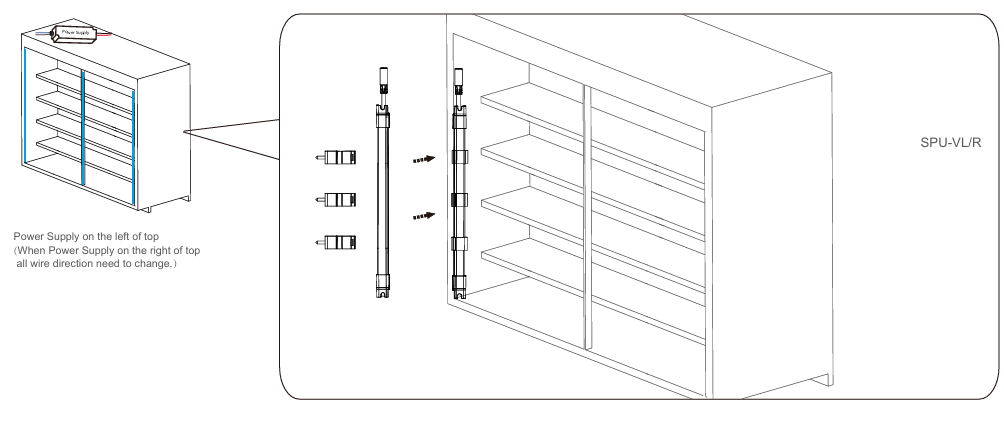
LED modules, drivers, 括弧, and lenses are installed inside the insulated cabinet — within the defined cooling boundary. That means:

  • Electrical power enters the refrigerated space
  • Nearly all of it converts to thermal energy
  • That heat must be continuously extracted

From a physics standpoint:

Electrical energy → Thermal energy → Refrigeration removal

There is no “free” watt inside a refrigerated case.

2. The Thermodynamic Relationship

The relationship is straightforward:QlightingplightingQ_{点灯} \approx P_{点灯}

Where:

  • Q = Heat added to refrigerated space (W)
  • P = Electrical input power of lighting system (W)

実際に, 95–100% of LED lighting power becomes heat inside the cabinet, depending on:

  • Driver location (internal vs external)
  • Heat sink efficiency
  • Optical design
  • Airflow management

Even highly efficient LEDs (160 lm/W or higher) still convert the majority of input power into heat. Luminous efficiency improves visual output — but it does not eliminate thermal load.

This is why lighting design is inseparable from refrigeration design.

3. What This Means for OEM Manufacturers

ショーケースメーカー様向け, lighting power influences:

  • Compressor runtime
  • Evaporator load
  • Defrost frequency
  • Cabinet pull-down time
  • Temperature fluctuation near product surfaces

A difference of 20–40 watts per cabinet may appear small — but across:

  • 50 cases in a supermarket
  • 500 cases in a hypermarket chain
  • Thousands of units across a brand rollout

The cumulative refrigeration burden becomes significant.

This is why leading OEMs increasingly evaluate lighting not just by brightness — but by thermal contribution per linear meter.

4. Practical Engineering Example

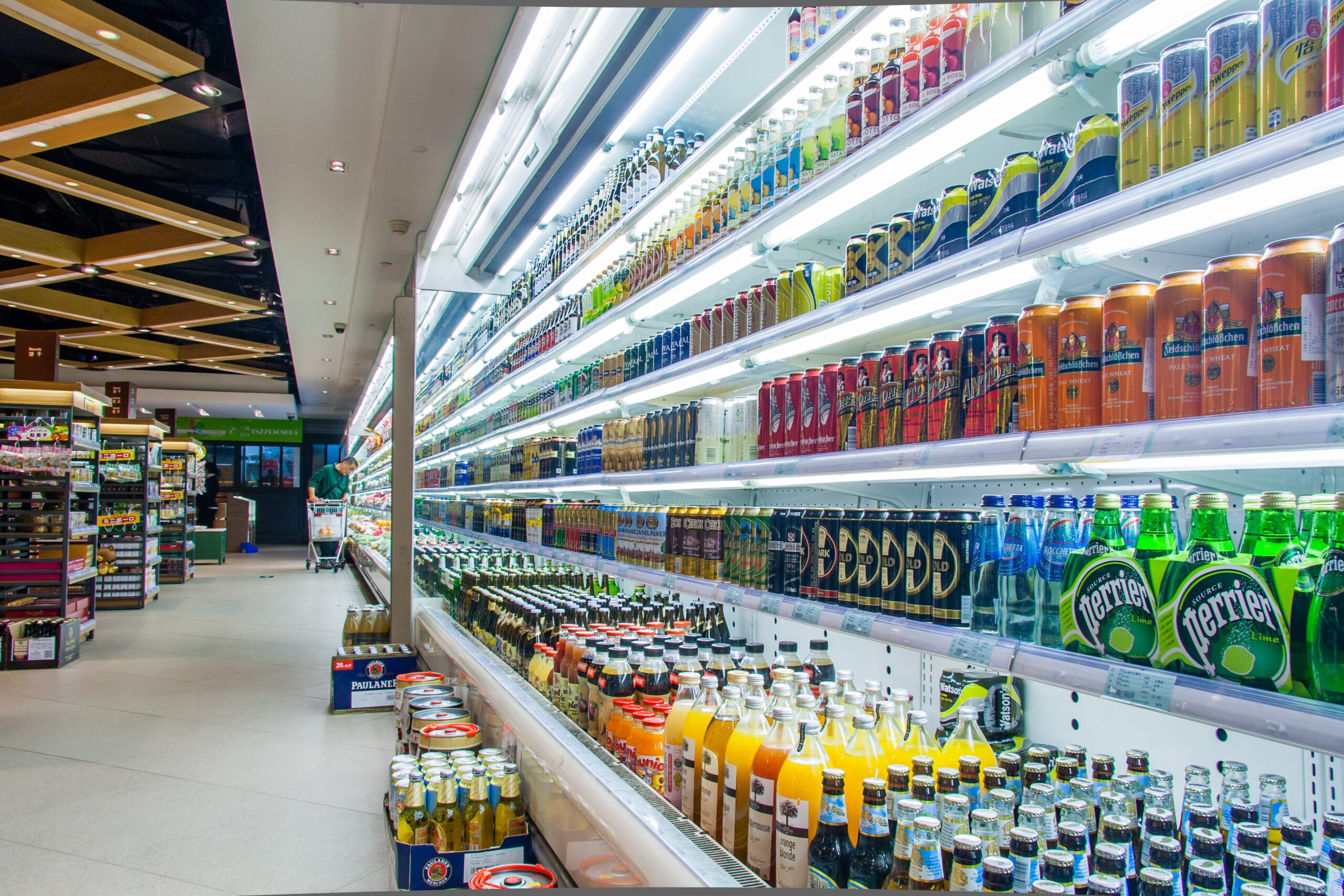
Consider a vertical multi-deck glass door freezer:

ItemCase ACase B
Lighting Power60 W35 W
Daily Heat Added1.44 kWh0.84 kWh
Annual Heat Load525 kWh307 kWh

That 25 W reduction saves over 200 kWh per case annually in refrigeration removal.

Multiply this across an installation of 200 cases, and the energy difference becomes operationally meaningful.

5. Beyond Wattage: Thermal Distribution Matters

Not all lighting systems transfer heat the same way.

Key factors include:

  • Lens angle and optical control
  • Surface-mount vs recessed design
  • Aluminum profile heat dissipation
  • Driver separation
  • Placement relative to airflow channels

ライディシンから, lighting systems are designed specifically for refrigerated environments — not adapted from general retail fixtures.

例えば:

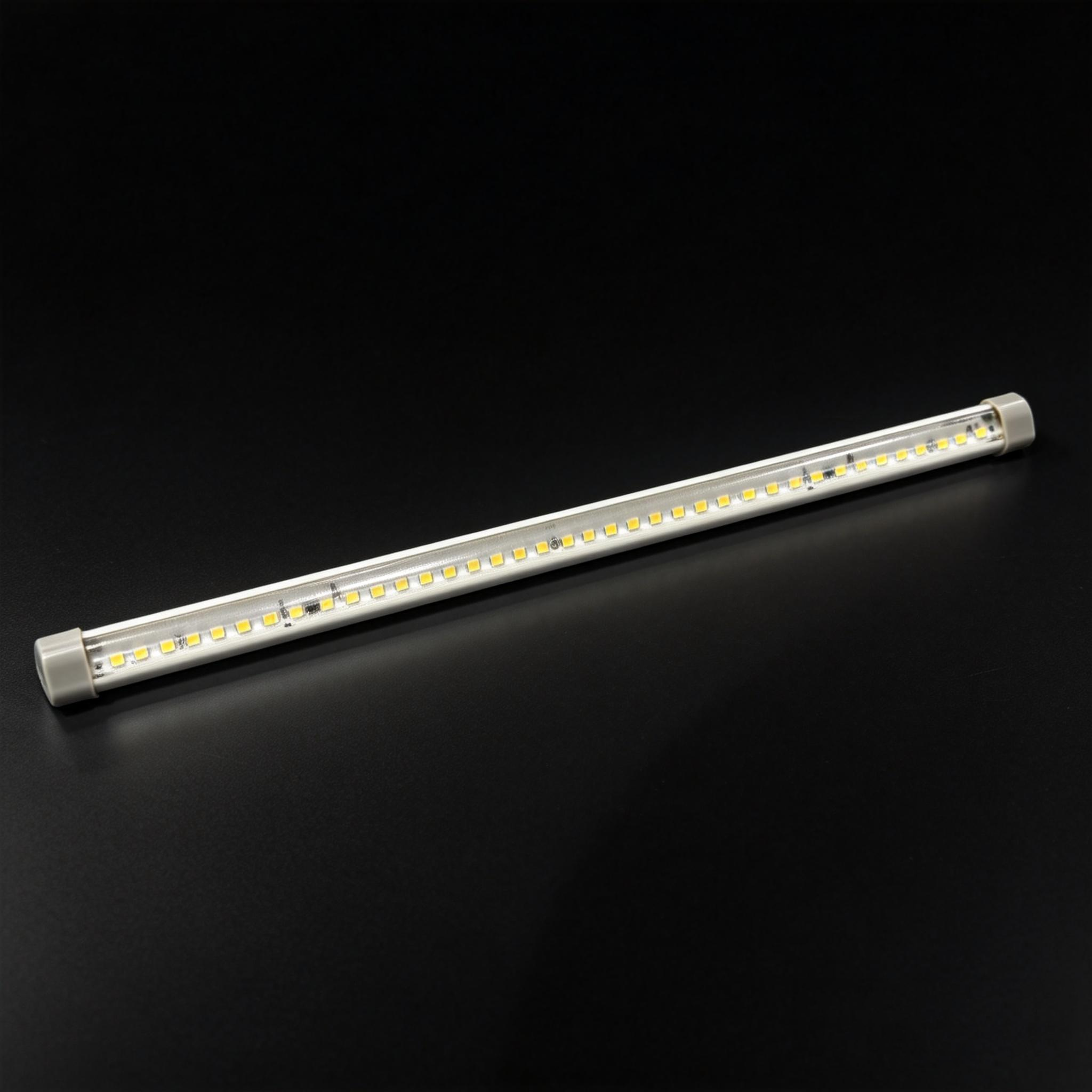
  • Our SPU series is engineered with optimized thermal paths
  • DC24V systems reduce internal driver heat
  • IP65 sealing maintains thermal stability in humid environments
  • Optical control minimizes unnecessary radiant heating toward products

The goal is not only lower wattage — but controlled heat behavior.

6. Why This Is Becoming More Important

Today, retailers and OEM partners are under increasing pressure to:

  • Meet energy regulations (DOE, EU Ecodesign)
  • Improve ESG performance
  • Reduce compressor cycling
  • Maintain consistent food temperature

Lighting can either support these objectives — or silently undermine them.

Forward-thinking manufacturers now treat lighting as a refrigeration component, not a decorative accessory.

7. The Strategic Takeaway

For refrigerated display case OEMs:

  • Every lighting watt must be included in refrigeration load calculations
  • Lower connected power reduces compressor demand
  • Proper optical and thermal design protects temperature stability
  • Lighting decisions impact long-term energy performance

ライディシンから, we collaborate with refrigeration engineers early in cabinet development to ensure lighting integrates thermally, mechanically, and optically — without adding unnecessary load.

Because in refrigeration design, every watt matters.

共有:

他の投稿

よくある質問

よくある質問と回答

この FAQ では、商用 LED 照明における Laidishine の製造専門知識について概説します。, カスタム OEM ラベルなどの中核となるビジネスの詳細をカバー, 製品保証, 国際認証 (ul, CE, CB), 標準的な B2B 取引および支払い条件.

スーパーマーケット用冷蔵ディスプレイ照明

冷蔵ディスプレイ照明は業務用冷蔵庫メーカーにとって主要な競争上の優位性になりつつあります

今日の競争が激化する市場において, ショーケースを目立たせるにはどうすればよいですか? スーパーマーケットや小売店にデザインとプレゼンテーションで独自の優位性を与えるにはどうすればよいですか? 冷蔵ディスプレイ照明があなたが探している答えかもしれません.

スーパーマーケットの冷蔵倉庫

業務用冷凍庫の売上急増の秘密

冷凍庫の照明, 冷蔵陳列棚の単なる付属品として無視されることがよくあります, 製品がプレミアム価格で販売できるかどうか、また小売販売量を大幅に増加できるかどうかを決定する極めて重要な要素へと静かに進化しています。. 小売業者の選択基準は非常に単純です: 商品の売上を明らかに促進する冷凍庫だけが利益を得る. 最終消費者向け, 最終的に支払い意思があるかどうかは、展示されている商品の視覚的な魅力にかかっています。. この記事では、戦略的な冷凍庫照明ソリューションがメーカーの冷凍庫の販売実績をどのように向上させるかを検討します。.

簡単な見積もりを取得

内で対応します 12 時間, 接尾辞が付いたメールに注意してください 「@laidishine.com」.

また, あなたは行くことができます お問い合わせページ, より詳細なフォームを提供します, 製品の詳細をお持ちの場合、または交渉済みの軽いソリューションを取得したい場合.

データ保護

データ保護法を遵守するため, ポップアップの重要なポイントを確認してください。. 引き続き当社ウェブサイトをご利用いただくには, 「同意する」をクリックする必要があります & 近い'. 当社のプライバシーポリシーについて詳しく読むことができます. 当社はお客様の同意を文書化します。当社のプライバシー ポリシーに移動してウィジェットをクリックすることでオプトアウトできます。.