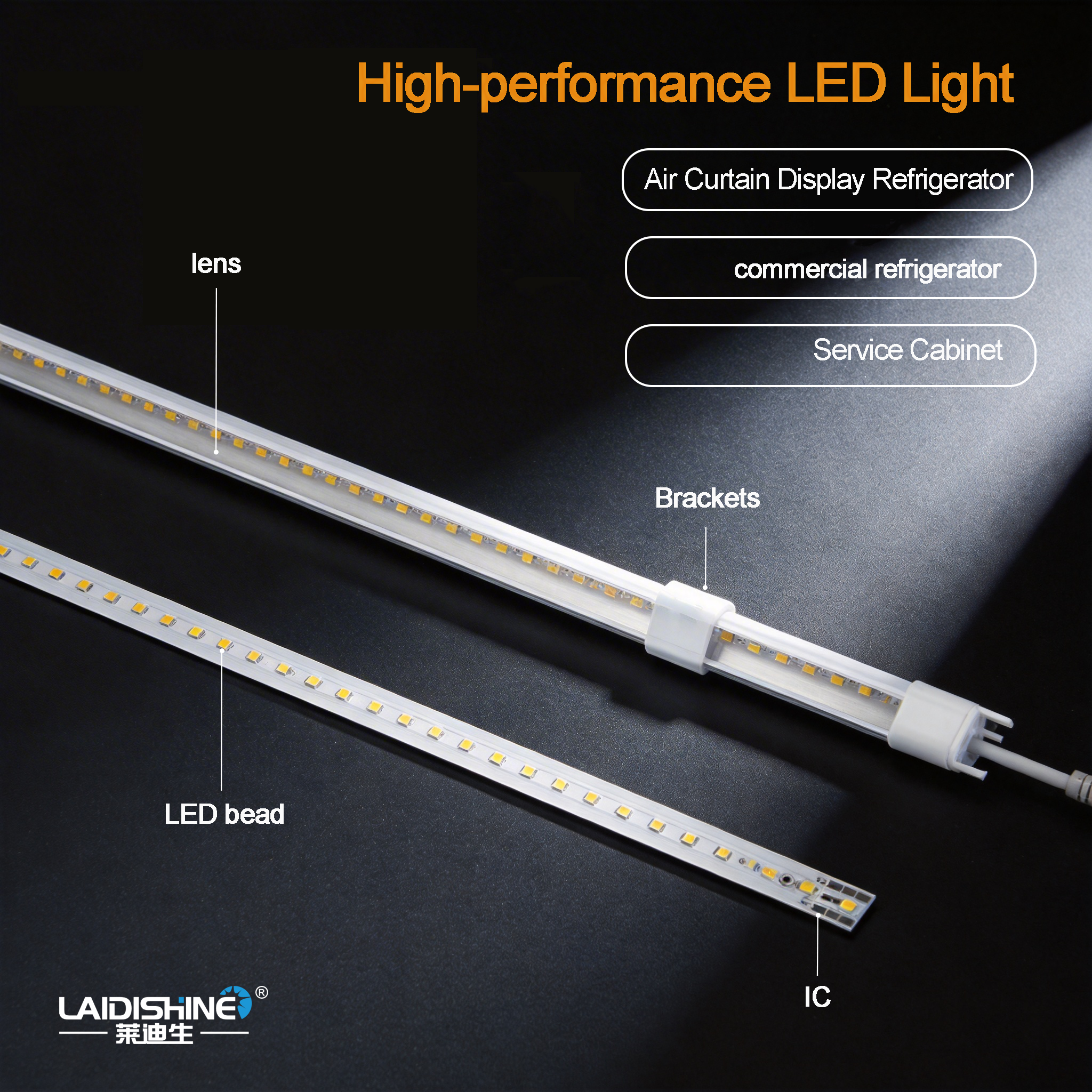
Actualmente atendemos a un cliente que pone un énfasis excepcional en el rendimiento térmico de los accesorios de iluminación para refrigeradores comerciales.. Nuestras comunicaciones continúan desde hace cinco meses..
¿Por qué el cliente está tan preocupado por la disipación del calor??
Las razones fundamentales residen en dos aspectos:
Primero, como mencionamos en este artículo, ¿Por qué las luces LED emiten luz de diferentes colores?, durante el funcionamiento de las luces LED? Cuando la energía eléctrica se convierte en luz a través de la unión PN del chip, Una parte de la energía se libera inevitablemente en forma de calor: la emisión de luz siempre va acompañada de la generación de calor.. Operación prolongada, Las altas temperaturas acumuladas aceleran el envejecimiento de los chips LED y los componentes electrónicos internos., acortando directamente la vida útil del dispositivo, lo que lleva a reemplazos frecuentes y a un aumento significativo de los costos de mantenimiento.
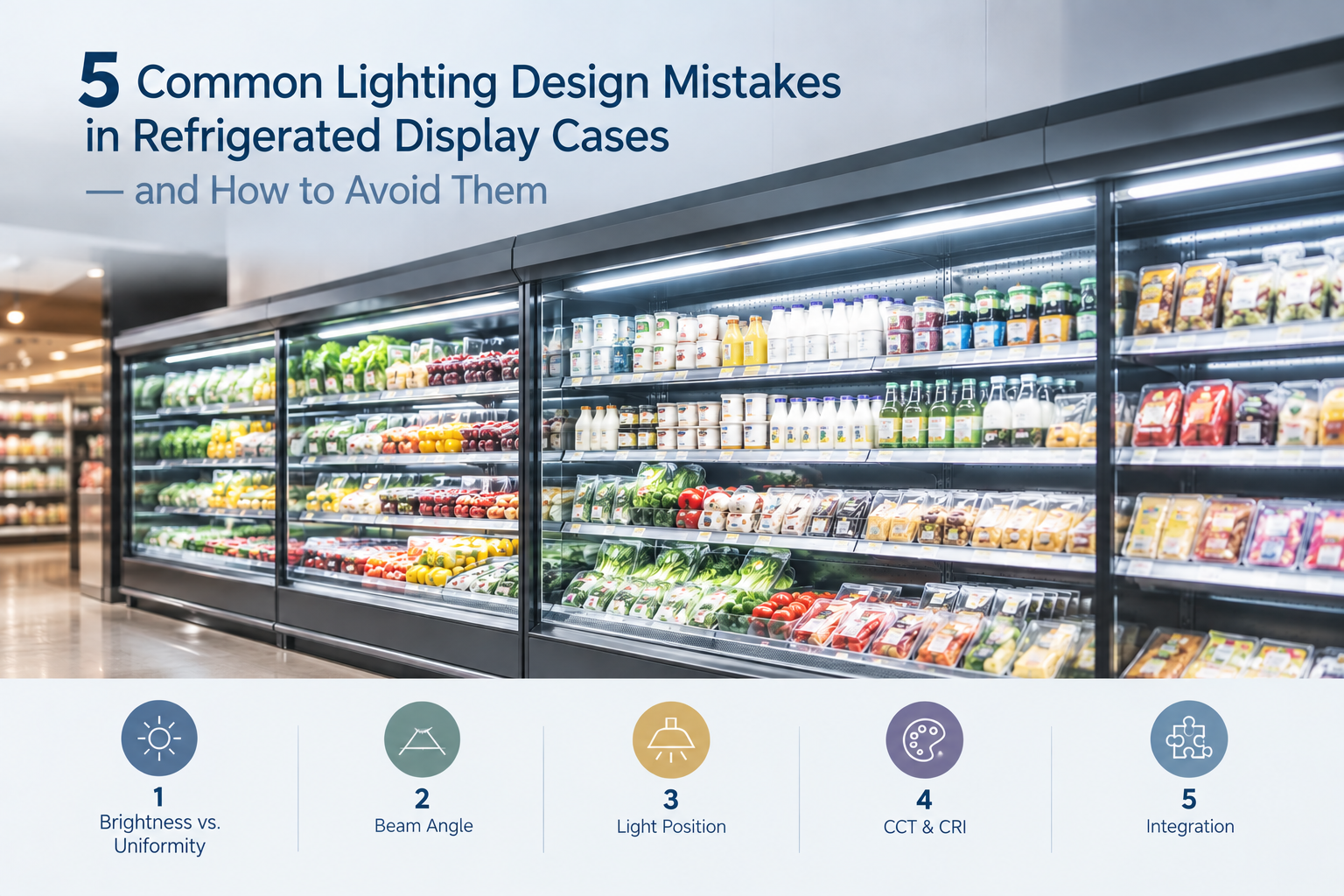
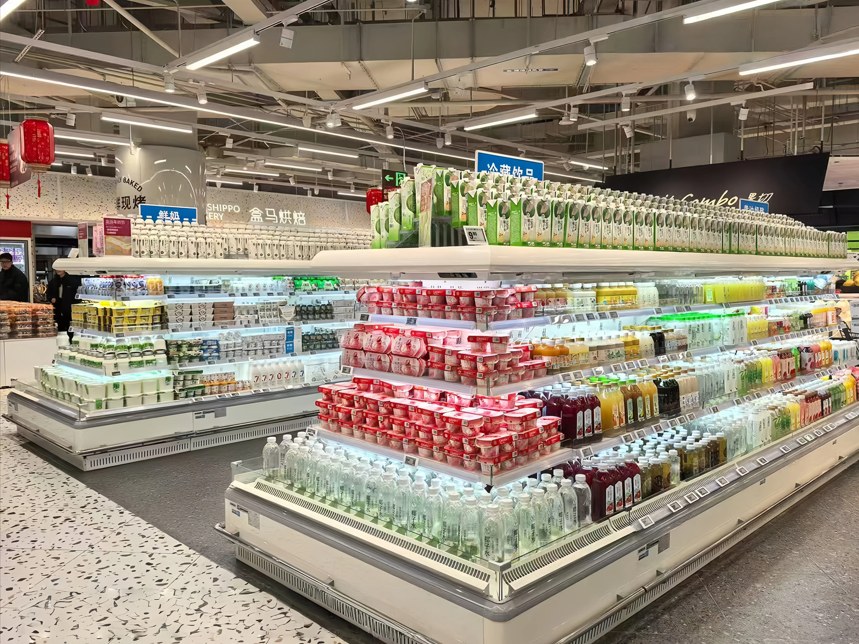
Segundo, El calor emitido por las luces del refrigerador se suma directamente a la carga de calor general dentro de la vitrina de refrigeración., obligar al compresor a funcionar con más frecuencia o durante períodos más prolongados para mantener la temperatura establecida, aumentando así el consumo de energía y los gastos operativos.
De hecho, para abordar este desafío, nuestra corriente luces LED más frías adoptar principalmente dos enfoques:
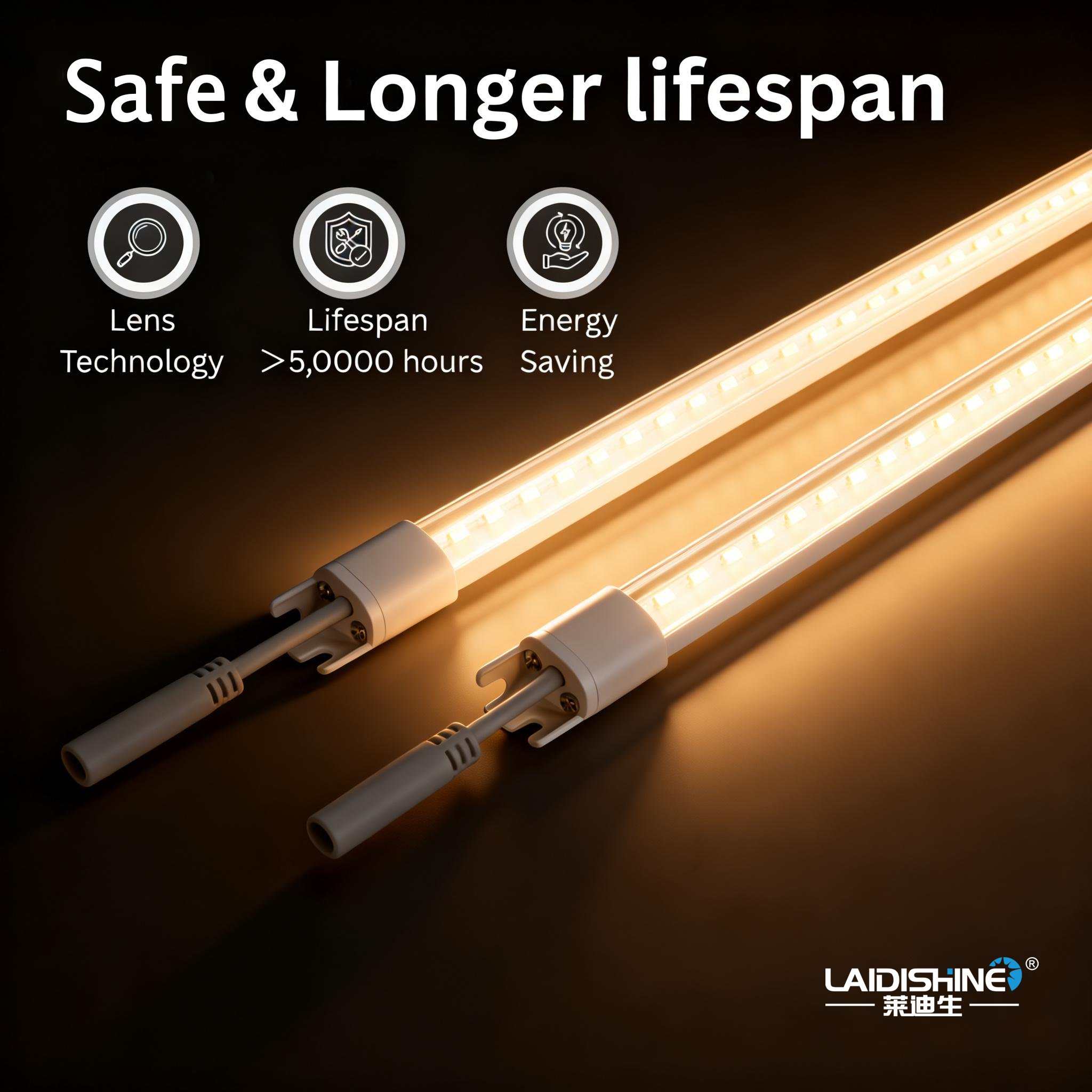
Estructura de disipación de calor mejorada: Se utilizan extrusiones de aluminio para alejar rápidamente el calor de los chips LED.. Por ejemplo, la SPU Ladyshine, LBF, y la serie CNP emplean PCB a base de aluminio y una mitad de aluminio, Diseño de carcasa de mitad de plástico para mejorar la disipación del calor y garantizar una larga vida útil..
Bajo voltaje, controladores de alta eficiencia: El controlador suele ser el eslabón débil de las luminarias LED. Adoptamos sistemas de suministro de energía de bajo voltaje de 24 V CC., que no solo mejoran la seguridad sino que también reducen la generación general de calor. Al mismo tiempo, Nos aseguramos de que los controladores estén equipados con componentes resistentes a bajas temperaturas, como condensadores de estado sólido., permitiendo un funcionamiento estable en entornos bajo cero y evitando el calor adicional causado por arranques frecuentes.
Sin embargo, Después de que proporcionamos las muestras iniciales al cliente., Los resultados de sus pruebas mostraron que todavía se escapaba algo de calor al exterior., mientras que el producto actual del cliente casi no genera calor perceptible. en respuesta, Realizamos experimentos repetidos y reemplazamos el material de la placa LED con una placa de fibra de vidrio; este material atrapa efectivamente el calor dentro del cuerpo de la lámpara., evitando que se libere al ambiente más fresco y reduciendo así la carga térmica. Pero la desventaja es que ahora todo el calor se concentra dentro del cuerpo., elevando la temperatura interna y amenazando seriamente la vida útil del dispositivo.
Al final, después de la consulta, adoptamos el siguiente enfoque: Reducir la potencia total del dispositivo al tiempo que aumenta la eficacia luminosa de los LED.. Con una importante reducción de potencia., incluso si la relación de conversión de calor permanece sin cambios, la cantidad absoluta de calor generado cae sustancialmente. Esta solución cumple con los estrictos requisitos del cliente para minimizar la carga de calor interna y al mismo tiempo mantener la temperatura del cuerpo de la lámpara dentro de un rango razonable para garantizar la durabilidad.. Esta estrategia equilibrada ofrece rendimiento y confiabilidad y actualmente está esperando una mayor validación y confirmación por parte del cliente..