Die thermische Realität hinter jedem Watt verstehen
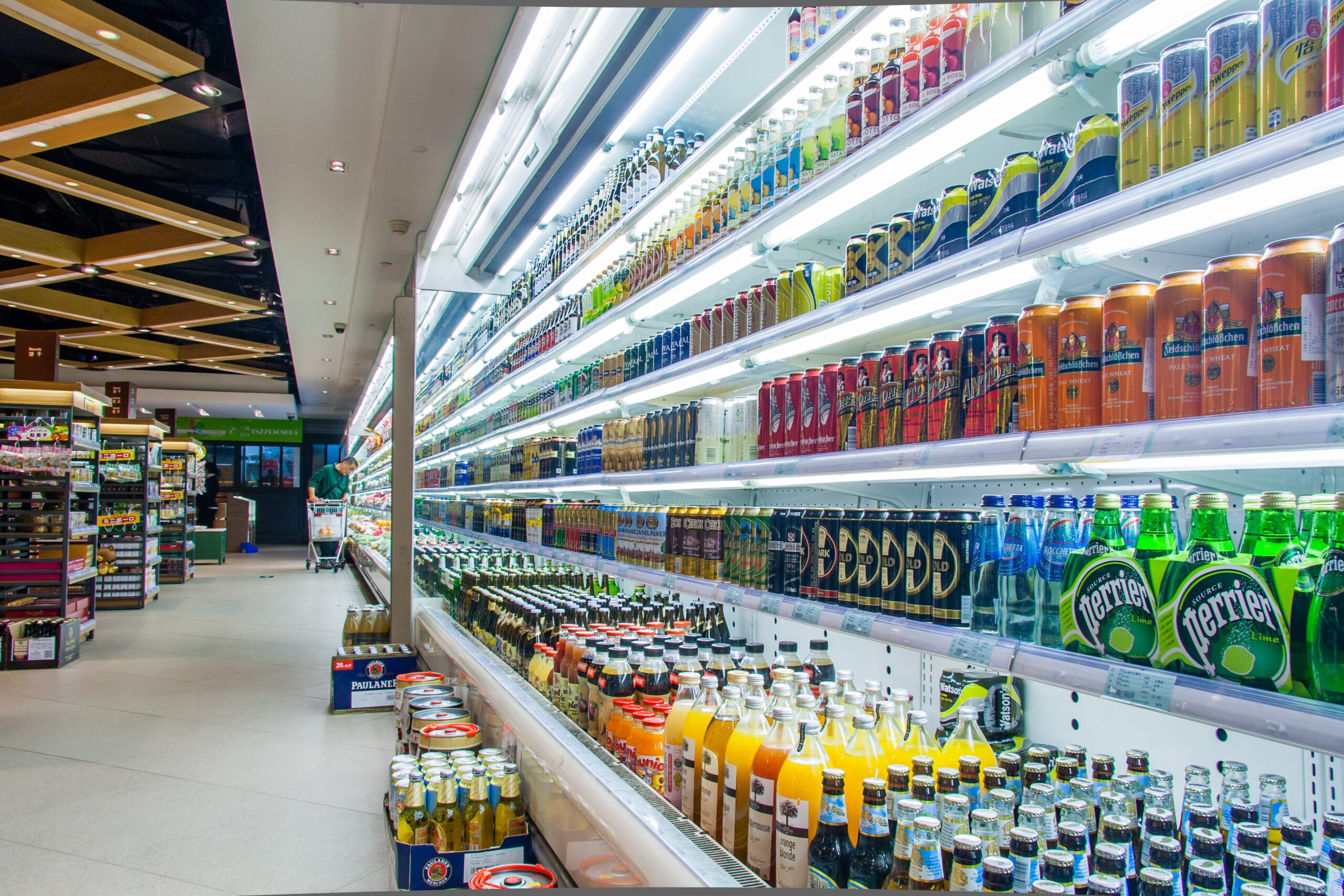
In gewerblichen Kühlvitrinen, Beleuchtung wird oft im Hinblick auf Helligkeit diskutiert, Farbwiedergabe, oder Merchandising-Effekt. Allerdings aus technischer Sicht, Die Beleuchtung spielt eine weitaus wichtigere Rolle – sie beeinflusst direkt die thermische Belastung des Kühlsystems.
Für OEM-Hersteller, Kältetechniker, und Systemdesigner, Eine Tatsache bleibt grundlegend:
Jedes in einer Kühlvitrine installierte Watt an Beleuchtung wird zu Wärme, die vom Kühlsystem abgeführt werden muss.
Dies ist keine Marketing-Interpretation. Es handelt sich um eine grundlegende Thermodynamik – und sie wirkt sich direkt auf die Kompressordimensionierung aus, Energieverbrauch, Temperaturstabilität, und langfristige Systemeffizienz.
1. Beleuchtung innerhalb der Kühlgrenze: Warum es wichtig ist
In einer Supermarktumgebung, Deckenleuchten leuchten von außerhalb des Kühlraums. Ihre Wärme wird an die Umgebungsluft des Lagers abgegeben.
Bei der Beleuchtung von Kühltheken ist das jedoch anders.
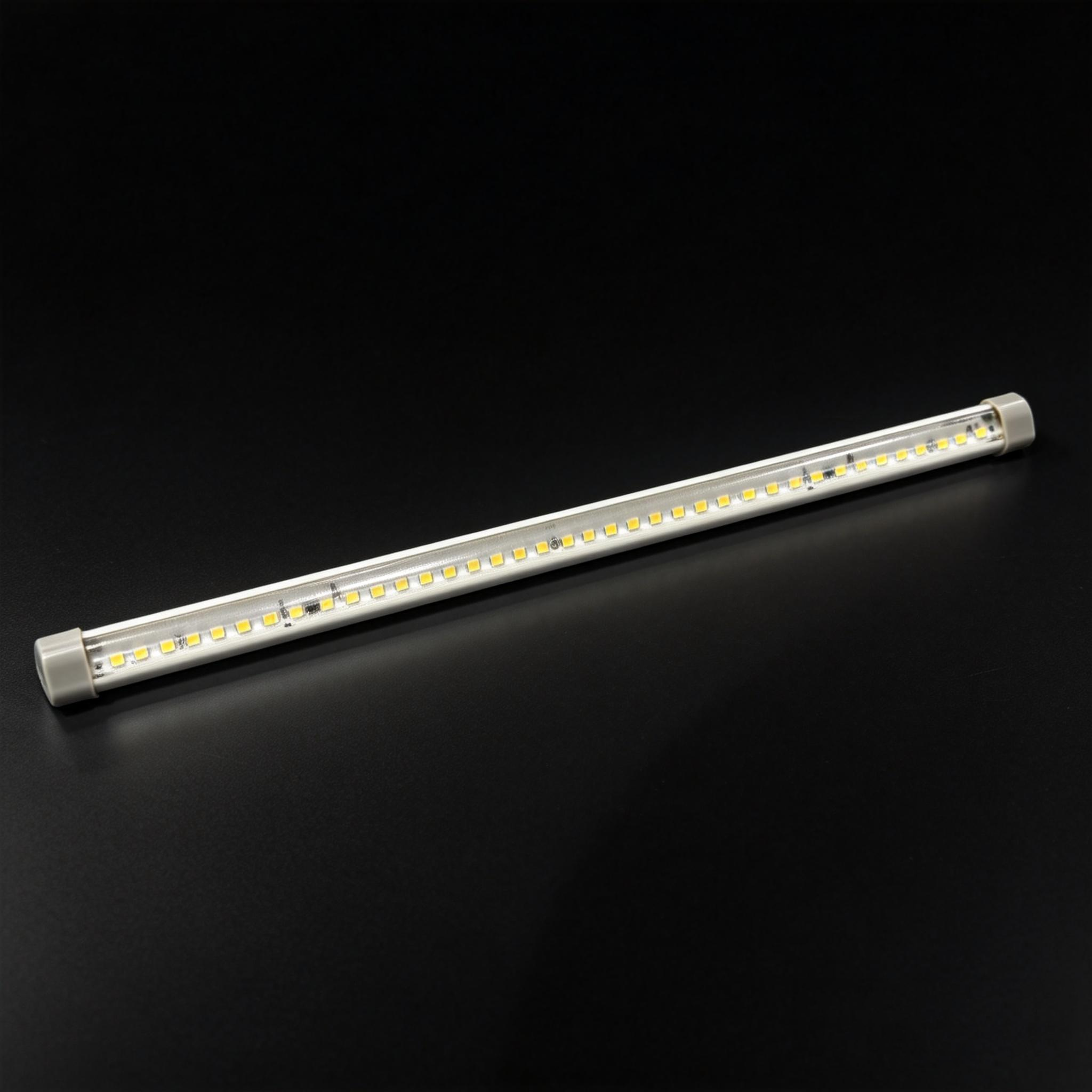
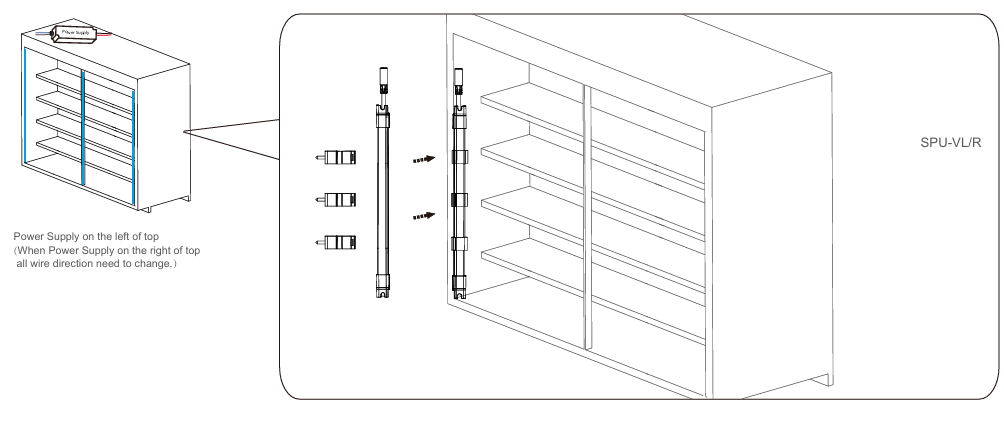
LED-Module, Fahrer, Klammern, und Linsen werden innerhalb des isolierten Schranks installiert – innerhalb der definierten Kühlgrenze. Das bedeutet:
- Elektrischer Strom gelangt in den Kühlraum
- Fast alles davon wird in Wärmeenergie umgewandelt
- Diese Wärme muss kontinuierlich abgeführt werden
Aus physikalischer Sicht:
Elektrische Energie → Wärmeenergie → Kälteabfuhr
In einer Kühlvitrine gibt es kein „freies“ Watt.
2. Die thermodynamische Beziehung
Die Beziehung ist unkompliziert:
Wo:
- Q = Dem Kühlraum zugeführte Wärme (W)
- P = Elektrische Eingangsleistung des Beleuchtungssystems (W)
In der Praxis, 95– 100 % der LED-Beleuchtungsleistung wird im Inneren des Gehäuses in Wärme umgewandelt, je nach:
- Standort des Fahrers (intern vs. extern)
- Effizienz des Kühlkörpers
- Optisches Design
- Luftstrommanagement
Sogar hocheffiziente LEDs (160 lm/W oder höher) wandeln immer noch den Großteil der Eingangsleistung in Wärme um. Die Lichtausbeute verbessert die visuelle Leistung – beseitigt jedoch nicht die thermische Belastung.
Deshalb ist Lichtdesign untrennbar mit Kühldesign verbunden.
3. Was das für OEM-Hersteller bedeutet
Für Vitrinenbauer, Lichtleistung beeinflusst:
- Kompressorlaufzeit
- Verdampferlast
- Häufigkeit des Auftauens
- Schrankauszugszeit
- Temperaturschwankungen in der Nähe von Produktoberflächen
Ein Unterschied von 20–40 Watt pro Schrank mag klein erscheinen – aber er reicht aus:
- 50 Fälle in einem Supermarkt
- 500 Fälle in einer SB-Warenhauskette
- Tausende Einheiten bei einem Marken-Rollout
Die kumulative Kühllast wird erheblich.
Aus diesem Grund bewerten führende OEMs Beleuchtung zunehmend nicht nur nach Helligkeit, sondern auch nach dem Wärmebeitrag pro Laufmeter.
4. Beispiel aus der Praxis des Ingenieurwesens
Erwägen Sie einen vertikalen Gefrierschrank mit mehreren Etagen und Glastüren:
| Artikel | Fall A | Fall B |
|---|---|---|
| Lichtleistung | 60 W | 35 W |
| Tägliche Hitze hinzugefügt | 1.44 kWh | 0.84 kWh |
| Jährliche Wärmebelastung | 525 kWh | 307 kWh |
Das 25 W-Reduktion spart über 200 kWh pro Kiste pro Jahr bei der Kälteentnahme.
Multiplizieren Sie dies mit einer Installation von 200 Fälle, und der Energieunterschied wird operativ bedeutsam.
5. Über die Wattzahl hinaus: Wärmeverteilungsfragen
Nicht alle Beleuchtungssysteme übertragen Wärme auf die gleiche Weise.
Zu den Schlüsselfaktoren gehören:
- Linsenwinkel und optische Kontrolle
- Aufbau- oder Einbaudesign
- Wärmeableitung durch Aluminiumprofil
- Fahrertrennung
- Platzierung relativ zu den Luftströmungskanälen
Von Laidishine, Beleuchtungssysteme sind speziell für gekühlte Umgebungen konzipiert und nicht an allgemeine Einzelhandelseinrichtungen angepasst.
Zum Beispiel:
- Unsere SPU-Serie ist mit optimierten Wärmepfaden ausgestattet
- DC24V-Systeme reduzieren die interne Treiberwärme
- Die IP65-Dichtung gewährleistet die thermische Stabilität in feuchten Umgebungen
- Durch die optische Kontrolle wird eine unnötige Strahlungserwärmung der Produkte minimiert
Das Ziel ist nicht nur eine geringere Wattzahl, sondern ein kontrolliertes Wärmeverhalten.
6. Warum das immer wichtiger wird
Heute, Einzelhändler und OEM-Partner stehen zunehmend unter Druck:
- Erfüllen Sie die Energievorschriften (DAMHIRSCHKUH, EU-Ökodesign)
- Verbessern Sie die ESG-Leistung
- Reduzieren Sie die Zyklen des Kompressors
- Sorgen Sie für eine konstante Lebensmitteltemperatur
Beleuchtung kann diese Ziele entweder unterstützen – oder sie stillschweigend untergraben.
Zukunftsorientierte Hersteller betrachten Beleuchtung heute als Kühlkomponente, kein dekoratives Accessoire.
7. Der strategische Imbiss
Für Kühlvitrinen-OEMs:
- Jedes Watt Beleuchtung muss in die Berechnung der Kühllast einbezogen werden
- Eine geringere Anschlussleistung reduziert den Kompressorbedarf
- Das richtige optische und thermische Design schützt die Temperaturstabilität
- Beleuchtungsentscheidungen wirken sich auf die langfristige Energieleistung aus
Von Laidishine, Wir arbeiten schon früh in der Schrankentwicklung mit Kältetechnikern zusammen, um sicherzustellen, dass die Beleuchtung thermisch integriert wird, mechanisch, und optisch – ohne unnötige Belastung.
Denn im Kühldesign, Jedes Watt zählt.
Mehr Leseteil 2: https://www.laidishine.com/what-ashrae-and-industry-standards-really-say-about-lighting-in-refrigerated-cases/
-1-scaled.jpg)