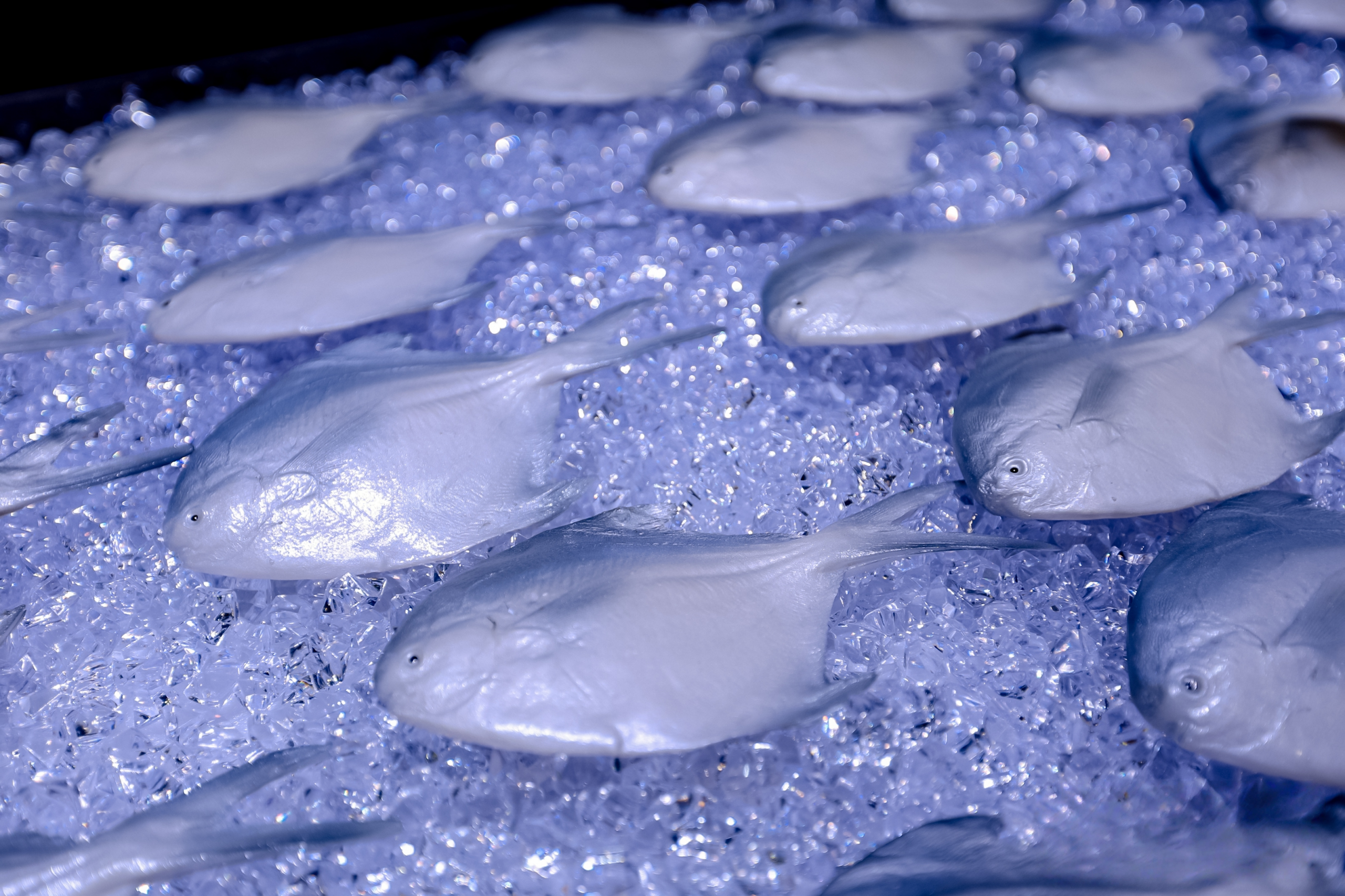
Walk into a supermarket, and the seafood display cabinet looks bright and decent from a distance. But step closer, and you will notice the salmon appears pale, the tuna has darkened, and the pink shrimp has turned dull grey.
Is it the seafood that is the problem?
No — it’s the lighting.
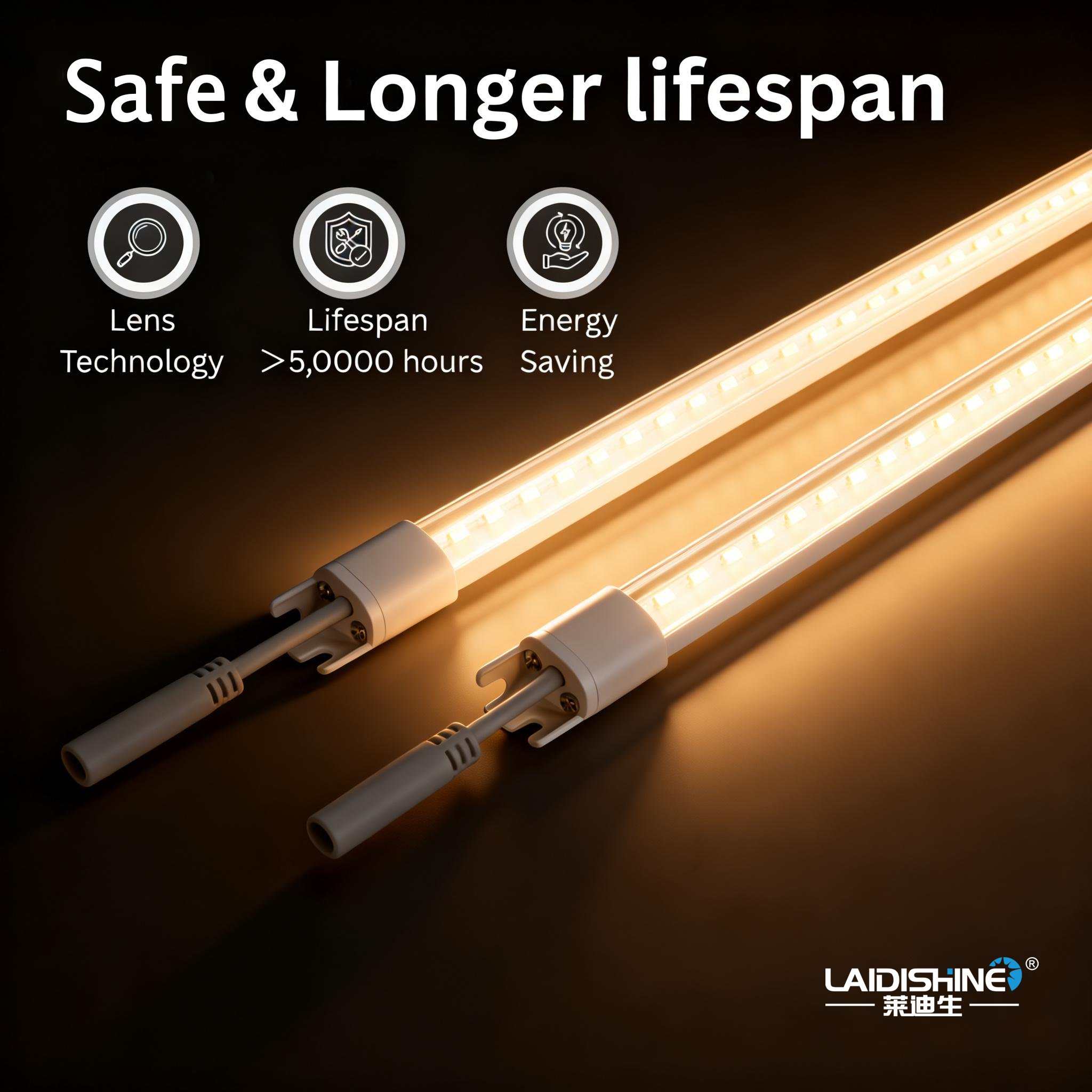
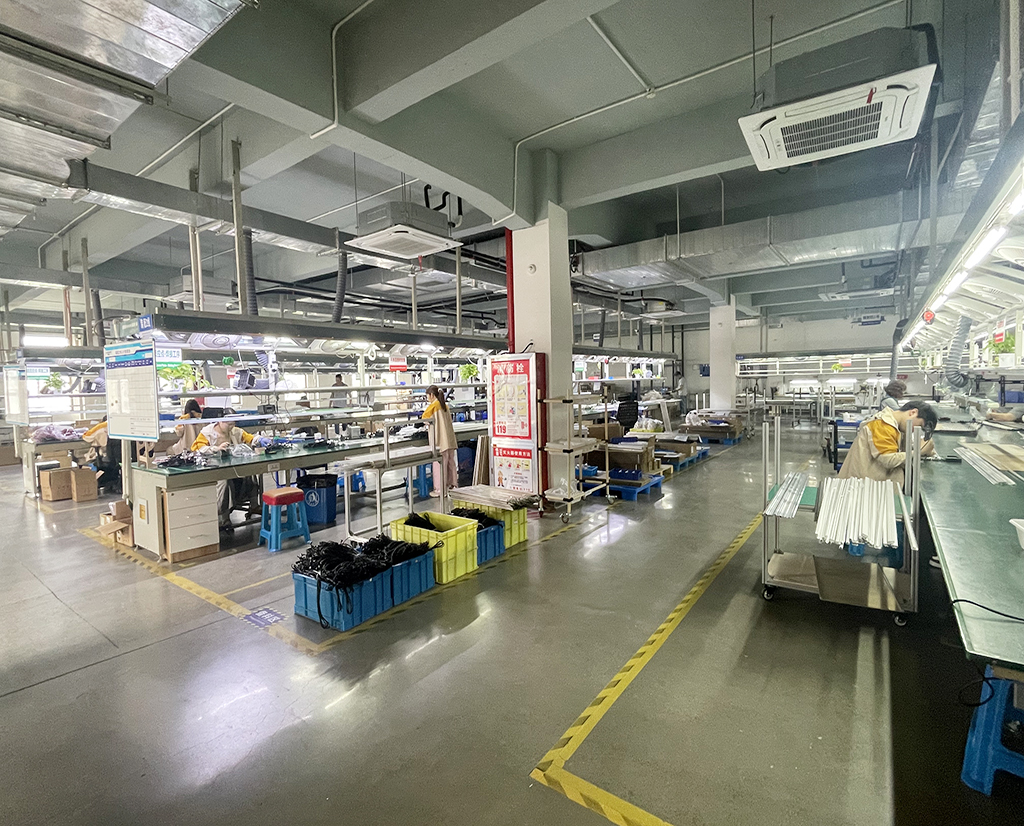
We manufacture LED lighting for refrigerated display cabinets, so we stand in front of seafood counters far more often than most people. Time and again, we see business owners blame the produce, suppliers or long storage time. Yet few stop to consider what the lights are doing to their seafood. Before shoppers touch the seafood, they judge it with their eyes — and your cabinet lighting is silently shaping that first impression.
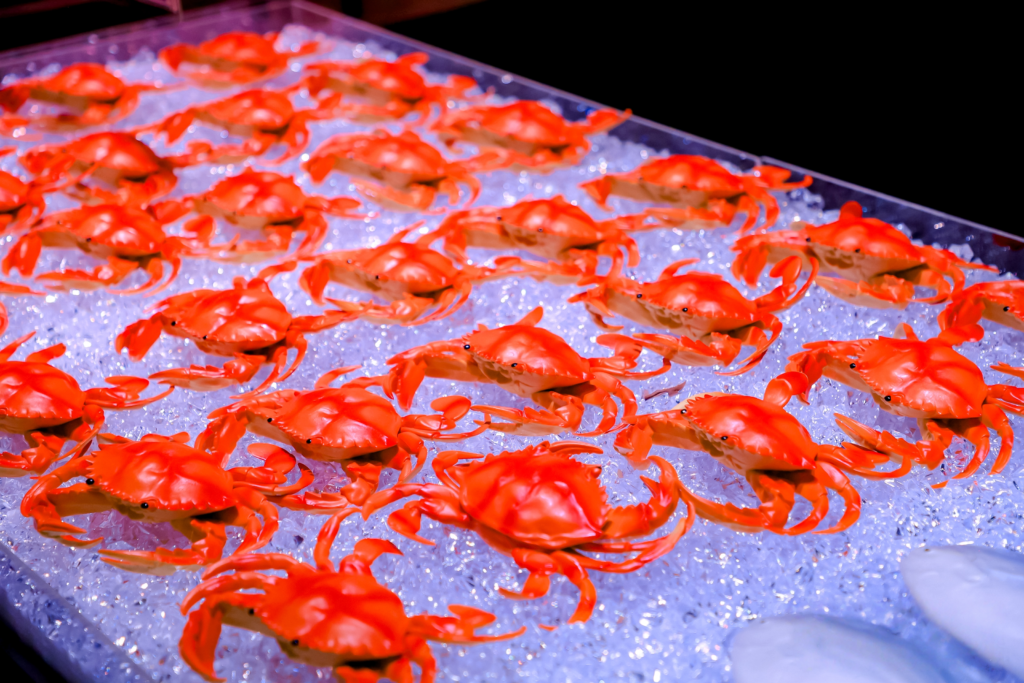
Why Seafood Needs Cool Light
Shoppers do not check the cabinet temperature controller. They look at the colour of the fish, the sheen on scales and the pink tone of shrimp. Their judgement is visual, and light controls most of it.
Warm light — the kind used in bakeries and cosy restaurants — works beautifully for bread and pastries. But on seafood, it works against you. Warm tones flatten the cool blue-grey hues of fish skin. Even a fresh grouper can look stale under warm light. The product may be properly chilled, yet warm light signals “not fresh” to customers.
Cool white light in the 5000K to 6500K range has the opposite effect. It mimics the bright, cool daylight found at bustling wet markets, making seafood look as though it has just been landed. This is no marketing gimmick; human eyes naturally associate this light quality with freshness.
When specifying lights for seafood counters, start with a cool colour temperature and let the colour rendering index handle the rest. Resist the urge to switch to warmer lighting just because it “feels more comfortable”. Warm light does no favours for seafood.
CRI Alone Is Not Enough — Pay Attention to R9
The Colour Rendering Index (CRI, or Ra) measures how accurately a light source reproduces colours compared to natural light. For seafood applications, budget lights typically hit CRI 80, while CRI 90 is the benchmark often highlighted by suppliers.
Here is a pitfall most buyers overlook: CRI is an average value. It averages the light’s performance across a set of test colours. A light can have a nominal CRI of 90 yet render red tones poorly. This is where R9 comes in — the metric specifically measuring red colour reproduction. Salmon, shrimp, tuna and most popular seafood products are rich in red and pink hues. Weak R9 dulls these tones, making fish look pale and worn.
Do not merely ask suppliers “What is the CRI?”. Always follow up and ask for the R9 value. A lamp with CRI 90 and strong R9 will make raw tuna steaks look deep and vibrant. The same tuna will appear flat and grey under a lamp with inflated CRI figures but poor R9. Same seafood, same cabinet — yet vastly different visual appeal.
This is why we design our refrigerated lighting with high CRI and strict R9 performance targets. Technical datasheets only tell part of the story. Numbers on paper cannot show how a lamp illuminates fresh salmon fillets. Real samples under real lighting are what reveal the true effect.
Bright Enough, Without Glare in Aisles
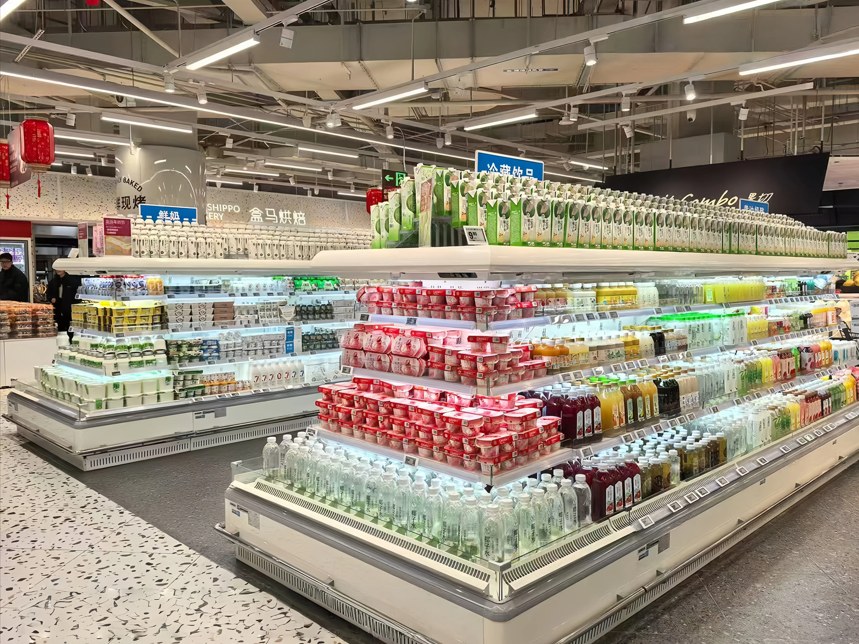
You want your seafood cabinet to stand out, but not at the cost of light reflecting off the glass and dazzling customers. Dark patches inside the cabinet also hide your goods from view.
The goal is consistent, even illumination. A common mistake is over-lighting the front edge of the counter while leaving the back shelves in shadow, or directing light toward shoppers instead of onto the seafood. Light should land on products, not on aisle floors or cabinet glass. If the cabinet glass feels hot, excess heat from the lights is hurting both your merchandise and energy costs.
For multi-tier seafood cabinets, fixture placement matters just as much as power output. Aim beams at the shelves, not the glass. Fine-tuning the beam angle delivers better freshness perception than simply cranking up wattage.
Real-World Challenges: Low Temperatures, Kondensation & Service Life
Product brochures never show what happens to a lamp after five years inside a cold, humid display cabinet.
Seafood cabinets are harsh environments: niedrige Temperaturen, constant condensation, repeated washing with water and sanitising chemicals. A lamp that performs well in dry showrooms can fail within months without proper sealing. Moisture seeps into drivers, corrodes connectors, and one day an entire shelf goes dark.
When selecting lights for seafood counters, check the IP rating for dust and water resistance, and confirm the driver matches your actual load. Undersized drivers overheat; oversized ones waste power and risk flickering. This underrated aspect of seafood lighting determines whether your showcase still looks great in year three, or half the lights have failed. For more details on cold-store fixtures, refer to our guide: IP65 vs IP69K for Cold Room Lighting.
Six Questions to Ask Before Buying Seafood Cabinet Lights
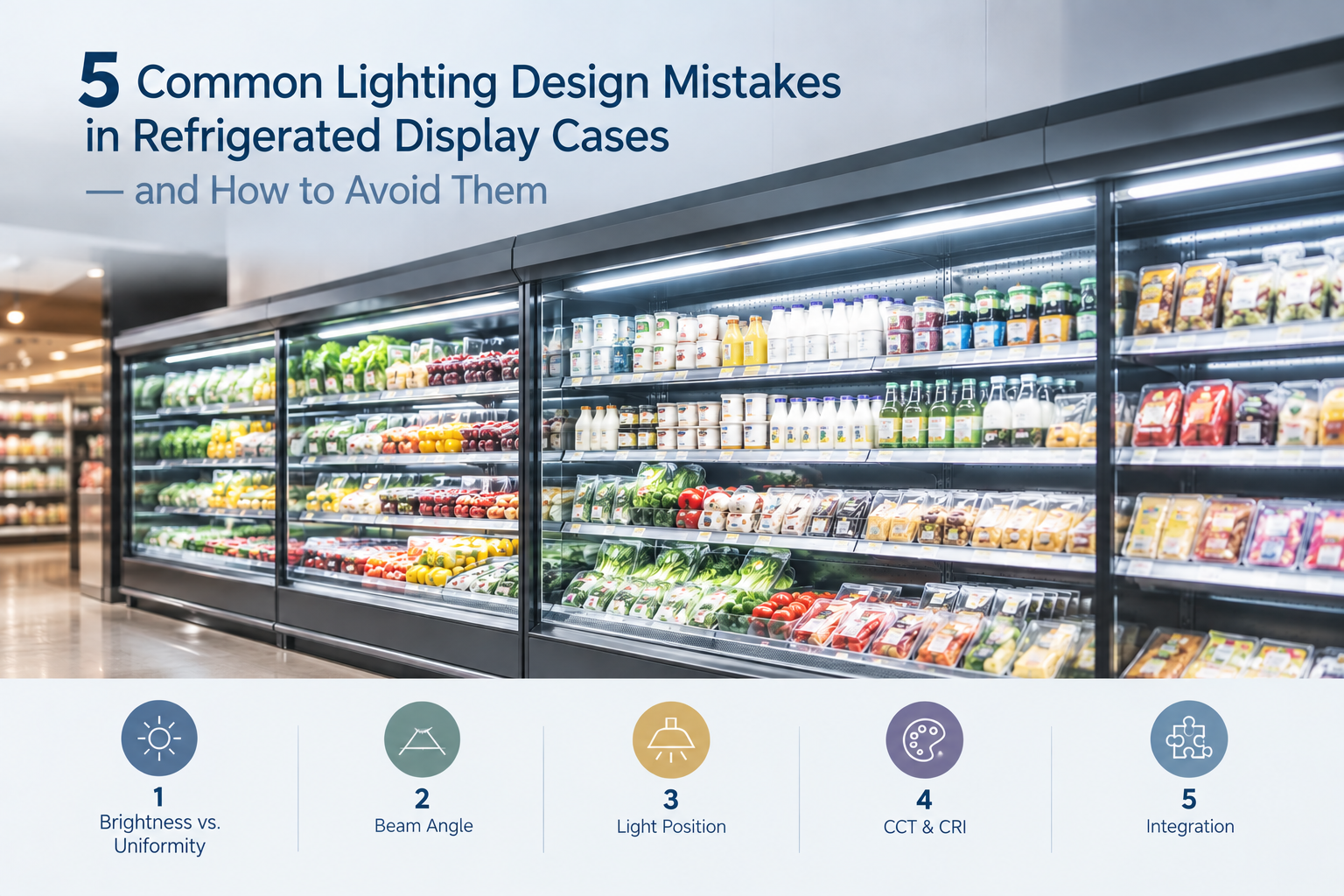
Whether you are purchasing for supermarkets, seafood shops or manufacturing display cabinets for clients, run through these six checks before finalising lamp selection:
- 1. Farbtemperatur: Is it cool, within the 5000–6500K range? Warm lighting on seafood counters is a red flag.
- 2. CRI & R9: Do not settle for “high CRI”. Request the R9 value, or better still, ask for a live demo with the lamp shining on salmon fillets.
- 3. Heat output: Does the fixture run cool, or is it warming the top layer of your produce?
- 4. Gleichmäßigkeit: Does light cover every shelf evenly, or only the front edge?
- 5. Moisture resistance: What is the IP rating? Are drivers sealed for heavy condensation?
- 6. Kompatibilität: Does the driver power rating match the number of lamps installed?
Shoppers demand high freshness standards for seafood. Well-designed lighting accentuates the natural quality of aquatic products, boosts customer perception and drives purchase intent. Ready to lift your seafood sales? Contact us for a custom lighting solution.