في أنظمة إضاءة التبريد, غالبًا ما يتم التعامل مع برنامج التشغيل باعتباره "مكونًا في الخلفية". ولكن في الواقع, فهو يؤثر بشكل مباشر على استهلاك الطاقة, الحمل الحراري, وحتى تكلفة التشغيل على المدى الطويل.
أحد أهم الأشياء التي يجب فهمها هو أن كفاءة السائق ليست قيمة ثابتة - فهي تتغير اعتمادًا على كيفية استخدام السائق.
1. المزيد من السائقين لا يعني كفاءة أفضل
في العديد من المنشآت المتجر, تم تصميم أنظمة الإضاءة بطريقة موزعة, مما يعني أنه يتم استخدام برامج تشغيل متعددة عبر أرفف أو أقسام مختلفة.
هذا النهج مرن, ولكن ذلك يأتي مع تكلفة خفية.
يستهلك كل سائق قدرًا صغيرًا من الطاقة بمفرده, حتى عندما يكون الحمل منخفضًا. وذلك عندما يزيد عدد السائقين, يزداد إجمالي خسائر النظام أيضًا - حتى إذا ظل حمل LED كما هو تمامًا.
من وجهة نظر النظام, وهذا شيء غالبًا ما يتم الاستهانة به.
2. الكفاءة تعتمد على الحمل
مثل معظم تحويل إمدادات الطاقة, فالسائق ليس على نفس القدر من الكفاءة في جميع الظروف.
لديها "نطاق عمل مثالي", حيث تكون الكفاءة في أفضل حالاتها. عندما ينخفض الحمل منخفضًا جدًا, يصبح الاستهلاك الداخلي الثابت أكثر أهمية, وتبدأ الكفاءة العامة في الانخفاض.
في تطبيقات السوبر ماركت الحقيقية, يحدث هذا الوضع في كثير من الأحيان, خاصة في:
- إضاءة الرف المعيارية
- أقسام الخزانة المحملة جزئيًا
- مشاريع التحديثية حيث لم يتم تحسين التحميل بشكل كامل
وبالتالي فإن الكفاءة الحقيقية التي تحصل عليها في الميدان لا تقتصر على رقم ورقة البيانات فحسب، بل تعتمد بشكل كبير على كيفية تصميم النظام.
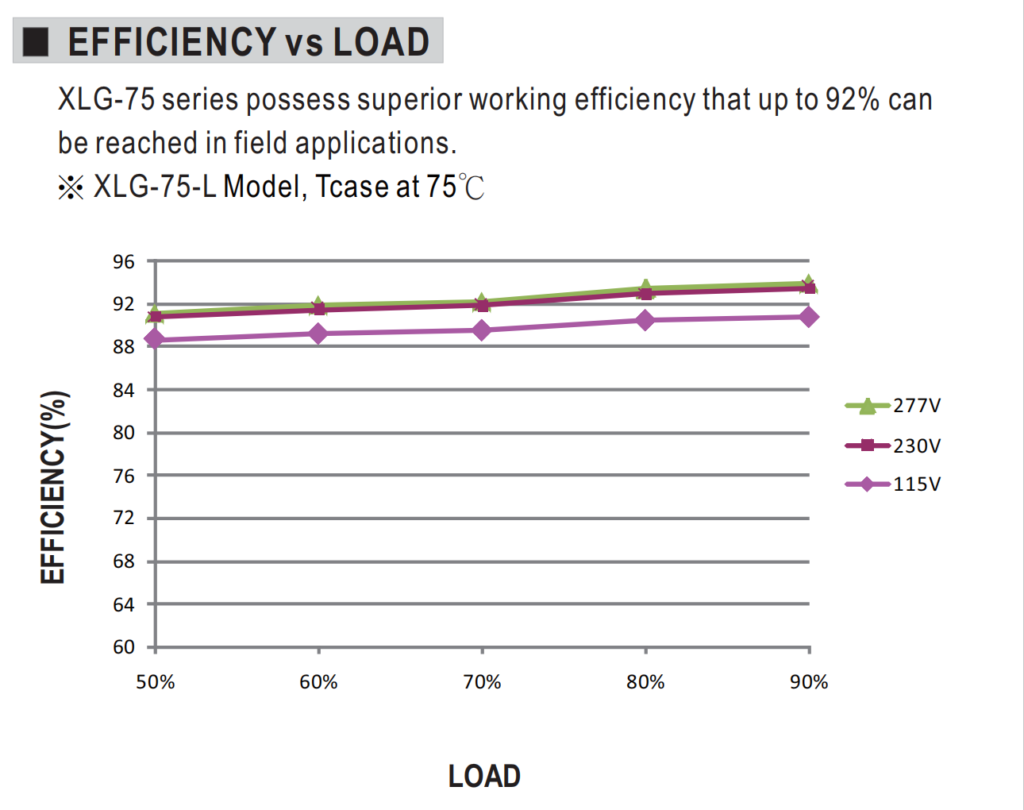
3. مثال - سلوك الكفاءة
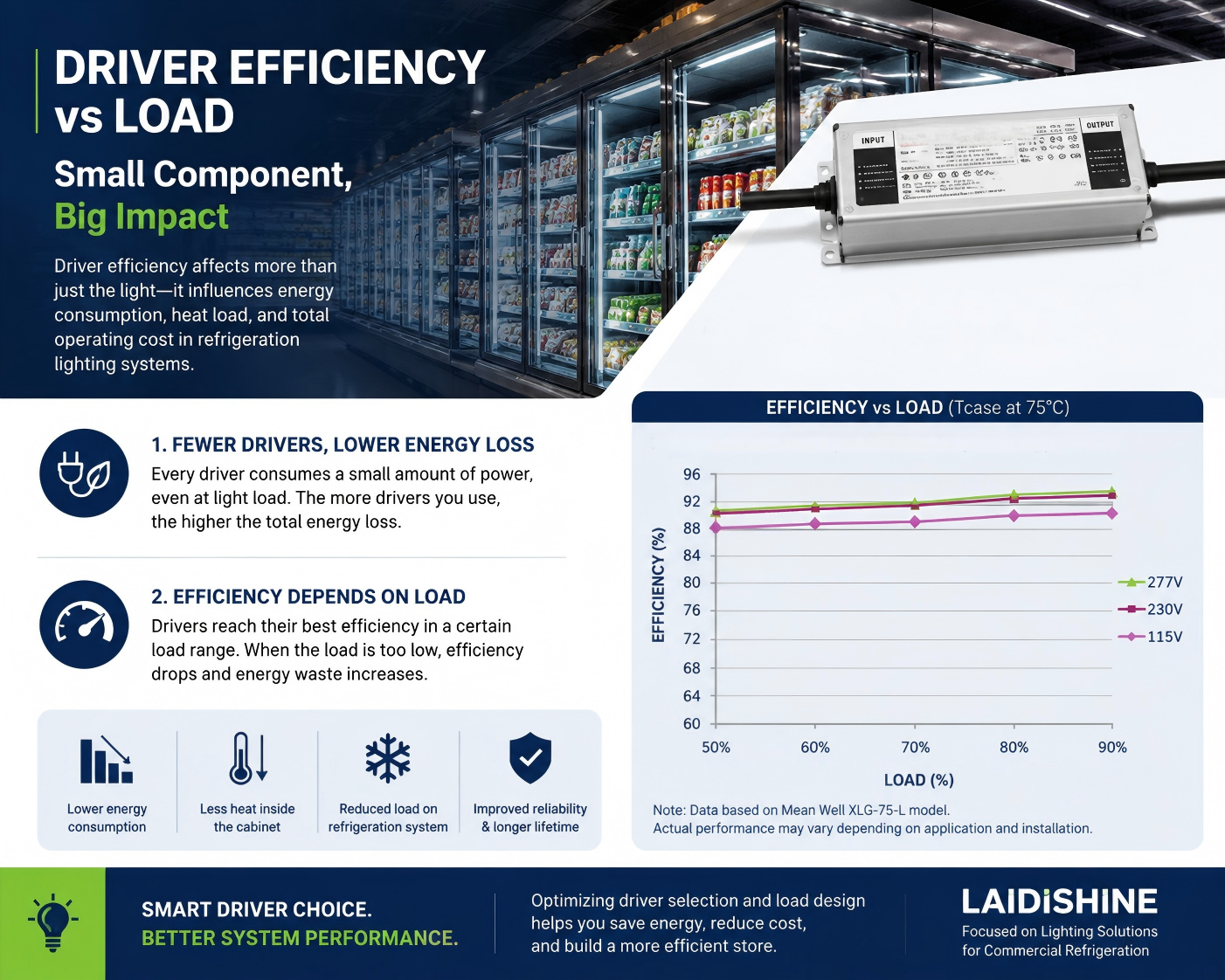
مرجع جيد هنا هو يعني حسنا XLG-75-24 مسلسل, والذي يستخدم على نطاق واسع في تطبيقات الإضاءة الصناعية.
يوضح الرسم البياني أدناه اتجاه كفاءته في ظل الفولتية المدخلة وظروف التحميل المختلفة (تم اختباره عند درجة حرارة 75 درجة مئوية).